You send a WhatsApp campaign to 500 people. Sixty reply within minutes. A hundred more reply over the next few hours. The remaining 340 say nothing. Same message, same time, same channel. Why did a third of the list respond and two thirds did not?
Most businesses look at the non-responders and conclude the message did not work or the list is bad. Sometimes that is true. But more often, the gap between the people who replied and the people who did not is not about the message at all. It is about where those contacts are in their decision-making, how recently they engaged with your business, and whether the message gave them a specific enough reason to respond right now rather than later.
Understanding what separates instant responders from non-responders changes how you build campaigns, write templates, and follow up. It also changes your expectations around what a good WhatsApp response rate actually looks like — and stops you from making the mistake of treating silence as a definitive answer.
Intent Is the Biggest Variable You Cannot See
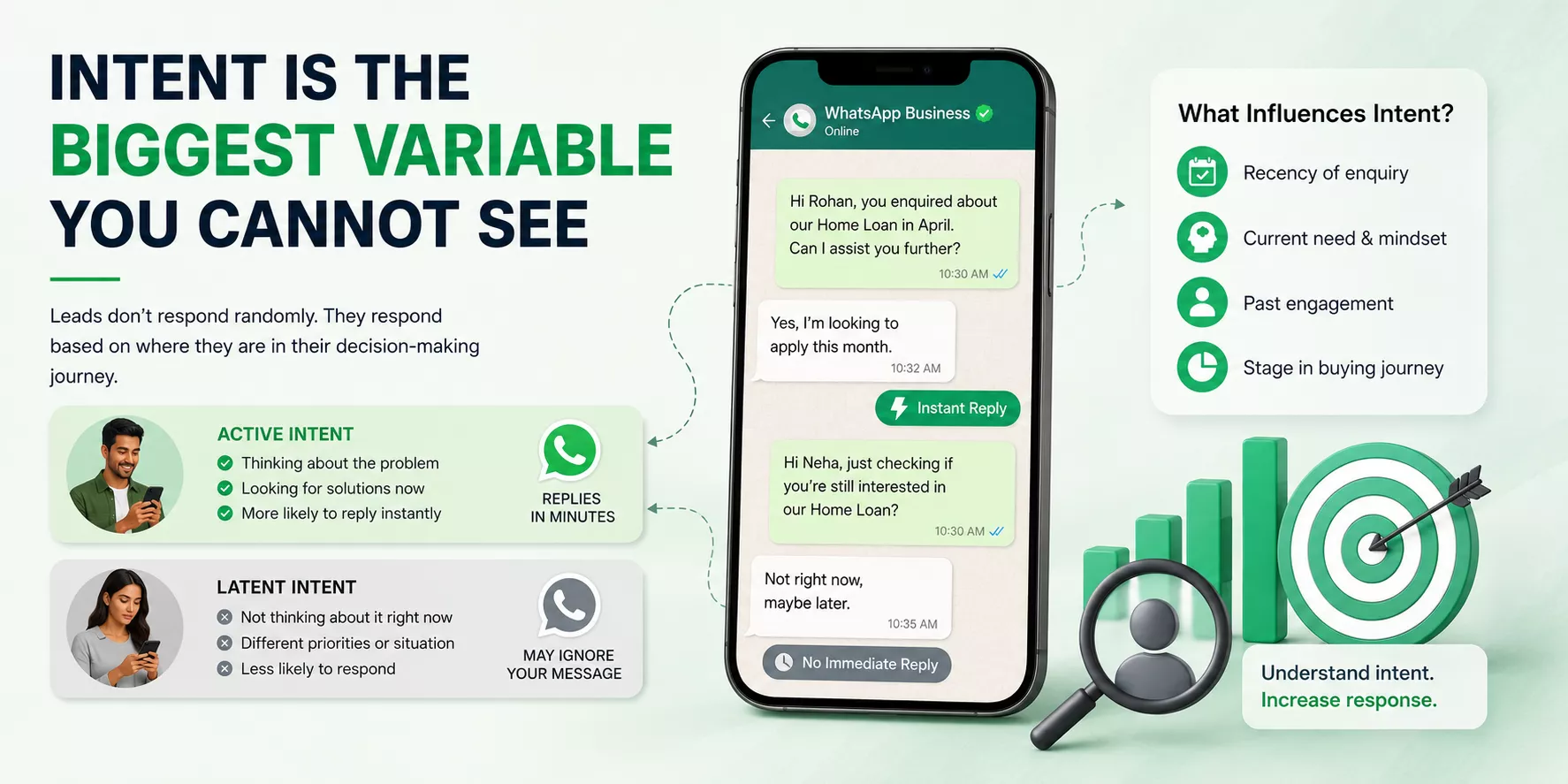
The contact who replies within three minutes is almost always someone in active buying mode. They are currently thinking about the problem your product or service solves. Your message landed at the moment they were already looking for a solution. The message did not create the desire — it connected with a desire that already existed.
The contact who ignores the message is often not uninterested. They are just not thinking about it right now. A person who enquired about a personal loan two months ago and then received a WhatsApp campaign today may be in a completely different financial situation or mindset. The need has not gone away. The timing is off.
This is why contact recency is the strongest predictor of response rate on any WhatsApp campaign. A lead who enquired in the last 30 days is significantly more likely to respond than one from six months ago — not because they are a better contact, but because their intent is more likely to still be active. When you send the same campaign to both without segmenting, the recent enquiries pull your response numbers up while the older ones pull them down, and you end up with an average that tells you nothing useful about either group.
Message Relevance Is What Triggers the Instant Reply
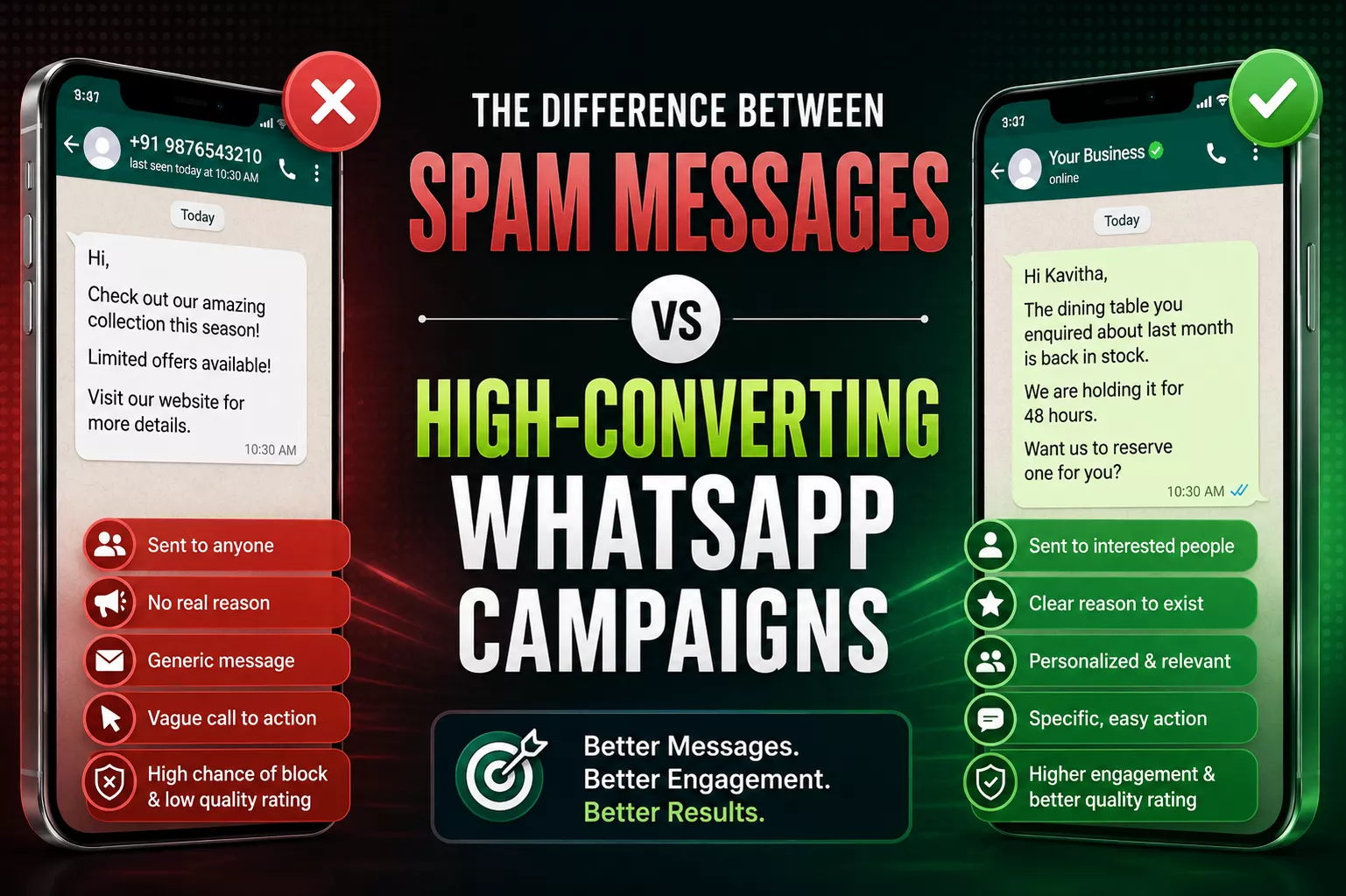
Among contacts who are in active buying mode, whether they reply instantly or delay comes down almost entirely to message relevance. A message that connects directly to something specific about their situation creates urgency. A message that could have been sent to anyone on your list creates nothing.
Compare two messages sent to the same list of people who enquired about a gym membership. Message A: ‘Join our gym this month and get 20 percent off the first three months.’ Message B: ‘Hi Priya, you visited us in March but did not sign up. Our morning batch still has two slots. Want to grab one before it fills?’
Message A is a promotion. Message B is a specific communication about a specific situation. Priya knows the business remembers her. She knows there is genuine scarcity. She has a clear, low-effort next step. The reply rate on Message B will be two to three times higher than Message A to the same list — not because the offer is better but because the message gives an immediate, personal reason to respond.
Dynamic variables in approved templates make this kind of personalisation possible at scale. Name, previous enquiry type, location, last visit date — any contextual detail that shifts the message from generic to specific increases the probability of an instant reply.
Timing Affects Response Rate More Than Most Businesses Realise
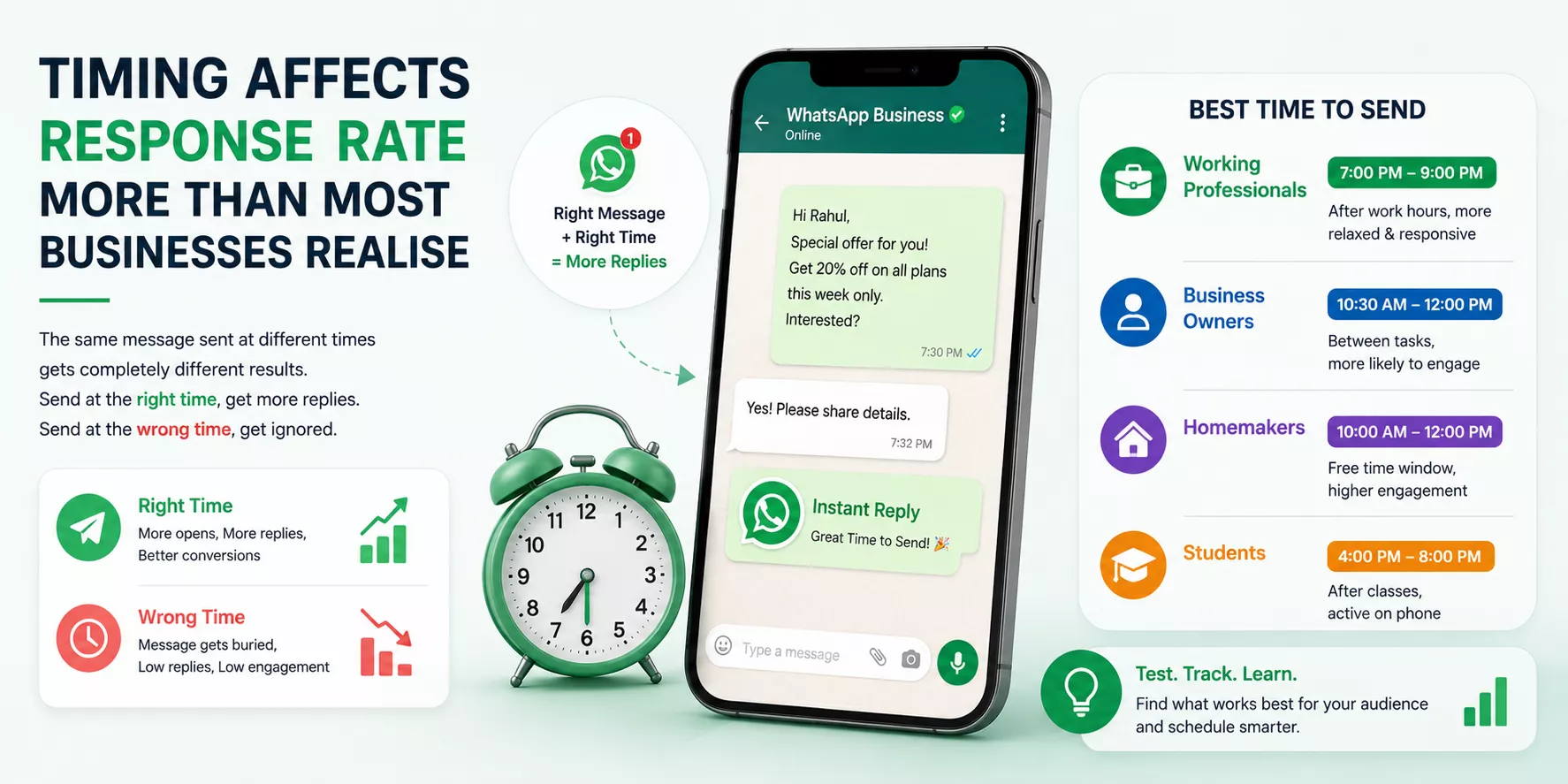
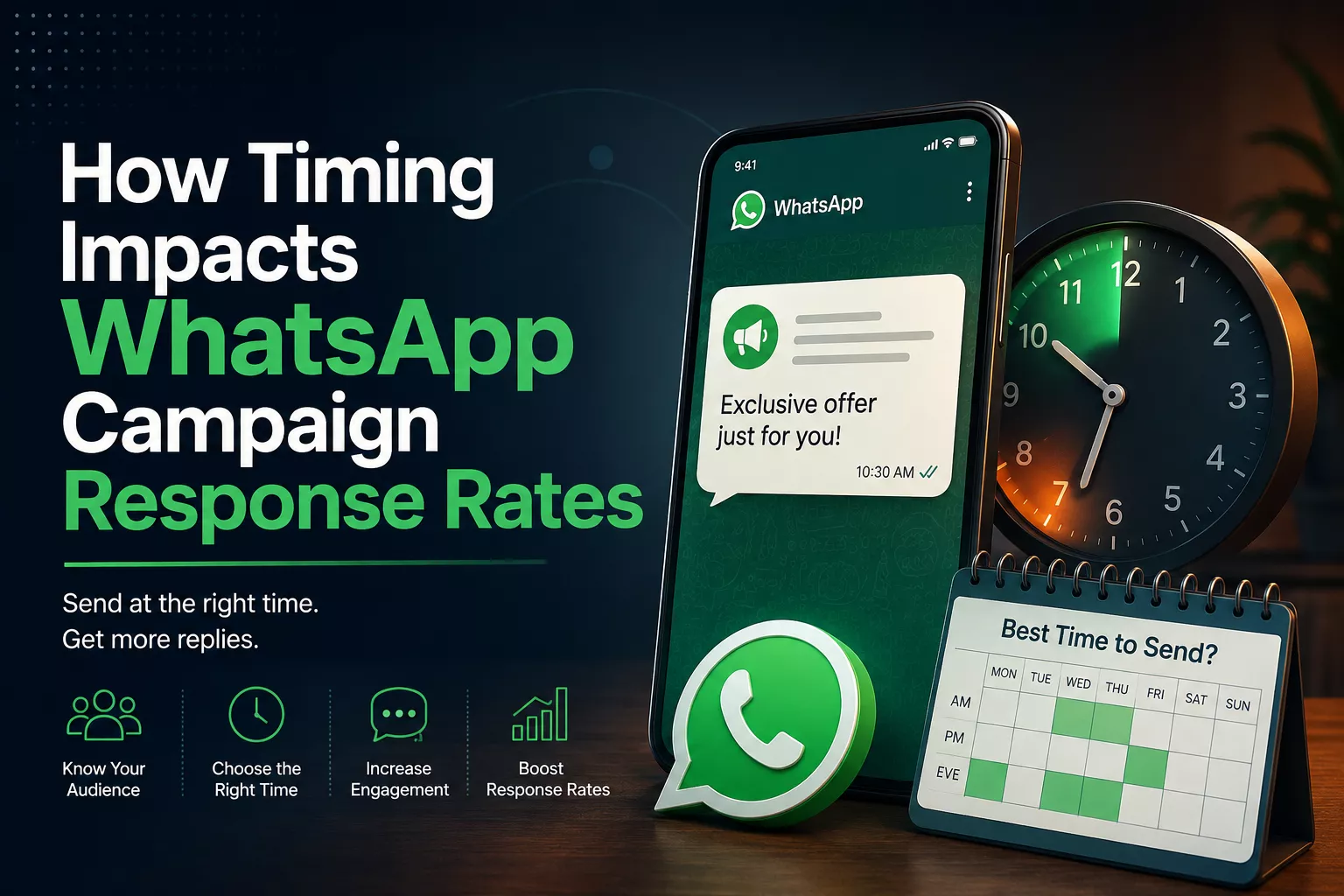
The same message sent at different times produces measurably different response rates. A WhatsApp campaign to working professionals sent at 9:30 AM on a Tuesday will underperform the same campaign sent at 7:30 PM on a Tuesday — because at 9:30 AM, those people are in work mode, opening emails, sitting in meetings, handling the morning. At 7:30 PM, they are winding down, checking their phone at a different pace, and more likely to engage with a message that is not work-related.
The right send time varies by audience. A campaign to business owners works best mid-morning or post-lunch when they are between tasks. A campaign to homemakers gets better responses between 10 AM and 12 PM. A campaign to students performs differently on weekdays versus weekends. None of this is guesswork — it is something you learn from your own campaign data over two or three sends, then use to schedule more precisely.
Day of the week matters too. Monday mornings are notoriously bad across almost every audience because people are mentally clearing the weekend. Friday afternoons are hit or miss because decision-making wind-down starts early. Wednesday and Thursday tend to produce the most consistent response rates — the week is in full swing and there is no mental barrier from the start or end of the week.
The List Quality Gap You Stop Seeing After a While
Businesses that have been running WhatsApp campaigns for six months or more often stop questioning their list quality because response rates have settled into a pattern. The pattern feels normal. It is not always.
A list that was built from strong opt-ins twelve months ago is now twelve months older. Contacts have changed jobs, moved cities, changed phone numbers. Some have already bought from a competitor and are no longer in the market. Others opted in for a specific offer that is long past. The contacts who joined the list through a weak or passive opt-in — a checkbox buried in a form, an imported database from a partner — were never high-intent to begin with.
List hygiene is not glamorous work but it directly determines your response rate ceiling. Removing contacts who have not responded to three consecutive campaigns, re-validating numbers that have had zero activity, and separating recently acquired opt-ins from older ones for separate campaigns — these actions consistently improve response rates because you are no longer averaging engaged contacts against dead weight.
What the Call to Action Is Actually Asking Them to Do
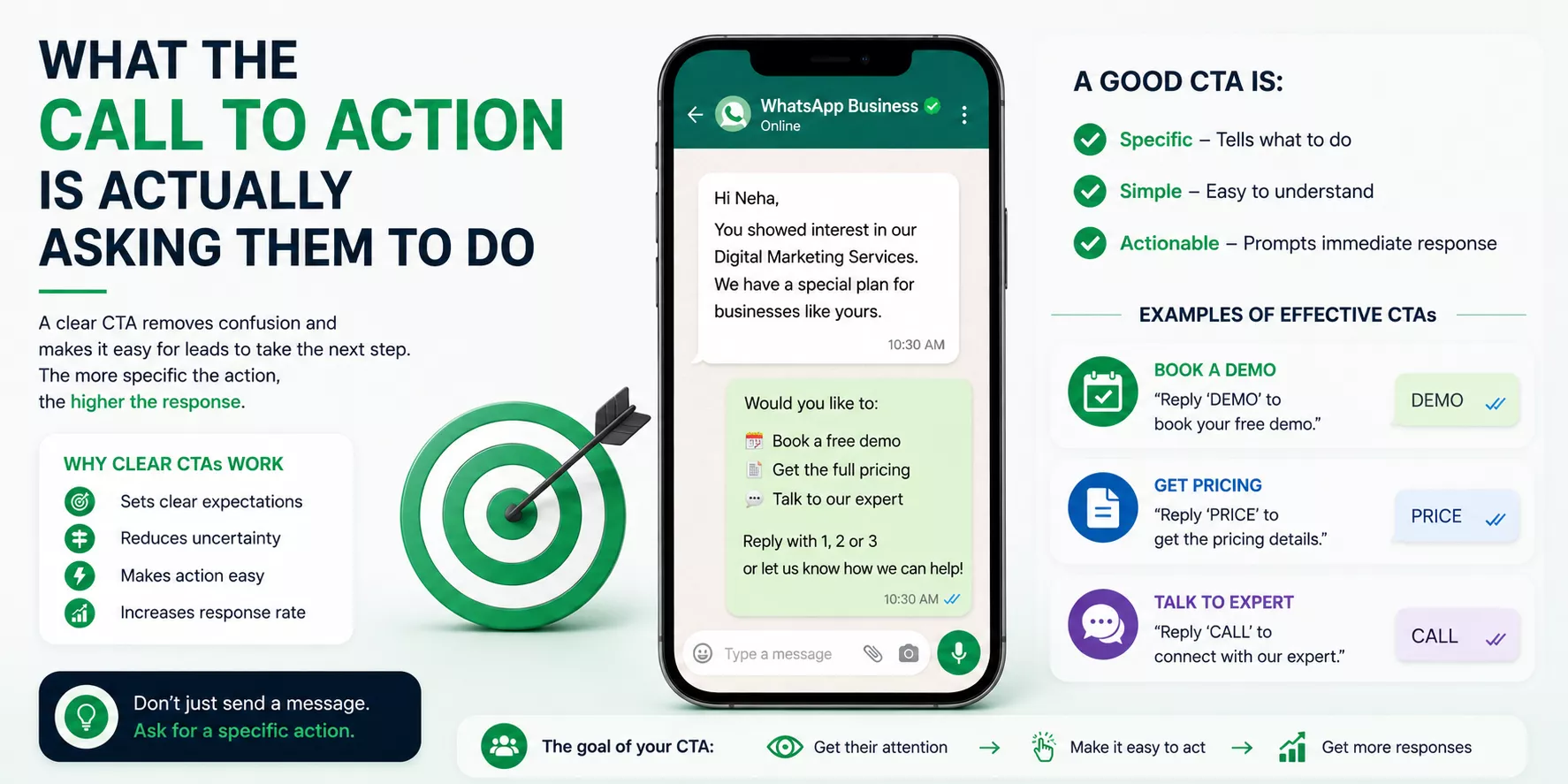
A message can be perfectly timed, highly personalised, and sent to a warm contact — and still get ignored if the call to action creates too much friction. ‘Click here to fill out a form and one of our team members will be in touch’ is a four-step process dressed up as one instruction. The contact reads it, calculates the effort, and decides to do it later. Later never happens.
The calls to action that get instant replies are the ones where the reply itself is the action. ‘Reply YES to book your slot.’ ‘Reply PRICE to get our latest rates.’ ‘Type DEMO and we will set one up this week.’ The barrier is one word. The contact does not leave WhatsApp. They do not open a browser. They do not fill out a form. They just reply, and the automated flow takes it from there.
This is a design principle that applies to every approved template used in a campaign. The message ends with a single, obvious, low-effort action that can be completed inside the conversation. Anything that requires the contact to leave WhatsApp and do something else introduces enough friction to delay or kill the response.
What Happens to the People Who Did Not Reply
Non-response to a single message is not a verdict. It is a data point. The contact saw the message or did not. The timing was wrong or the angle did not connect. This is why a structured follow-up sequence matters more than the initial send.
Automated reply flows can trigger a second message to non-responders after three to five days — not a repeat of the first message, but a different angle. A customer testimonial. A piece of content relevant to their enquiry. A limited-time offer that was not in the original message. The second touchpoint catches the people who were interested but missed the first message or were not in the right headspace when it arrived.
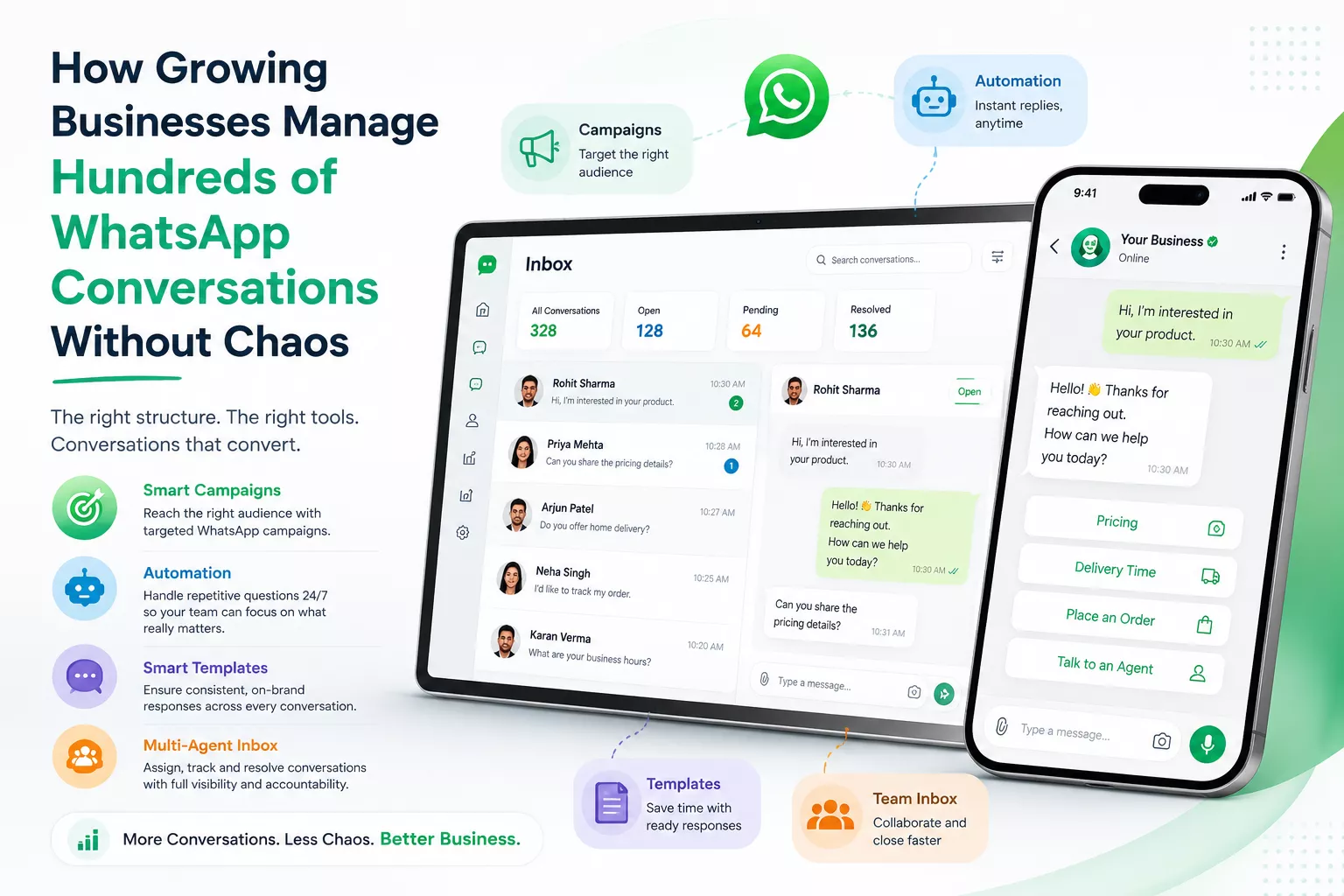
Within the multi-agent inbox, contacts who reply to follow-up sequences — even with a simple question — can be routed directly to an agent who has full visibility of the campaign history and the contact’s non-response pattern. The agent enters the conversation knowing this is someone who took two touches to engage and approaches accordingly — no hard pitch, just a soft, informed check-in.
The leads who reply instantly are not more valuable than the ones who reply on the third attempt. They are just easier to find. The leads who take longer to respond are still there — they just needed a different angle, a better moment, or a second reason to engage. Building a WhatsApp campaign system that accounts for both groups is what separates businesses with a 12 percent response rate from ones running at 35.
At 24/7 Marketing, we build WhatsApp campaigns with the full picture in mind — segmented contact lists, personalised approved templates, automated follow-up sequences for non-responders, and a multi-agent inbox that ensures every reply, whether it comes in five minutes or five days, gets handled with the right context.
Want campaigns that convert more of your list, not just the easy replies? Visit 247marketing.in.