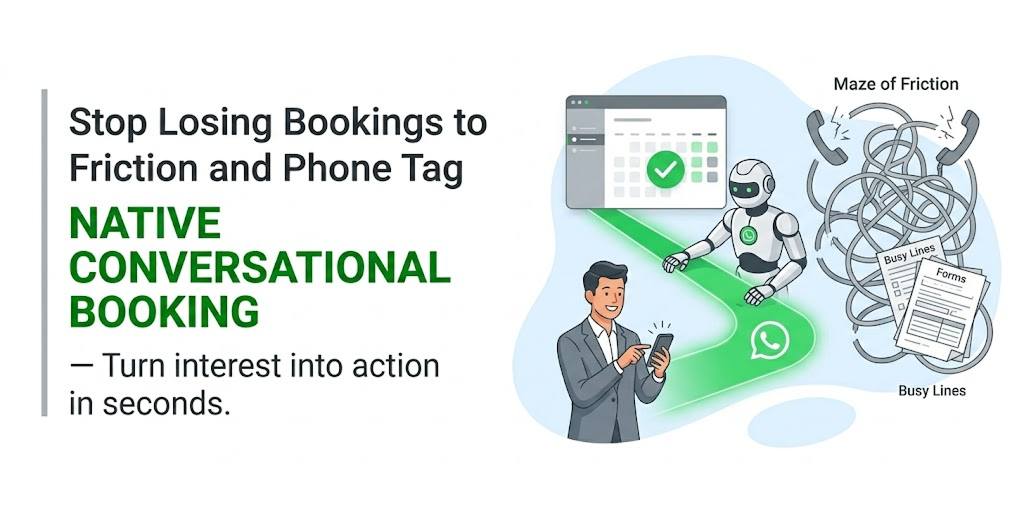
Think about how appointment booking works in most businesses right now. A customer calls. The line is busy. They call again. Someone answers, checks a paper diary or a calendar on screen, goes back and forth on timing, confirms a slot. The customer hangs up and immediately forgets the date. Nobody sent a reminder. They don’t show up. The slot is wasted.
Or the digital version: the customer fills out a contact form, gets an automated email asking them to choose a slot, opens the email two days later, clicks the link, the calendar tool asks them to create an account, they give up. Booking abandoned.
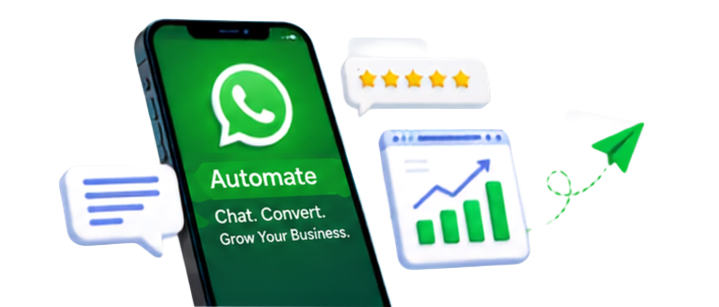
Neither of these processes is broken because businesses are careless. They’re broken because they ask customers to do too many things across too many channels. WhatsApp appointment automation solves this by collapsing the entire booking process into a conversation the customer is already having — on an app already open on their phone.
Why WhatsApp Is the Right Channel for Booking Flows
The average person in India checks WhatsApp dozens of times a day. It’s where they already communicate with family, with service providers, with local shops. When a clinic, a salon, a financial advisor, or a car service centre sends them a booking confirmation on WhatsApp, it lands in the same mental space as a message from someone they trust — not in a promotions tab they open once a week.
The other reason WhatsApp works: the back-and-forth format maps naturally onto how booking actually works. You need a date. They give options. You pick one. They confirm. You get a reminder. That’s a conversation, not a form. WhatsApp handles conversations natively. Everything else — email, web portals, phone calls — is friction added on top of something that should be simple.
What the Automated Booking Flow Actually Looks Like
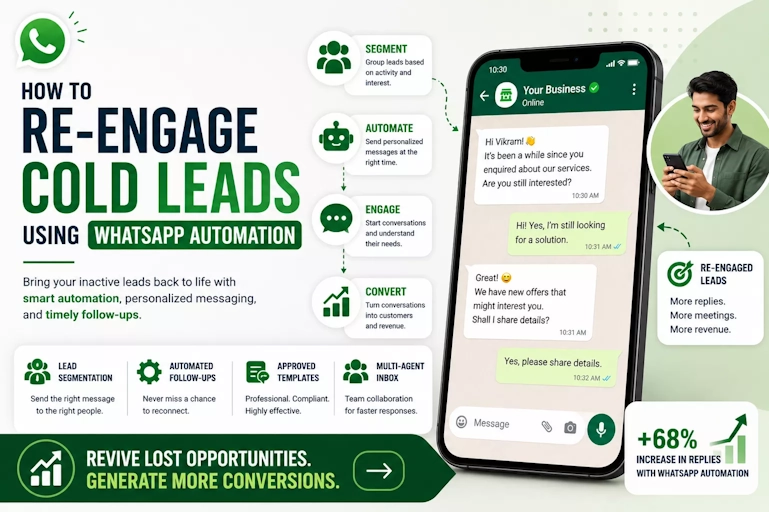
Here’s a concrete example. A dermatology clinic runs a WhatsApp campaign to patients who previously visited for a skin concern. The message: ‘Hi Priya, it’s been 3 months since your last visit. Dr. Mehta has slots available this week — reply BOOK to schedule your follow-up.’
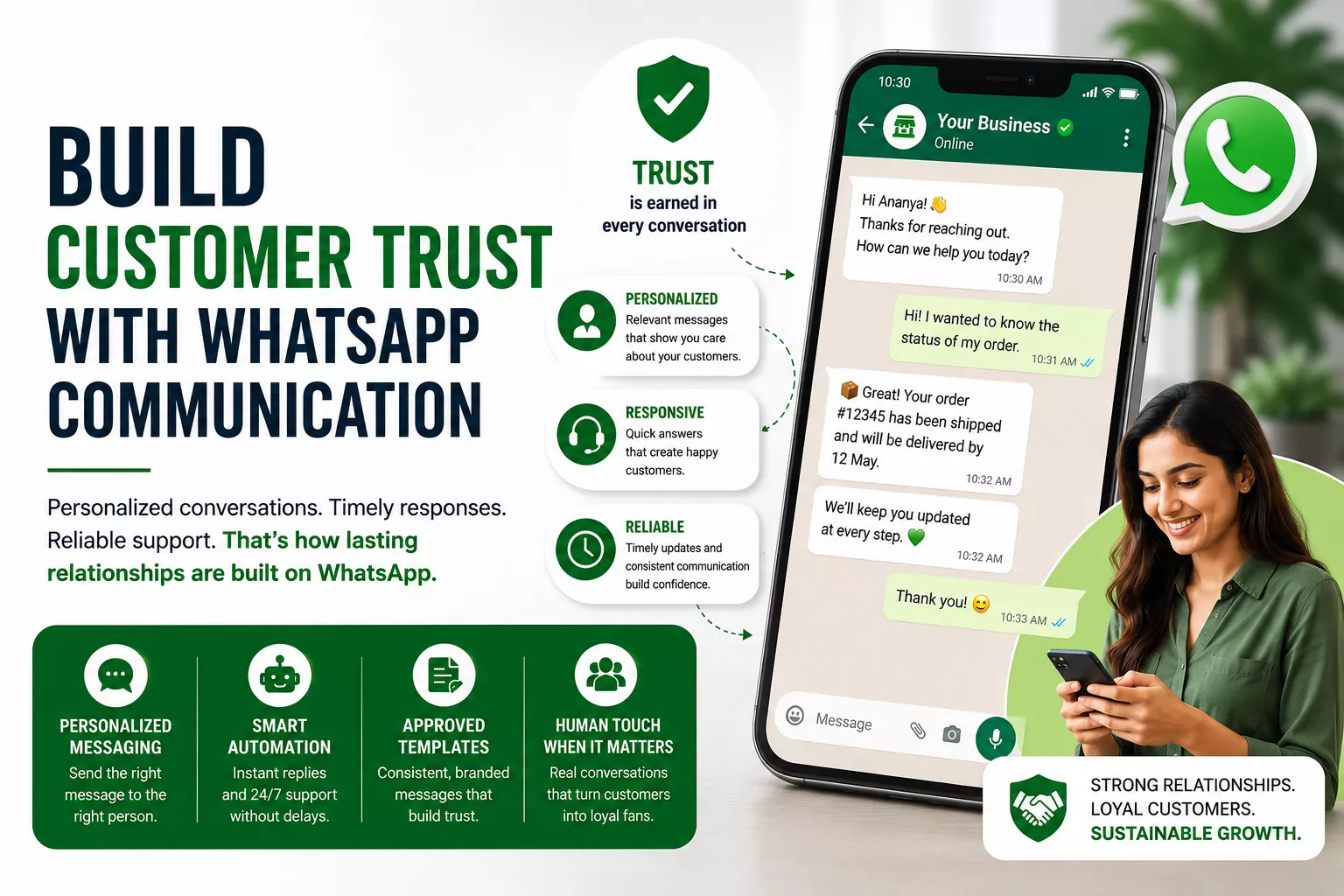
Priya replies BOOK. The automation responds immediately with available dates. She picks Thursday. The bot confirms the time slot, sends a calendar-style summary, and tells her she’ll get a reminder 24 hours before. No receptionist involved. No phone tag. The whole exchange took 90 seconds.
The day before her appointment, an automated WhatsApp message arrives: ‘Reminder: Your appointment with Dr. Mehta is tomorrow, Thursday, at 11 AM. Reply CONFIRM to confirm or RESCHEDULE to change your slot.’ She replies CONFIRM. The clinic’s system updates. No manual follow-up needed.
This same flow works for a salon booking hair treatments, a financial advisor scheduling review calls, a car workshop booking service dates, a gym scheduling personal training sessions. The industry changes. The structure of the flow doesn’t.
The Campaigns That Start the Booking Process
Appointment automation doesn’t only work reactively — waiting for customers to reach out and then guiding them through booking. It works proactively when paired with outbound campaigns.
A physiotherapy clinic can send a campaign to patients who completed a course of treatment six months ago — ‘Time for a check-in? Book a 30-minute review session this week.’ A financial services firm can message leads who downloaded a retirement planning guide — ‘Ready to run the numbers? Book a 20-minute call with our advisor.’ A dental practice can reach patients due for a clean — ‘Your last check-up was in January. We have Thursday morning slots open.’
These campaigns work because they’re sent to opted-in contacts who already have a relationship with the business. The message doesn’t feel random — it feels timely. And because the reply mechanism immediately triggers the booking flow, the gap between interest and action is measured in seconds rather than days.
At 24/7 Marketing, campaign setup for appointment-driven businesses includes the segmentation logic that determines who gets which message when — because a re-engagement campaign sent to the wrong segment at the wrong time doesn’t just fail, it creates opt-outs.
Templates That Handle Every Stage of the Booking Journey
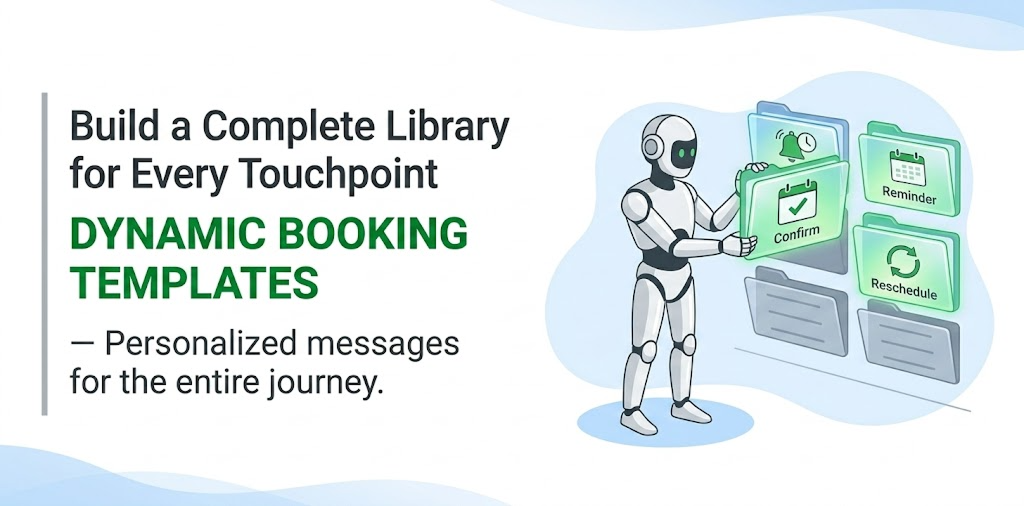
Outbound WhatsApp messages in an automated flow must use Meta-approved templates. For booking flows, this means having a library of templates that covers every touchpoint: the initial booking prompt, the slot confirmation, the 24-hour reminder, the day-of reminder, the reschedule message, the cancellation acknowledgement, and the post-appointment follow-up.
Each of these templates uses dynamic variables so the message feels personal. The patient’s name, the doctor’s name, the date, the time, the location — all injected per send. A template reading ‘Hi {{1}}, your appointment with {{2}} is confirmed for {{3}} at {{4}}. Add it to your calendar here: {{5}}’ becomes a specific, useful confirmation for every single booking without requiring a new template each time.
Getting this template library built and approved before launch matters more than most businesses realise. A booking automation system that’s live but missing the reschedule template, for instance, breaks the flow the moment a customer needs to change their slot. The whole system needs to be complete to work reliably.
Where Human Agents Step In
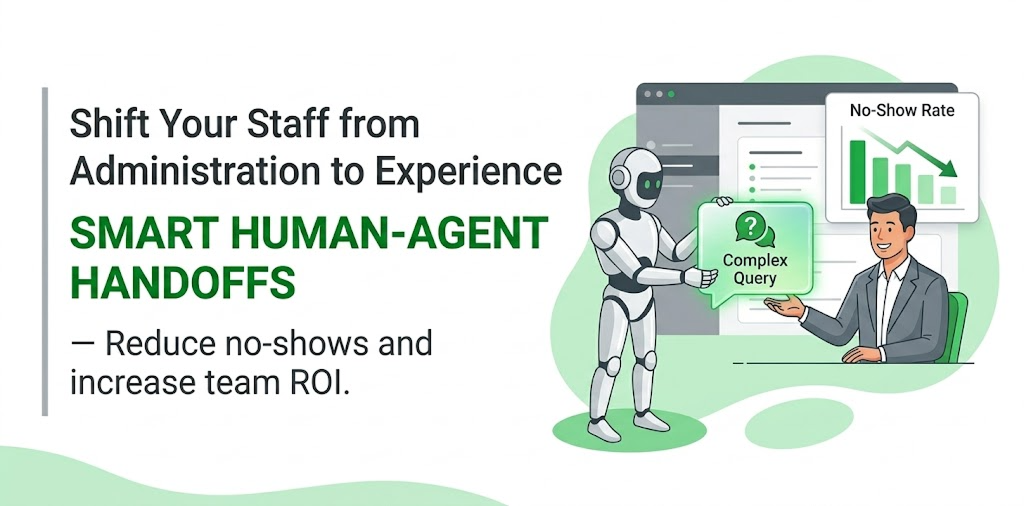
Automation handles the predictable: slot selection, confirmations, reminders, standard reschedules. But not every booking situation is straightforward. A patient with a complex medical history needs to ask whether the doctor will have their previous records. A client wants to book a package rather than a single session and needs to understand pricing first. A customer has a complaint about their last visit before they’ll commit to another.
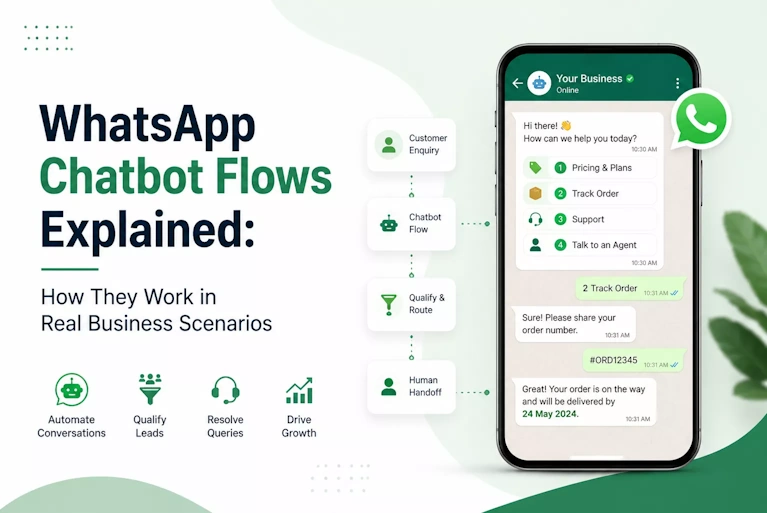
These conversations need a human. The automation should recognise when it’s out of its depth and hand off cleanly — flagging the conversation, preserving the full context of what was already exchanged, and routing it to the right agent in the team inbox.
A multi-agent inbox is where this handoff lands. The agent who picks it up sees everything: which campaign triggered the conversation, what the customer already said, which slot they were considering. They don’t start from scratch. They step in as a continuation, not as a new conversation. For service businesses where appointment quality matters — not just appointment volume — that continuity is what separates a good experience from a frustrating one.
No-Shows Drop. Capacity Fills. Staff Focus Shifts.
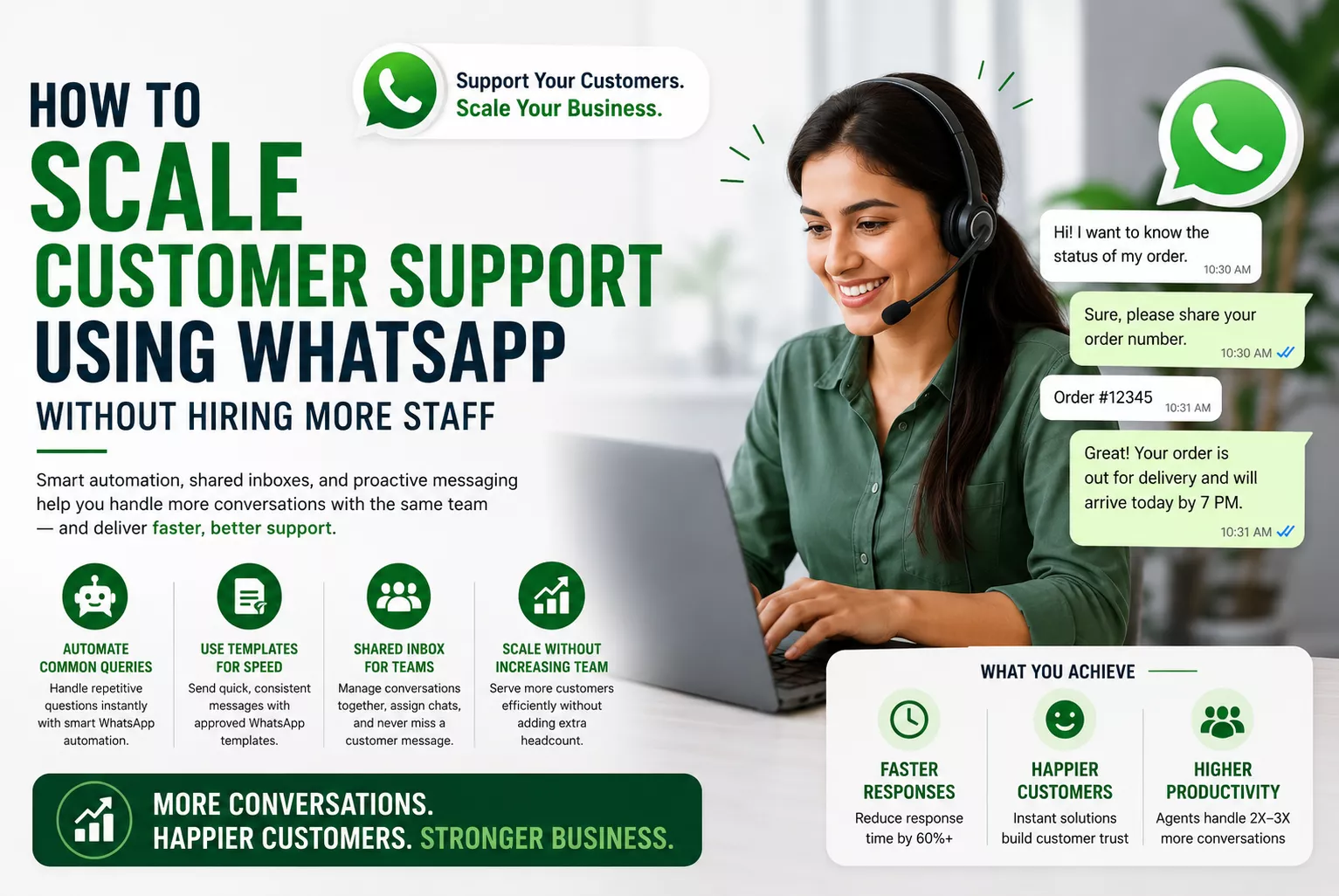
The measurable outcomes for businesses that implement WhatsApp booking automation are consistent across industries. No-show rates drop — because WhatsApp reminders get read and responded to in a way that email reminders don’t. Booking conversion from campaign to confirmed appointment improves — because the path from interest to booking has fewer steps. Staff time on scheduling-related calls and follow-ups drops sharply — because the automation is handling volume that used to require a person.
A front desk team that was spending three hours a day on appointment-related calls can redirect that time to in-person patient experience, or to outbound follow-up calls for higher-complexity cases. The automation doesn’t eliminate the need for people — it changes what those people spend their time doing.
That shift — from repetitive administrative tasks to higher-value work — is the actual return on investment from WhatsApp booking automation. The technology is the infrastructure. What it enables is a business that can serve more customers, more reliably, without proportionally growing the team behind it.
At 24/7 Marketing, we build booking automation systems end to end — the outbound campaigns that prompt bookings, the approved templates that handle every stage of the flow, the automated replies that guide customers through slot selection, and the multi-agent inbox where your team handles the conversations that actually need them.
Ready to stop losing bookings to missed calls and unanswered forms? Visit 247marketing.in.