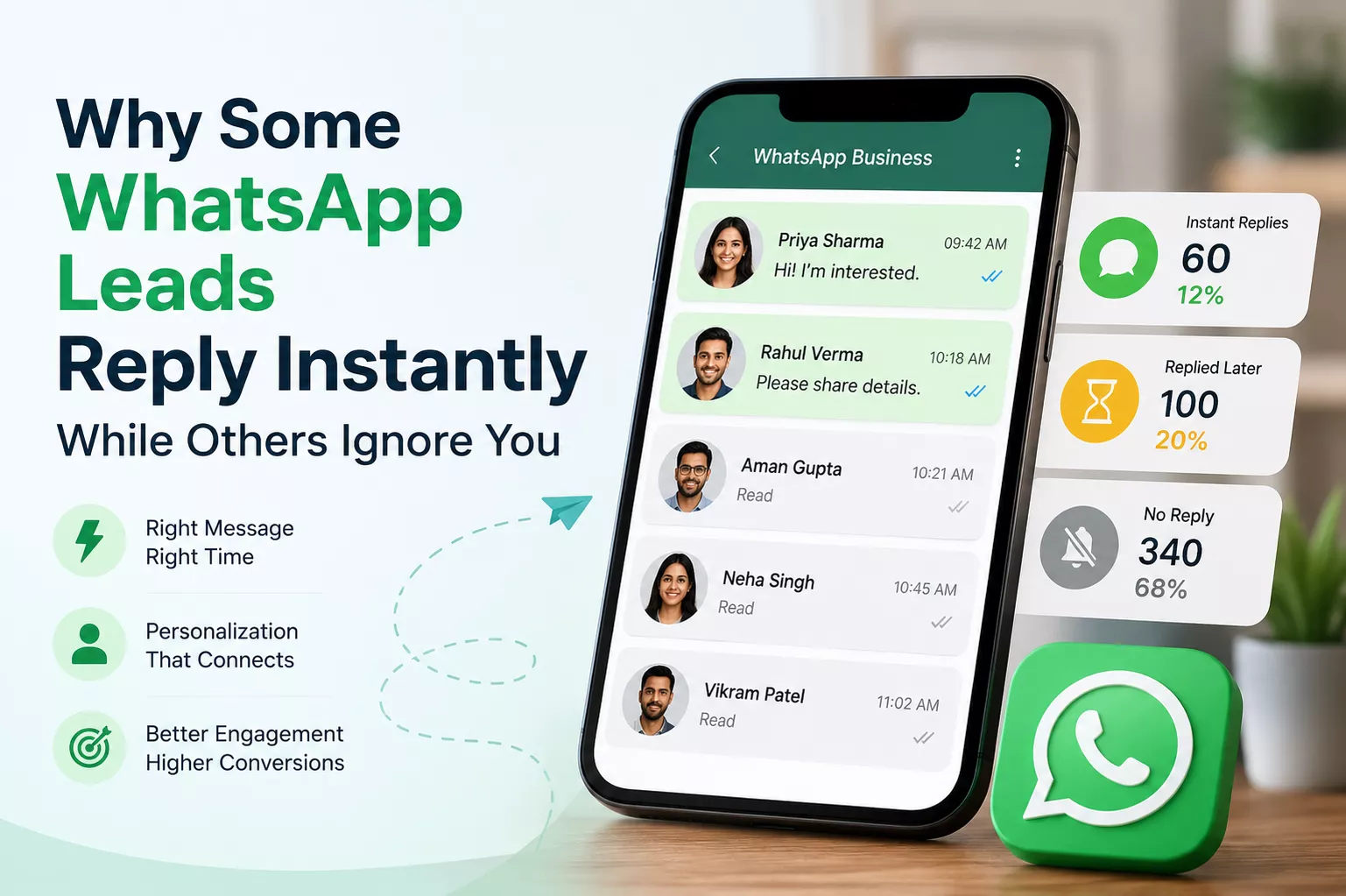
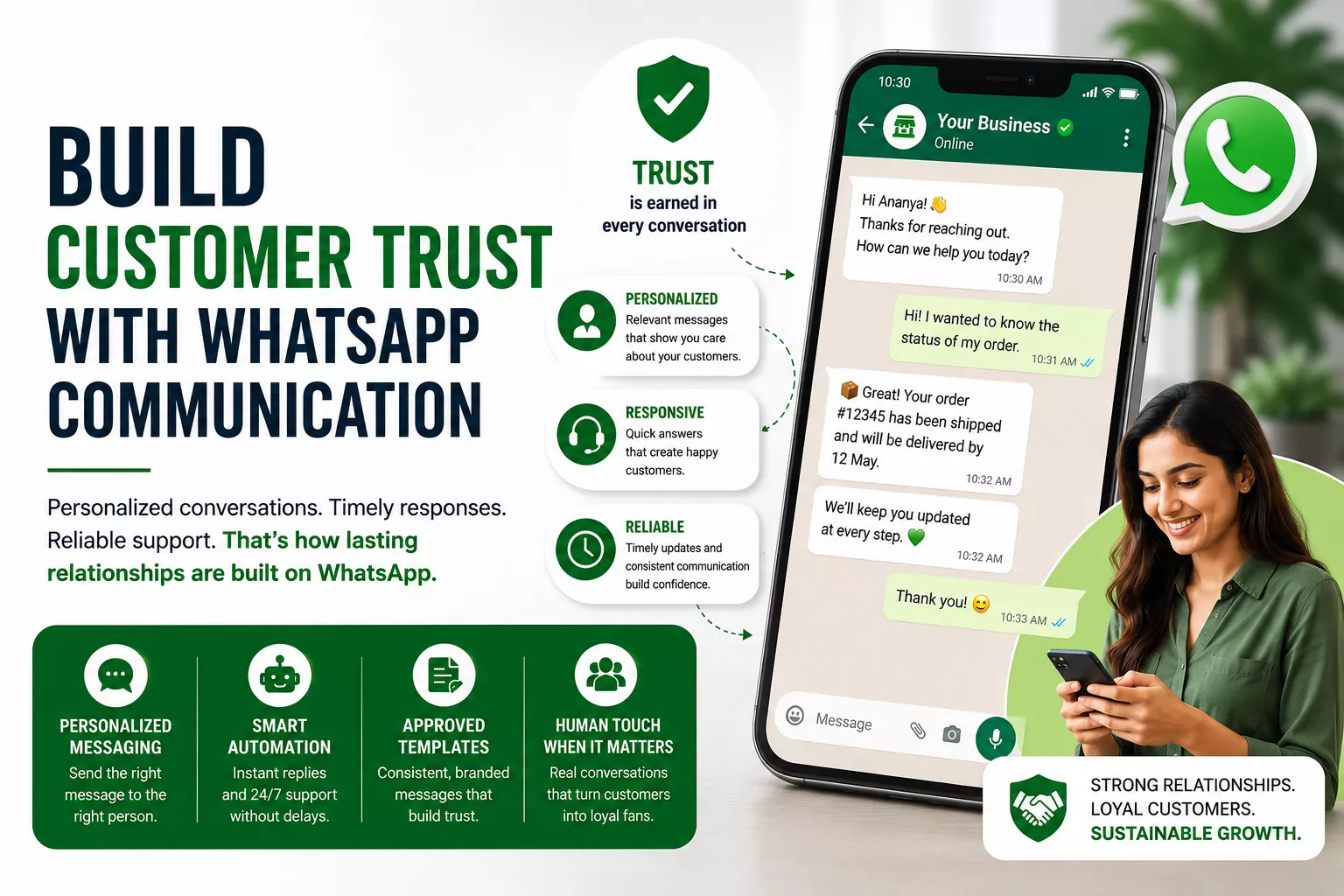
There is a very short window between a customer sending a WhatsApp message and them deciding whether your business is worth dealing with. Research from Harvard Business Review puts it at roughly five minutes for enquiries where a decision is pending. After that, the chances of converting that lead drop by over 80 percent. Not 20 percent. Not half. More than 80 percent.
WhatsApp raises the stakes further because the channel creates a specific expectation. When someone messages a business on WhatsApp, they are not expecting an email-style response turnaround of hours. They are in the mental frame of a conversation — and conversations have near-immediate replies. Every minute of silence stretches that expectation and erodes trust.
Reducing response time on WhatsApp is not about working faster or hiring more people. It is about building a system where the channel itself handles most of the response load, so the delays that frustrate customers stop happening by design rather than by effort.
Why Response Time Directly Translates to Revenue
Most businesses track customer satisfaction through surveys and ratings. Very few track the direct line between response speed and sale outcome — but the data is consistent across industries. In real estate, the agent who responds to a property enquiry within three minutes is ten times more likely to convert it than one who responds in 30 minutes. In insurance, the first advisor to make contact after an online lead comes in closes the majority of deals. In e-commerce, the customer who gets an immediate answer about a product buys at a significantly higher rate than one who gets an answer two hours later.
Response time is not just a support metric. It is a sales metric. And on WhatsApp, where the expectation of speed is baked into the platform itself, slow responses do not just lose sales — they damage the brand relationship with the customer who was ready to buy.
The Three Layers Where Response Time Breaks Down
Before fixing response time, understand where it actually breaks. Most businesses have three distinct failure points.
The first is after-hours lag. A message comes in at 8 PM. No one sees it until 9:30 AM the next day. By then, the customer has moved on. This is the most common gap and the most fixable.
The second is queue congestion during busy periods. A campaign goes out, hundreds of replies come in, and the two people managing the WhatsApp number cannot keep up. Response times stretch from seconds to hours within the same business day.
The third is routing failure. A customer sends a message. It lands in the inbox. No one picks it up because it is unclear whose job it is. The message ages. The customer waits. Eventually someone sees it and has to start a conversation that should have started an hour ago.
Each of these has a specific solution. None of them require hiring more headcount.
Automated Replies: Closing the After-Hours Gap Immediately
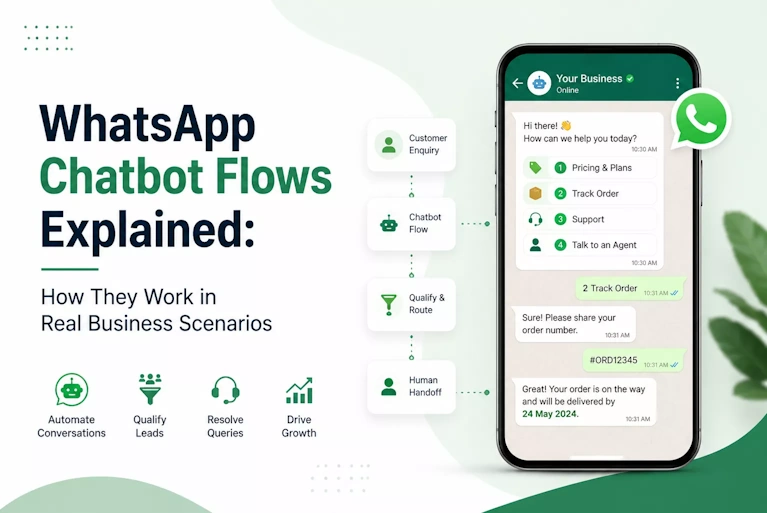
The fastest fix for after-hours lag is automated reply flows that activate the moment a message lands — regardless of what time it arrives. Not a generic away message. A flow that reads the customer’s query, identifies what they are asking, and responds with something actually useful.
A skincare brand receives a message at 10 PM: ‘Does this moisturiser work for oily skin?’ The automated flow detects a product query, responds with the relevant product description, skin type compatibility, and customer review highlights — and offers the option to place an order or speak to someone the next morning. The customer has their answer. They did not wait 13 hours.
For queries the automation cannot fully resolve — a complaint, a complex customisation request, a high-value negotiation — the flow captures the details, sends the customer a confirmation that their query is noted and will be addressed at a specific time, and queues it for the right agent. The customer is not in the dark. They know when to expect a response and what it will cover.
The psychological shift this creates is significant. A customer who gets an immediate, relevant automated response at 10 PM and a personalised human follow-up at 9:30 AM has a completely different experience than one who sends a message and hears nothing until the next working day. The outcome may be the same response time for the human part — but the customer’s perception of your responsiveness is completely different.
Templates That Cut Agent Response Time During Business Hours
Even during business hours, agents slow down when they have to compose responses from scratch. A customer asks about return policy. The agent types it out. Another customer asks the same thing. Typed again. A third. Typed again. This is not a people problem — it is a systems problem.
Approved WhatsApp templates solve this for outbound messages. But the same logic applies to internal quick replies for common queries. When your most frequent customer questions have structured, pre-built responses that agents can send with two taps, response time drops immediately — not because agents are working faster, but because the repetitive typing is gone.
Map your ten most common customer queries. Build a response for each that is accurate, complete, and on-brand. Every agent uses the same response. It goes out in seconds instead of minutes. The customer gets a consistent, reliable answer faster than any individual typing could deliver.
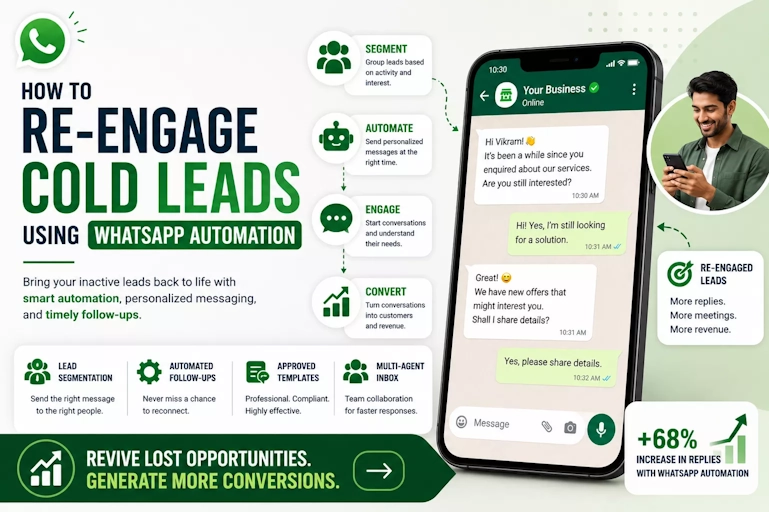
For campaign follow-ups specifically, having approved outbound templates ready means a customer who responds to a campaign at any point in the conversation cycle gets the right next message immediately — not after an agent manually finds the thread, reads the history, and types a reply.
Multi-Agent Inbox: The Fix for Queue Congestion and Routing Failure
The second and third failure points — queue congestion and routing failure — both trace back to the same structural problem: one WhatsApp number being managed as if it were one person’s responsibility.
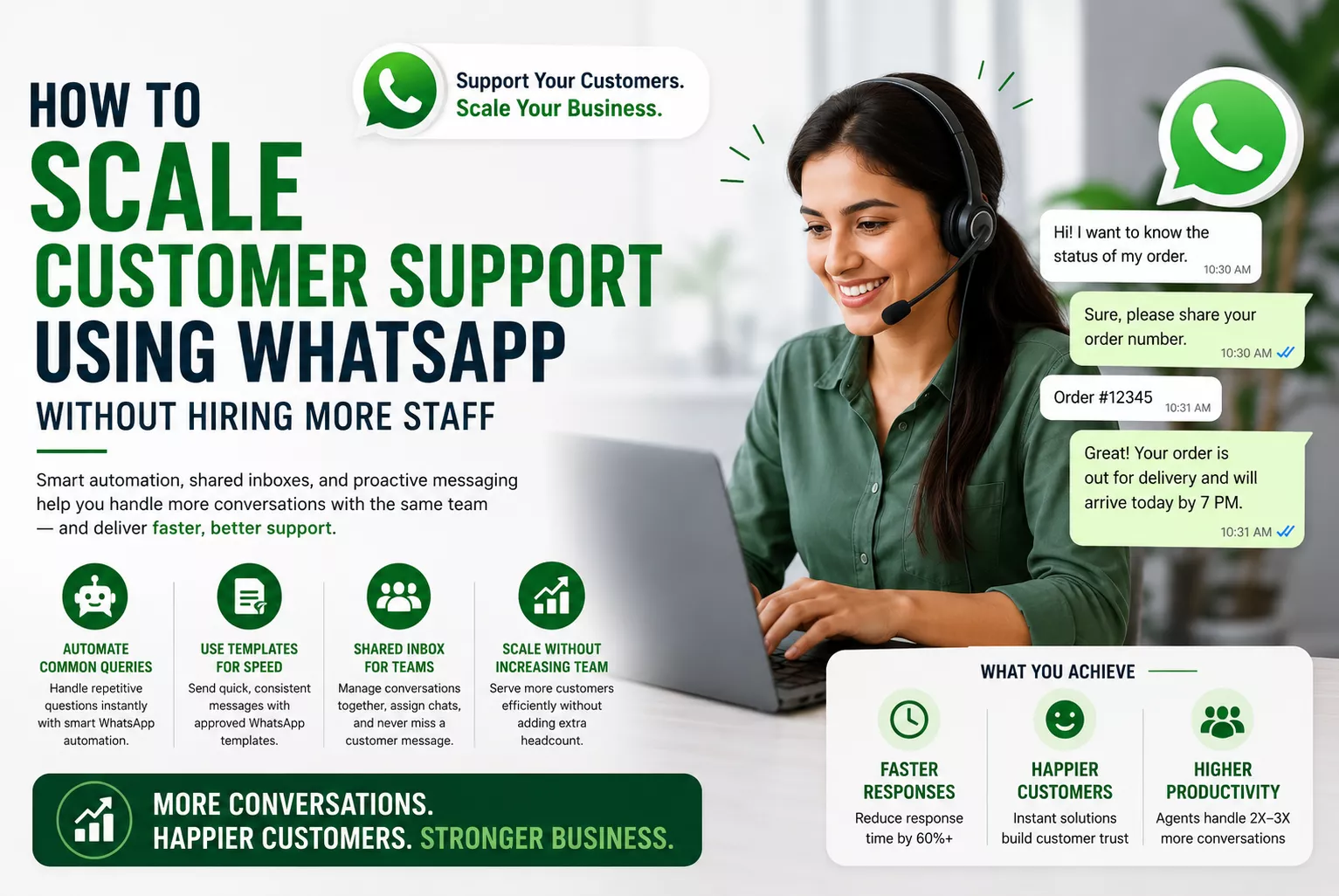
A multi-agent inbox replaces that single-point-of-failure structure with a shared system where every incoming conversation is visible to the whole team, assigned to a specific agent, tracked through its lifecycle, and resolved with accountability. No message sits unclaimed. No agent is blindly overloaded while another has capacity.
Routing rules make this precise. After a campaign goes out, replies route to the sales team. Support queries route to the support team. Billing issues go to finance. High-value or flagged conversations route to senior agents. The message lands with the right person immediately — not after being passed around manually.
Supervisors can see the inbox in real time. If one agent has 20 open conversations and another has 4, conversations can be redistributed in seconds. If a conversation has been sitting for more than a defined threshold — say, eight minutes — it gets flagged automatically. Nothing ages silently in the queue.
The result is not just faster individual responses. It is a consistent, measurable average response time across the entire team — which is what customer satisfaction actually tracks. A customer who reaches your business twice should get the same speed and quality both times, regardless of which agent handled it. The inbox structure makes that possible.
Measuring What Actually Matters
Once the system is running, track three numbers: first response time, resolution time, and re-contact rate. First response time tells you how long customers wait before they hear anything. Resolution time tells you how long it takes to fully close a query. Re-contact rate tells you how often customers come back with the same issue — a high re-contact rate means first responses are not actually resolving the query.
Most businesses that implement proper WhatsApp automation and a multi-agent inbox see first response time drop by 70 to 90 percent within the first month. Not because their team suddenly got faster. Because the system stopped making them the bottleneck.
Customer satisfaction does not improve because you care more. It improves because the experience you deliver matches the expectation the customer brought to the channel. On WhatsApp, that expectation is speed. Build the system that delivers it.
At 24/7 Marketing, we set up the full stack — automated reply flows, approved templates, campaign infrastructure, and multi-agent inbox — so that response time stops being a problem your team manages manually and starts being a standard your system maintains automatically.
Ready to cut response times and keep customers coming back? Visit 247marketing.in.