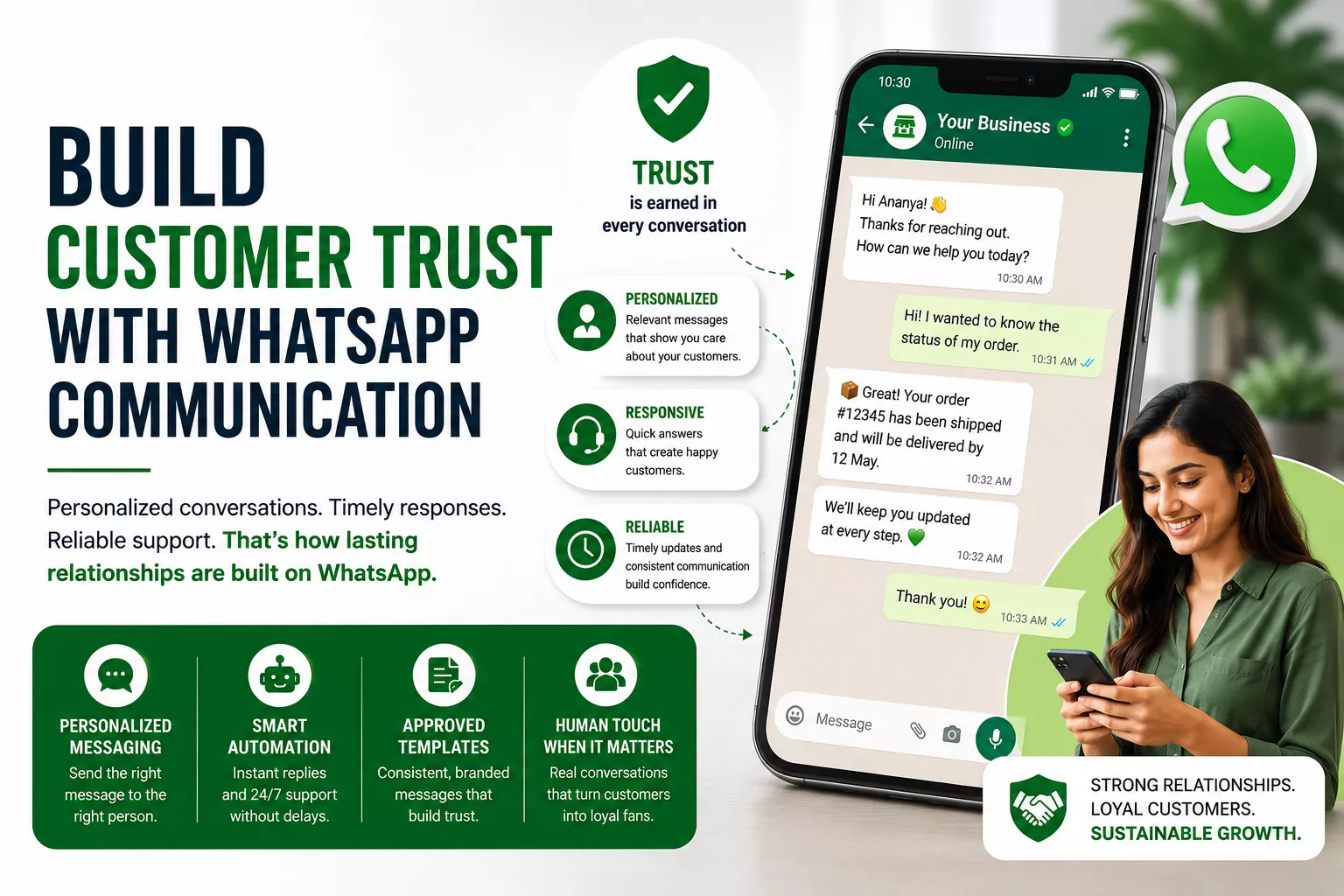
A customer messages your business at 11:30 PM asking whether a product is in stock. Your team is offline. The message sits there unanswered. By morning, that customer has already bought from a competitor who got back to them within minutes — not because the competitor had night-shift staff, but because they had smart auto-replies running on WhatsApp.
This scenario plays out thousands of times a day across Indian businesses. Not because owners don’t care about customer response — most do — but because no team can realistically be available every hour of every day. The question isn’t whether you need auto-replies. It’s whether yours are actually smart, or just a dead-end message that says ‘We’ll get back to you soon.’
There’s a significant difference between a generic away message and a properly built auto-reply system. One buys you time. The other actually resolves queries, qualifies leads, and keeps conversations moving — without anyone on your team being awake.
The Problem With 'We'll Get Back to You
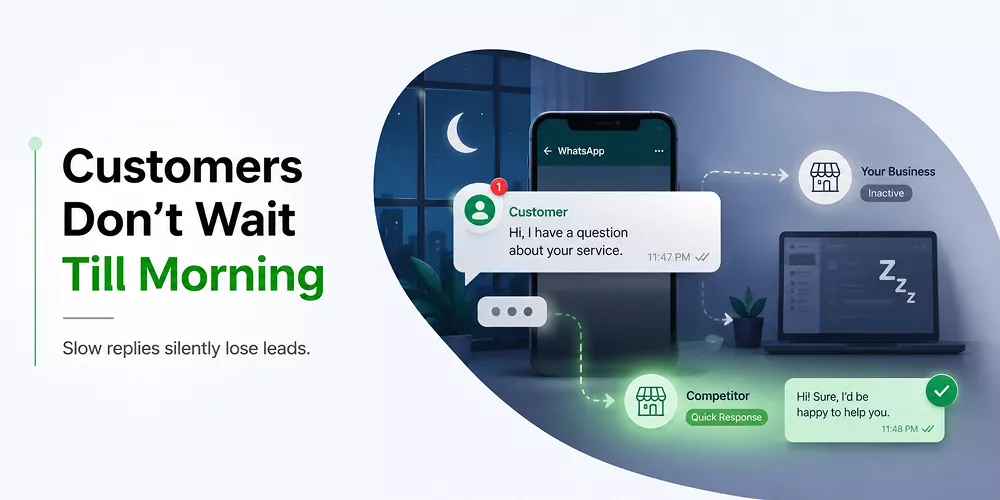
The standard WhatsApp Business away message is better than nothing. Barely. It tells the customer their message was received. It sets no expectations about when they’ll hear back. It resolves nothing. And for a customer in decision-making mode — comparing options, price-checking, ready to buy — it’s often enough friction to send them elsewhere.
The problem is structural. A single away message can’t differentiate between a customer asking for pricing, one tracking an order, one wanting to cancel, and one ready to book. They all get the same response, which means none of them get a useful one.
Smart auto-replies work differently. They read what the customer sent, identify the intent, and respond with something relevant — not a holding message, but an actual answer, or a structured follow-up that gets closer to one.
What Smart Actually Means in This Context
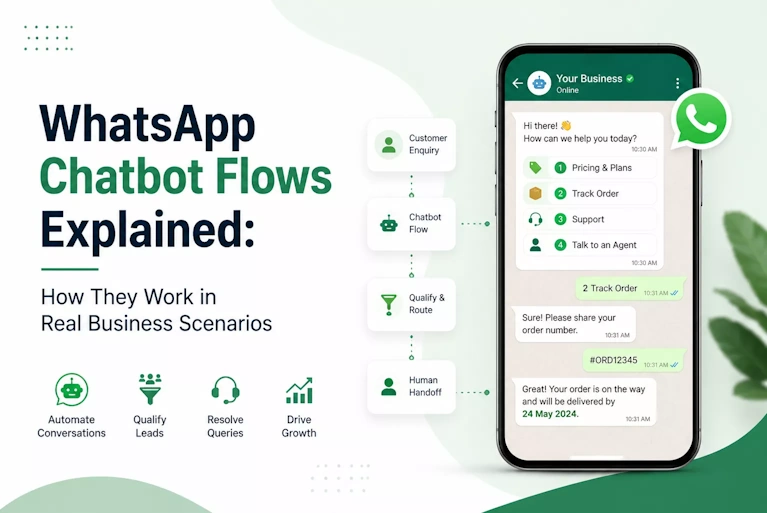
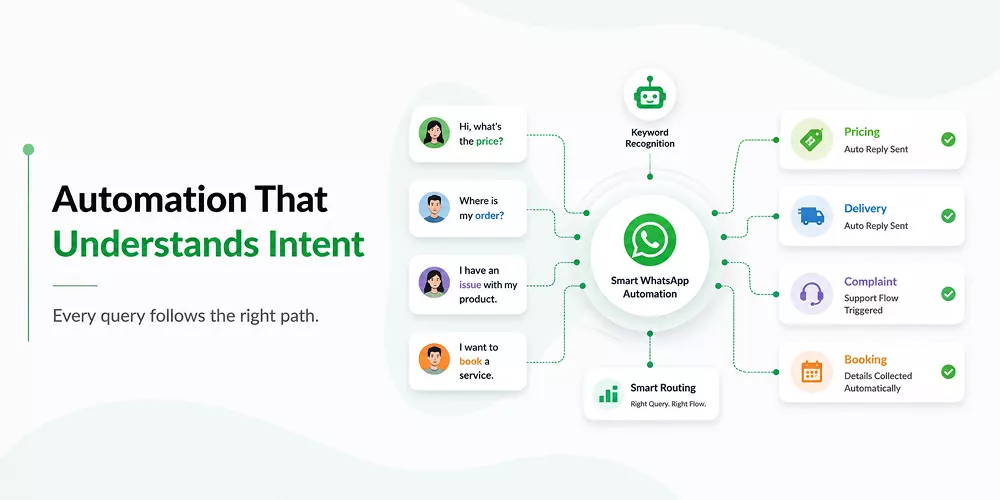
Smart auto-replies are built on keyword recognition and conversation flows. When a customer sends a message containing certain words or phrases, the system identifies the category of query and routes to the right response. This isn’t magic — it’s deliberate design.
A furniture retailer sets up the following: a customer types ‘price’ or ‘cost’ or ‘how much’ — they get an automated response with a link to the catalogue and an option to speak with someone for a custom quote. They type ‘delivery’ or ‘shipping’ — they get the standard delivery timeline and an option to track an existing order. They type ‘complaint’ or ‘damaged’ or ‘wrong item’ — the flow captures their order number and flags the conversation as urgent for a human agent to pick up first thing in the morning.
Each of those paths resolves something or moves the conversation meaningfully forward. The customer who asked about price at midnight has their answer before they wake up the next day. The customer with a damaged item knows their complaint is registered and will be handled — they’re not left wondering if anyone saw their message.
Building Flows That Don't Dead-End
The most common failure in auto-reply systems isn’t the first response — it’s what happens two messages in. The customer replies to the auto-reply. Now what? If the system has no logic for the follow-up, the conversation dies. The customer is back to waiting.
Well-designed flows anticipate the likely follow-up responses and build paths for them. After sending a pricing response, the flow offers two options: ‘Reply 1 to speak with our team’ or ‘Reply 2 to see more products.’ Either reply triggers the next appropriate step. The conversation has structure. The customer always has a clear next action.
For businesses in services — coaching, financial planning, healthcare, legal — lead qualification flows work this way. A prospect reaches out after seeing an ad. The auto-reply asks what they’re looking for. Based on their response, the flow either provides information directly or captures their details for a callback. By the time a human agent looks at the conversation in the morning, they know the prospect’s requirement, budget range, and preferred time to talk.
That’s not just automation — it’s a pre-qualified lead sitting in the queue, ready for a productive conversation rather than a cold one.
The Templates Behind the Automation
On the WhatsApp Business API, outbound messages in automated flows — messages your system sends to initiate or continue a conversation — require Meta-approved templates. This includes follow-up messages sent after a customer’s 24-hour conversation window closes.
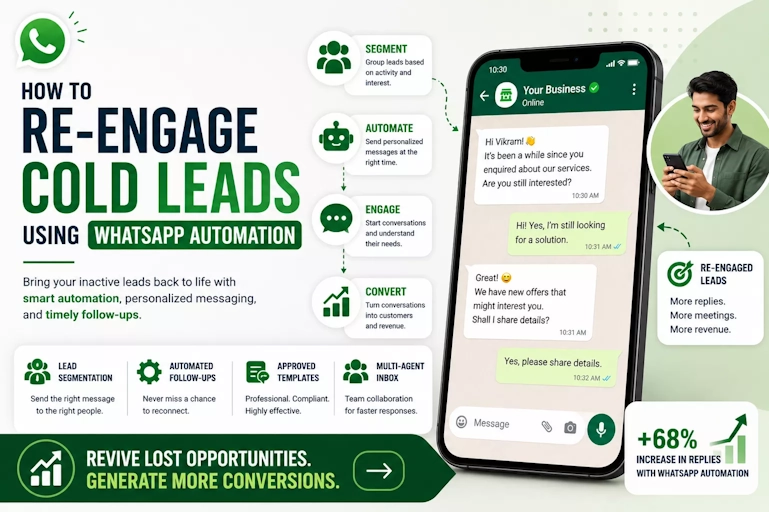
For auto-reply systems, the template library needs to cover more than just campaigns. It includes the re-engagement messages that bring a conversation back after a gap — ‘Hi Rahul, you reached out about our services earlier. We’d love to help. Are you still looking?’ It includes follow-up confirmations after a flow collects information — ‘Thanks for sharing your details. Our team will call you between 10 AM and 12 PM tomorrow.’ It includes escalation messages when a query is being passed to a human — ‘Your query has been noted. A team member will respond to you within the next 2 hours.’
Each of these templates needs to be drafted carefully, categorised correctly, and approved before the system can use them. At 24/7 Marketing, this is handled as part of the setup — because a gap in the template library creates a gap in the flow, and gaps in the flow mean dropped conversations.
When to Hand Off to a Human -- and How to Do It Right
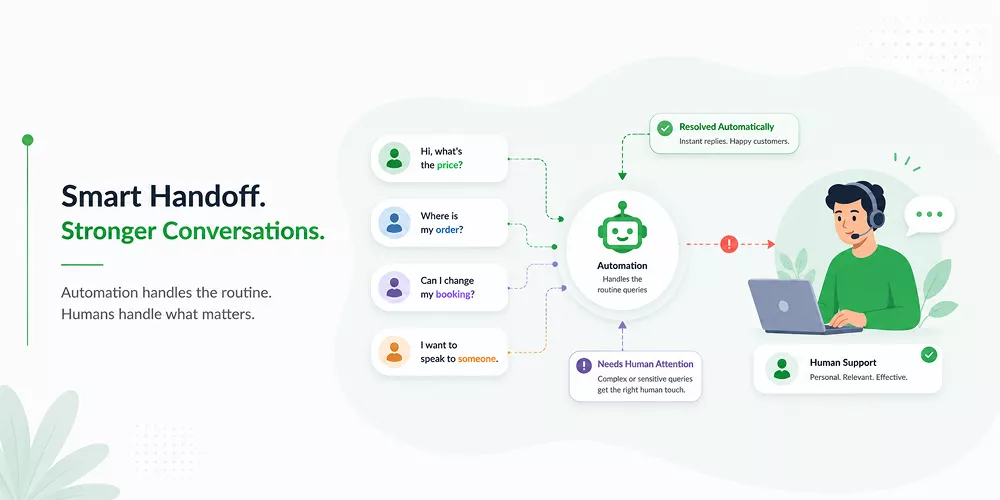
The goal of auto-replies is not to replace human agents entirely. It’s to handle the volume that doesn’t need them — so that when humans do get involved, they’re spending time on conversations that matter.
There are clear signals that a conversation needs a human: the customer has expressed frustration, the query is complex or unusual, the customer has asked the same question twice and the auto-reply didn’t satisfy them, or the conversation involves a decision with significant value. A smart auto-reply system is designed to recognise these signals and escalate accordingly — not keep sending automated responses to someone who clearly needs a person.
The handoff quality depends entirely on the inbox structure. In a multi-agent inbox, escalated conversations land in a queue that agents can see and action by priority. The agent picks up the thread with full history — they can see every auto-reply the customer received, every response the customer sent, and any data the flow captured. They don’t ask the customer to start over. They step in with context and move forward.
This is where the pieces of a properly built WhatsApp system connect. Campaigns bring in prospects. Templates handle outbound consistency. Auto-replies manage inbound volume around the clock. The multi-agent inbox catches what automation can’t handle. Each part depends on the others to function well.
What 24/7 Coverage Actually Costs Without Automation
Staffing for genuine 24/7 support requires shifts, additional headcount, and management overhead that most businesses — especially mid-sized ones — can’t absorb. The maths don’t work. So they compromise: they cover business hours and hope after-hours queries wait. Some do. Most don’t.
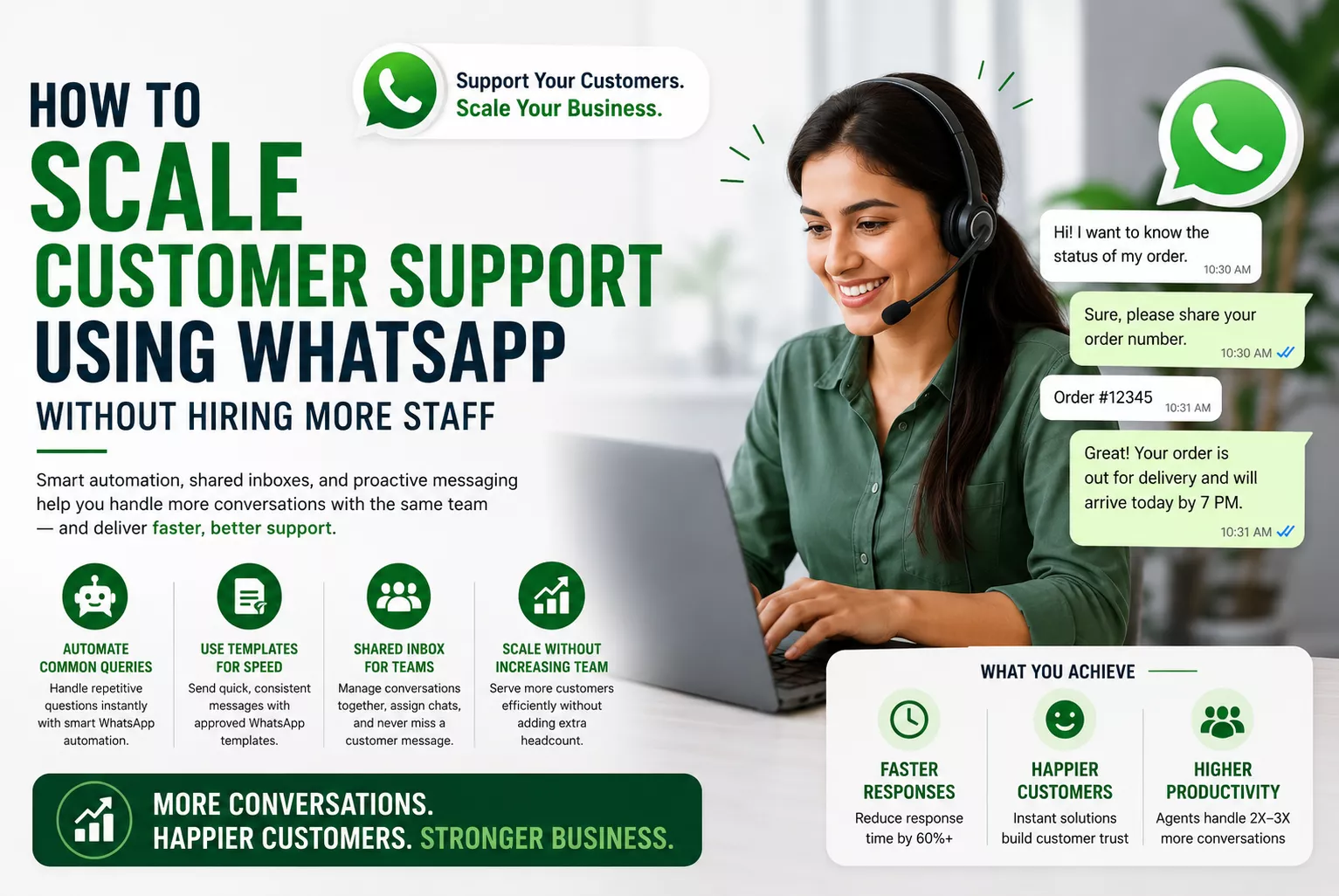
A properly built auto-reply system on WhatsApp covers the after-hours load at a fraction of the cost of a night-shift hire. It doesn’t get tired, doesn’t take Sundays off, doesn’t forget to follow up. For queries it can resolve, it resolves them immediately. For queries that need a human, it captures the details and queues them so the morning shift opens with organised, context-rich conversations instead of a pile of unanswered messages.
The businesses that set this up properly stop thinking about after-hours queries as a problem they can’t solve. They become a competitive advantage — because the business that responds at midnight builds trust that the one with a 9-to-6 WhatsApp window simply can’t.
At 24/7 Marketing, we design and build these auto-reply systems as part of a complete WhatsApp setup — flows that handle the volume, templates that keep everything compliant, and a multi-agent inbox that ensures nothing meaningful gets lost once the team comes back online.
Stop leaving after-hours queries unanswered. Build a smarter WhatsApp system at 247marketing.in.