The word chatbot has accumulated a lot of baggage. Most people picture something that misunderstands questions, loops endlessly, and eventually forces you to find a phone number. That association is not unfair — a badly built chatbot is genuinely worse than no chatbot at all. It wastes the customer’s time and signals that the business does not care enough to build something that works.
WhatsApp chatbot flows, built properly, are a different thing entirely. They are not trying to pass as human. They are not pretending to understand open-ended questions they were not designed for. They are structured conversation paths — designed around the specific things your customers actually say and need — that move people from a question to an answer, or from an enquiry to a qualified lead, without friction and without a human needing to be present.
The key to understanding how they work is to stop thinking about them as artificial intelligence and start thinking about them as decision trees with good UX. Here is what that looks like across real business situations.
What a Flow Actually Is
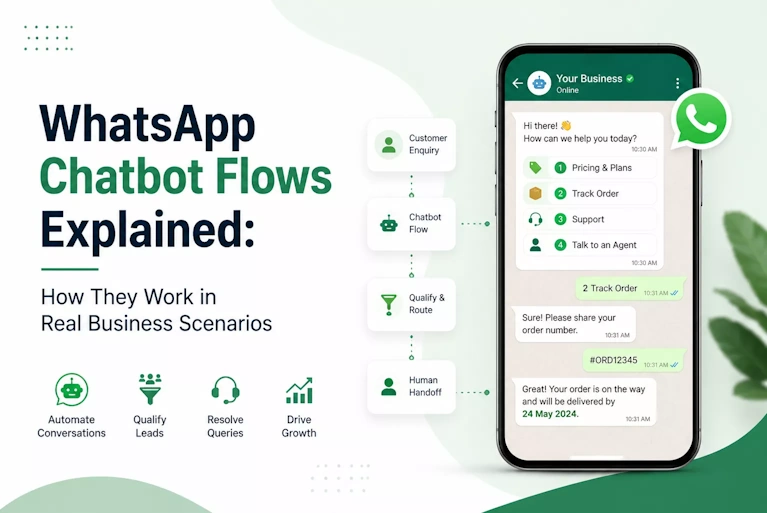
A WhatsApp chatbot flow starts with a trigger — either an inbound message from a customer or an outbound campaign message that invites a reply. From that trigger, the flow follows a logic path based on what the customer sends next.
The simplest version: a customer messages your business number. The flow sends a welcome message with numbered options — 1 for pricing, 2 for support, 3 for booking, 4 to speak with someone. The customer replies with a number. The flow routes them to the appropriate branch. Each branch has its own set of responses and options. The conversation progresses without an agent doing anything.
More sophisticated flows use keyword detection rather than numbered menus. The customer types ‘refund’ — the flow identifies the intent and enters the refund path. They type ‘not working’ — the flow enters a product support path and begins asking diagnostic questions. The customer does not need to pick from a menu. They write naturally and the flow handles the routing.
Every flow has a fallback for messages it cannot interpret — typically something like ‘I did not quite catch that, here are the options I can help with.’ And every well-designed flow has a clear path to a human agent when the conversation reaches a point automation cannot serve.
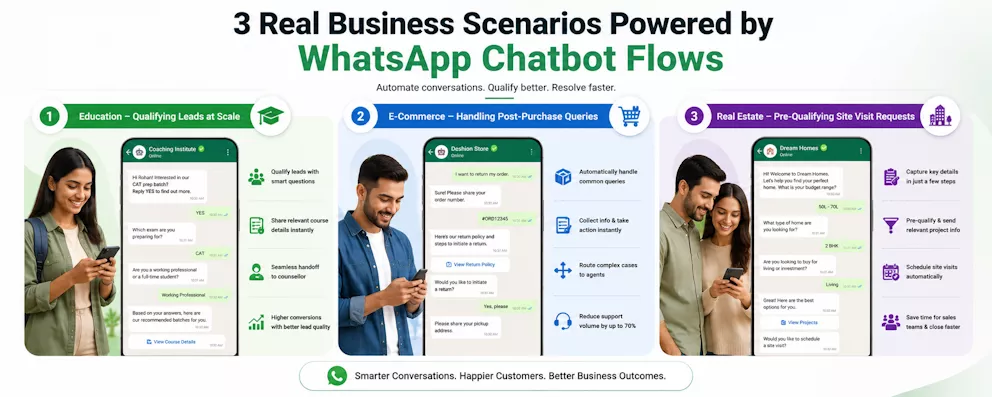
Scenario One: Education Business Qualifying Leads at Scale
A coaching institute runs a WhatsApp campaign targeting students who downloaded a course brochure. The message: ‘Hi Rohan, interested in our upcoming CAT prep batch? Reply YES to find out more.’ Rohan replies YES.
The flow takes over. It asks Rohan which exam he is preparing for. He replies CAT. The flow asks whether he is a working professional or a full-time student. He replies working professional. The flow asks about his current score range in mock tests. He gives a number. Based on his responses, the flow identifies him as a mid-level candidate looking for weekend batches and sends him the relevant course details, fee structure, and batch timing — all in the same WhatsApp conversation.
The flow then asks if he wants to speak to a counsellor. He says yes. The conversation is flagged in the multi-agent inbox, assigned to an admissions counsellor, with every qualification detail already visible. The counsellor’s first message to Rohan is not ‘tell me about yourself.’ It is ‘I can see you are preparing for CAT while working full time — our Saturday-Sunday batch at 9 AM fits that exactly. Want me to hold a seat?’
The flow did the qualification. The human did the close. Neither was doing the other’s job.
Scenario Two: E-Commerce Handling Post-Purchase Queries
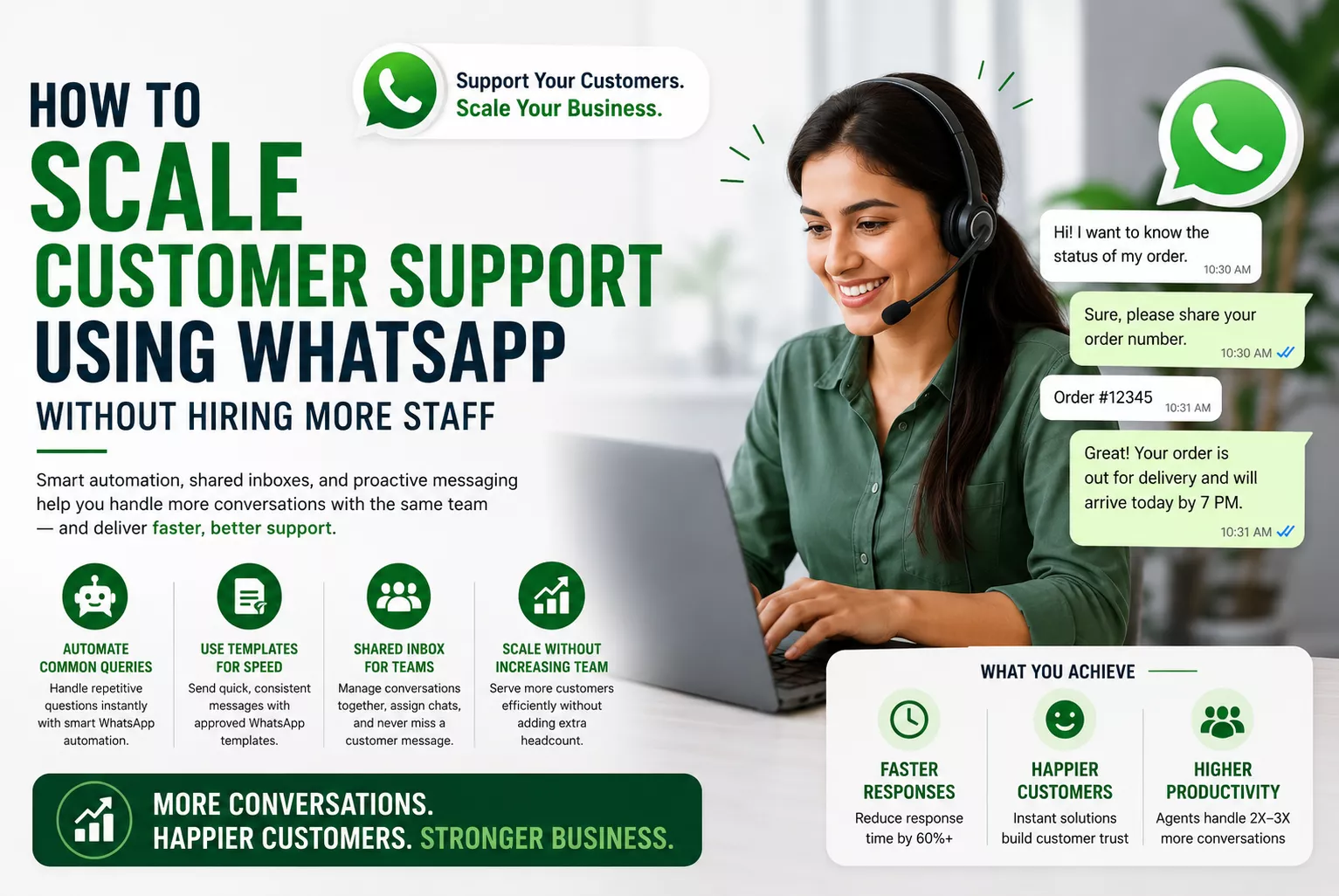
An online clothing brand receives 200 to 300 WhatsApp messages daily. Eighty percent of them are variations of four questions: where is my order, how do I return something, can I exchange for a different size, and what is the refund timeline. Four questions. Eighty percent of the volume.
The brand builds four flows, one for each question. A customer messages ‘return.’ The flow asks for the order number. They provide it. The flow sends the return policy, the condition requirements, and the steps to initiate a return — with a button to confirm they want to proceed. If they confirm, the flow collects the pickup address and raises a return request. If they have a question the flow cannot answer, it routes them to a support agent with the order number and context already in the thread.
The same flow structure handles the other three queries. The support team’s daily volume of 200 to 300 messages becomes 40 to 60 conversations that actually need a person. The team’s entire dynamic shifts — from reactive firefighting to focused problem-solving on the cases that deserve their attention.
Scenario Three: Real Estate Pre-Qualifying Site Visit Requests
A developer running a residential project gets enquiries from Facebook and Google ads. Every enquiry comes in as a form fill or a WhatsApp message: ‘Interested in the project, please share details.’ Without a flow, a sales agent calls each one, spends five minutes on basic questions, discovers half of them are outside the budget range or in a different city, and has now spent an hour doing screening that a flow could have done overnight.
With a flow: the enquiry triggers an automatic WhatsApp message. The flow introduces the project, asks for the prospect’s budget range, preferred configuration, whether they are buying to live in or invest, and their timeline. It takes four messages. Based on the answers, the flow either sends detailed project information for prospects who fit the profile, or gently redirects those who do not.
Qualified prospects are asked if they want to schedule a site visit. If yes, the flow presents available slots and confirms the booking. The sales agent’s calendar is now filled with pre-qualified site visits, not cold enquiry calls. Conversion rates from site visit to booking are significantly higher because the people showing up already know the project, the price, and the configuration — the flow gave them all of it.
Where Templates Fit Into the Flow Structure
When a flow sends an outbound message to initiate or re-engage a conversation — a campaign kickoff, a follow-up after 24 hours of silence, a confirmation after a form submission — that message must use a Meta-approved template. This is a WhatsApp Business API requirement for any message your business sends to start a conversation window.
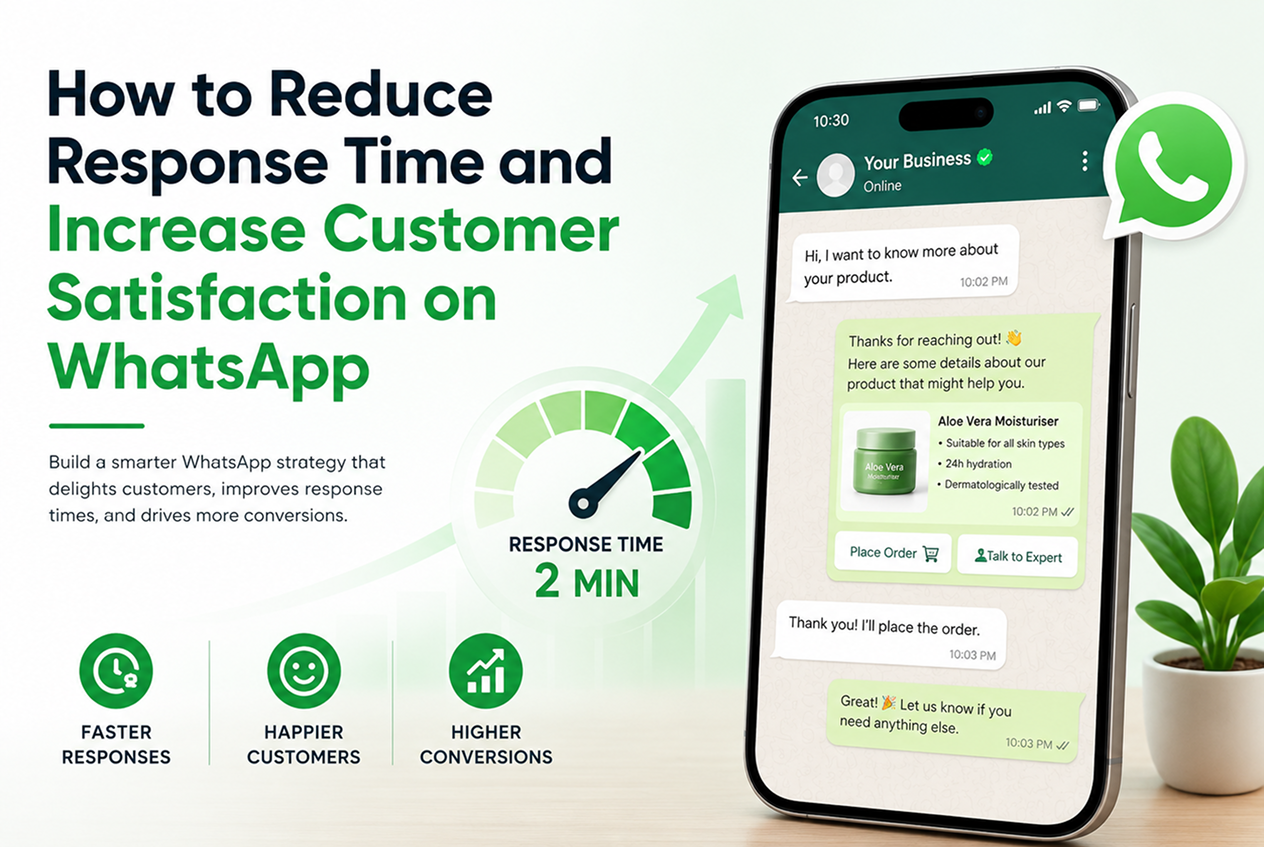
Templates are the entry points into your flows. A campaign template invites the customer to reply and enter the flow. A follow-up template re-engages someone who went quiet mid-flow. A confirmation template closes a completed flow interaction and sets the next expectation. Every outbound touchpoint in a flow needs a template behind it, and those templates need to be approved before the flow goes live.
At 24/7 Marketing, template creation for flow-based communication is part of the setup process. The templates are written specifically for how each flow works — not as standalone broadcast messages, but as conversation entry points designed to get a reply and move someone into the right path.
The Handoff: What Good Looks Like When Automation Ends
Every flow needs a defined exit point — the moment it hands control to a human. This should happen when the customer has asked something outside the flow’s scope, when they have expressed frustration, when the conversation has reached a decision point that requires judgment, or when they explicitly request a person.
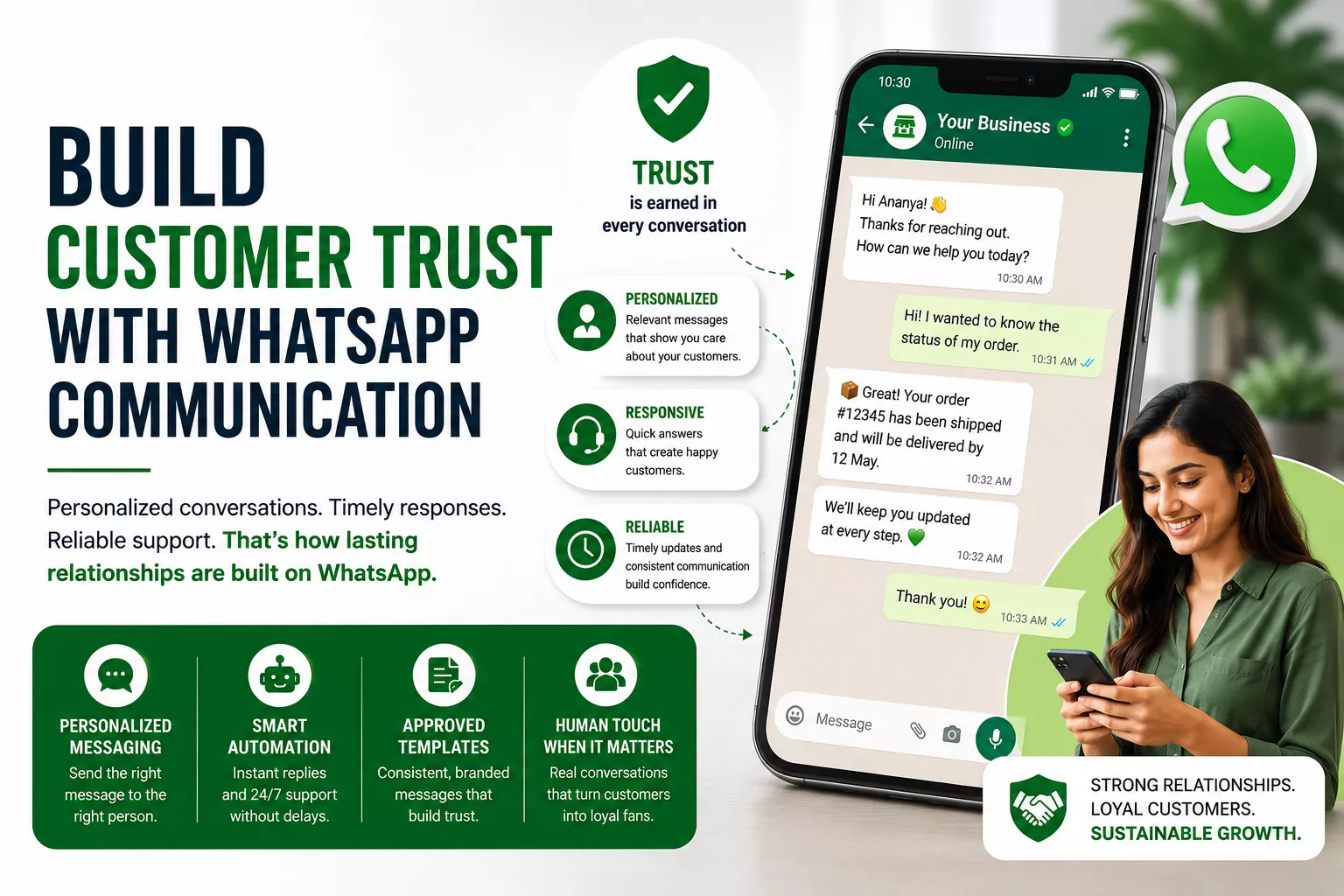
A good handoff preserves everything. The agent who picks up sees the full conversation — every question the customer asked, every answer the flow gave, every data point the flow collected. They do not ask the customer to start over. They walk in with context and pick up from where the flow left off.
In a multi-agent inbox, this handoff is structural. The escalated conversation lands in a queue, gets assigned to the right agent based on routing rules, and the agent has everything they need visible in one thread. The customer experiences it as a seamless continuation. They do not feel the join between automation and human.
That seamlessness is what separates a WhatsApp flow that builds customer confidence from one that frustrates them. The flow is not the product. The experience from first message to final resolution is the product — and every component, from the campaign that started the conversation to the agent who closed it, needs to fit together without gaps.
At 24/7 Marketing, we design and build WhatsApp flows as part of a complete system — campaigns that start conversations, templates that keep them compliant, flows that handle the volume, and a multi-agent inbox that catches what automation cannot. The result is a business that can handle significantly more customer interactions without adding headcount or dropping quality.
Ready to build WhatsApp flows that actually work for your business? Visit 247marketing.in.