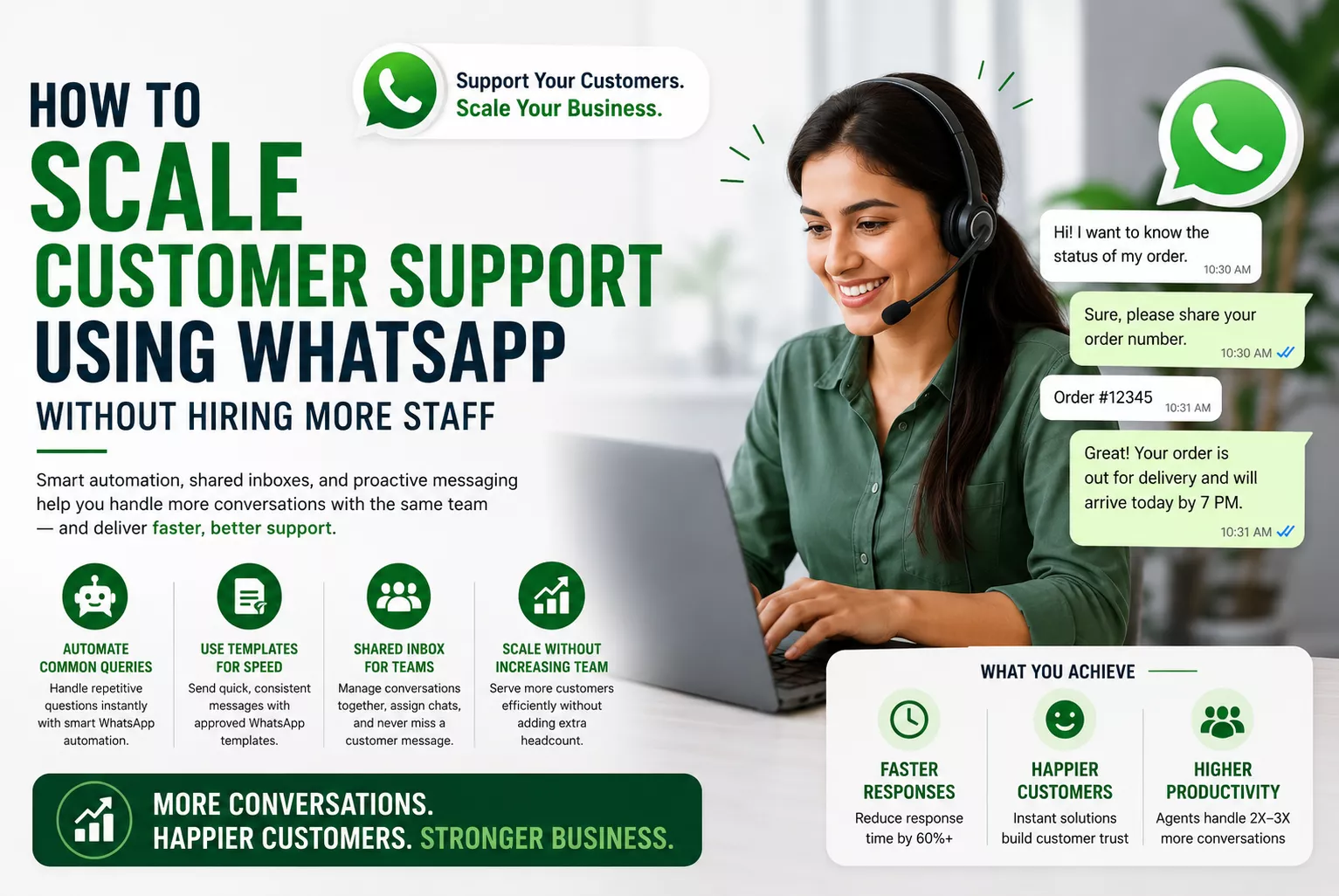
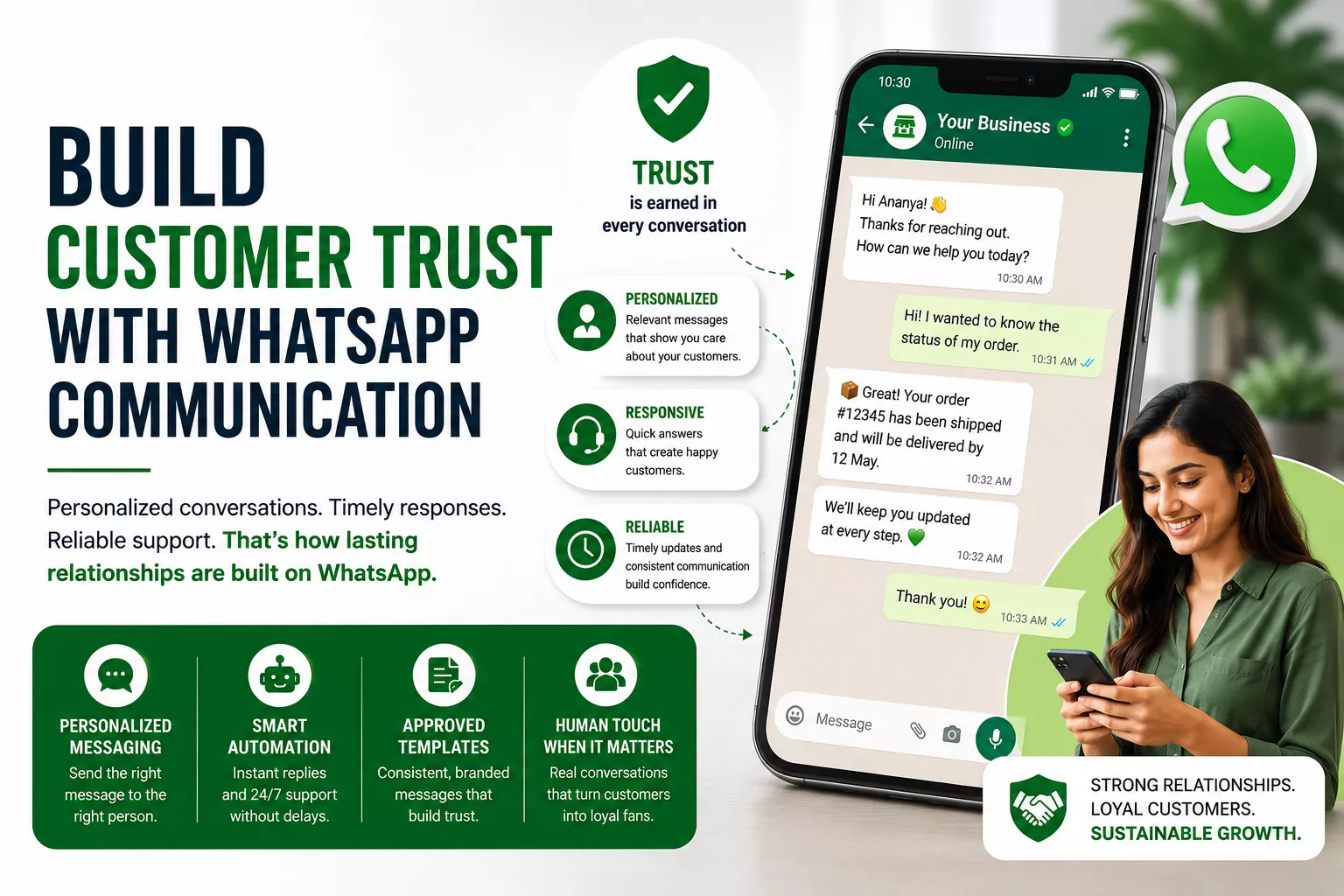
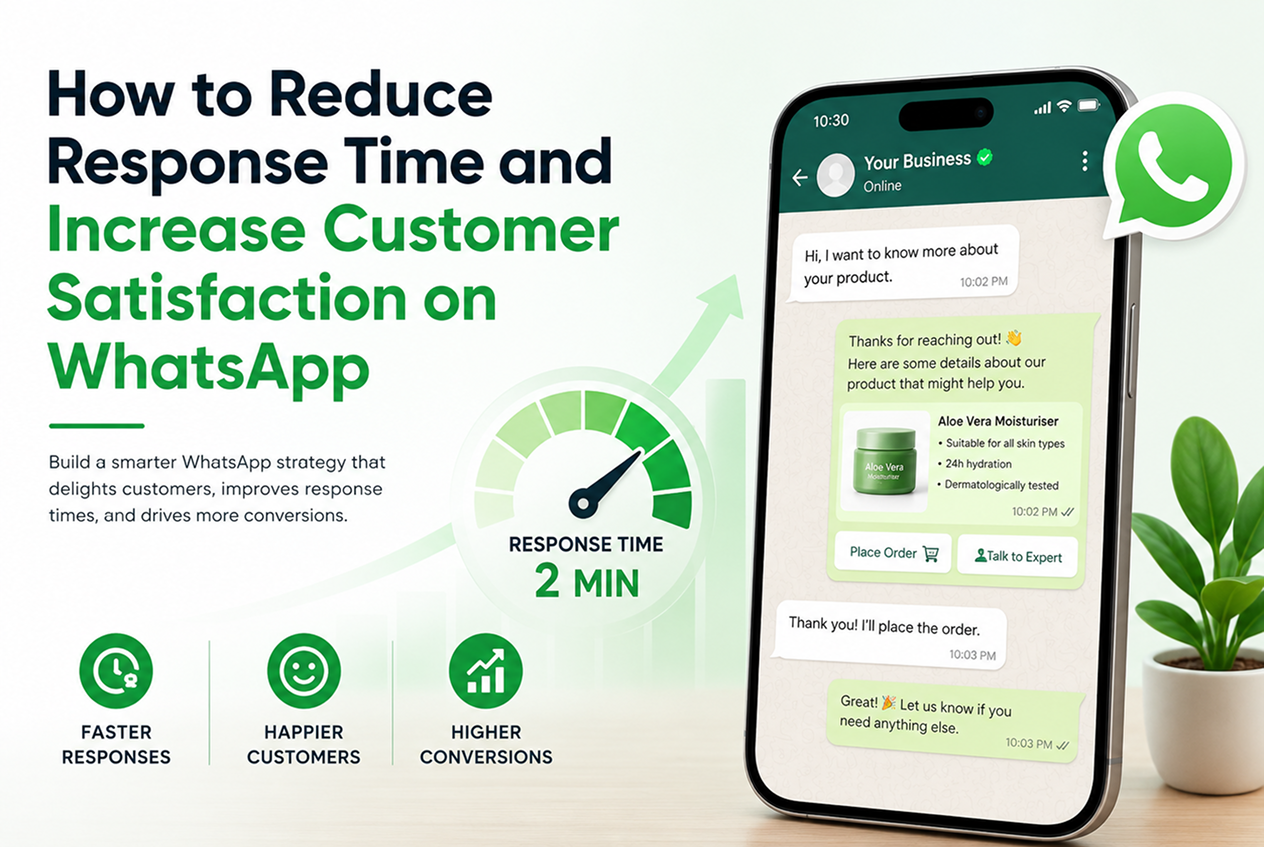
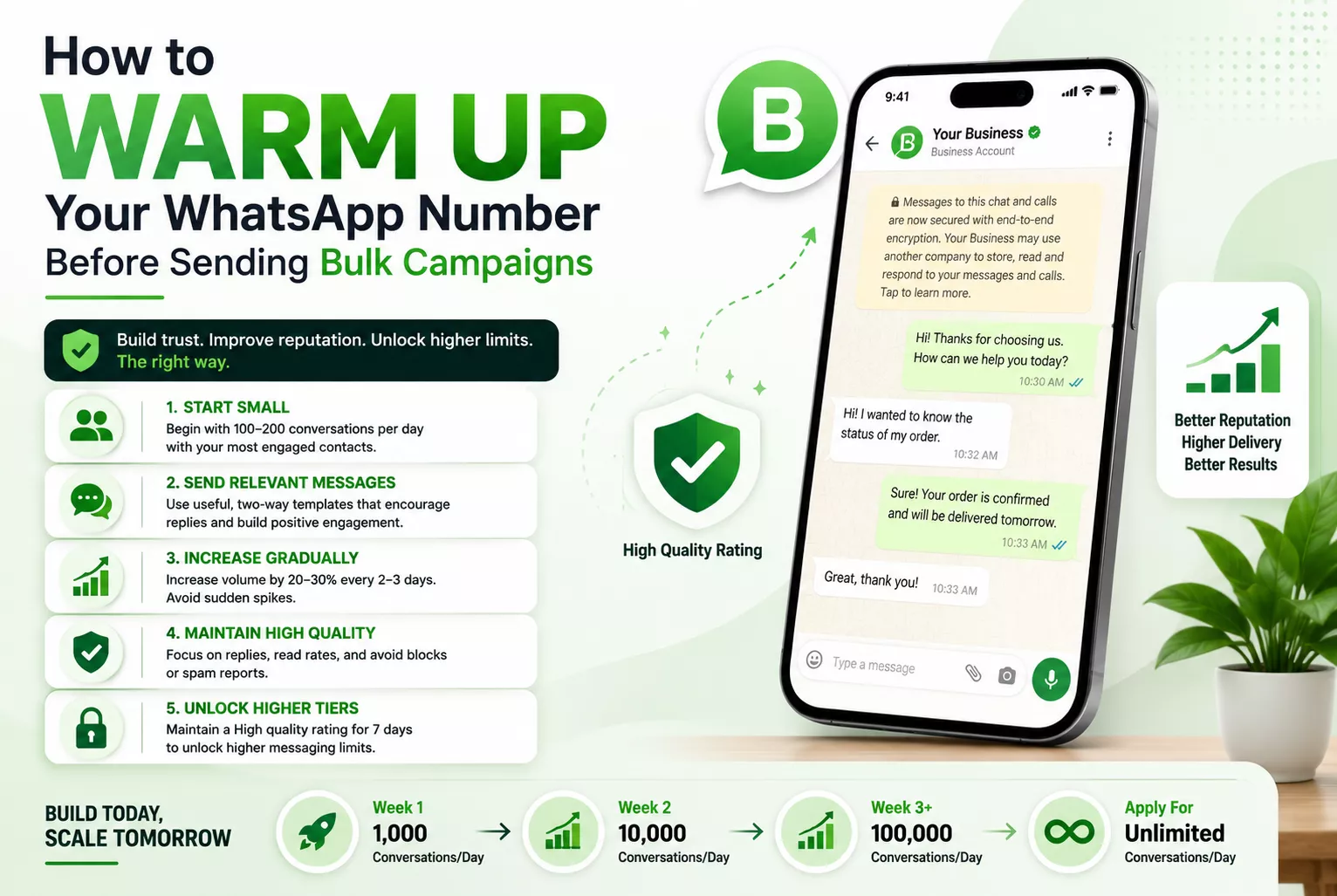
Trust does not get built through a single impressive interaction. It accumulates through dozens of small, consistent ones. A message that arrives when expected. An answer that actually addresses the question. A follow-up that was promised and actually sent. A complaint that was acknowledged without deflection. Each of these is a deposit into an account the customer keeps in their head — and WhatsApp, because of how personal and direct the channel is, is where those deposits and withdrawals happen faster than anywhere else.
Businesses that use WhatsApp as a broadcast channel — sending promotions and going quiet — are not building trust. They are using a trust-building channel to send noise. The businesses that genuinely earn customer loyalty on WhatsApp treat it as a two-way relationship tool, and they build the systems to back that up.
Why WhatsApp Is a Trust-Sensitive Channel
WhatsApp occupies a different psychological space than email or social media. It is where people talk to family, coordinate with friends, and manage the most immediate parts of their daily life. When a business earns a place in that space, it inherits a level of intimacy that no other channel offers. That is the opportunity. The risk is proportional: a business that abuses that space — sends irrelevant messages, goes silent when it matters, or provides inconsistent service — gets removed from it quickly, and rarely gets invited back.
The block button on WhatsApp is far more psychologically available than the unsubscribe button on email. Unsubscribing from an email list takes effort and feels like admin. Blocking on WhatsApp takes two taps and feels like a boundary decision. A customer who blocks your number is not just opting out — they are making an active statement about the relationship.
Understanding this changes how you approach every aspect of WhatsApp communication. Not just what you send, but when, how often, and what happens after the customer replies.
Campaigns That Respect the Relationship
The first time a business loses a customer’s trust on WhatsApp is usually through a campaign that felt unearned. A customer bought a pair of shoes six months ago. They receive a WhatsApp message promoting a mattress sale. No connection to their history, no relevance to them, no reason to care. The message signals that the business sees them as a number on a list, not as a person with a specific relationship with the brand.
Campaigns that build trust do the opposite. They arrive with context. A customer who bought running shoes three months ago receives a message: ‘Hi Ananya, most runners replace their shoes every 400 to 500 km. If you have been putting in the kilometres, we have new arrivals in your size. Here is 10 percent off your next pair.’ That message is relevant, timely, and useful. It demonstrates that the brand paid attention.
The mechanics behind this are segmentation and timing — sending the right message to the right person based on their actual relationship with the business, not blasting the entire contact list with whatever is on sale this week. At 24/7 Marketing, campaign setup includes this segmentation logic from day one because a campaign that feels irrelevant is not just a wasted send, it is a trust withdrawal.
Consistency Is What Templates Actually Buy You
Most businesses think about WhatsApp templates as a compliance requirement — something Meta demands before you can send outbound messages. The more useful way to think about them is as a consistency guarantee.
Trust is partly built on predictability. When a customer places an order and consistently receives a well-formatted confirmation on WhatsApp within a minute, then a dispatch notification, then a delivery update, they develop a sense of reliability about your business. They know what to expect and when. That reliability is a form of trust.
Without templates, this consistency is agent-dependent. One agent sends a detailed, warm confirmation. Another sends three words. A third forgets to send anything. The customer’s experience of your business varies based on who happened to handle their query. Approved templates remove that variance. Every customer gets the same quality of communication at every touchpoint.
Templates also communicate professionalism. A well-structured WhatsApp message with the customer’s name, accurate details, and a clear next step signals that the business has its operations under control. A rushed, typo-filled reply from a personal number signals the opposite — even if the underlying service is fine.
Auto-Replies That Feel Like Attention, Not Avoidance
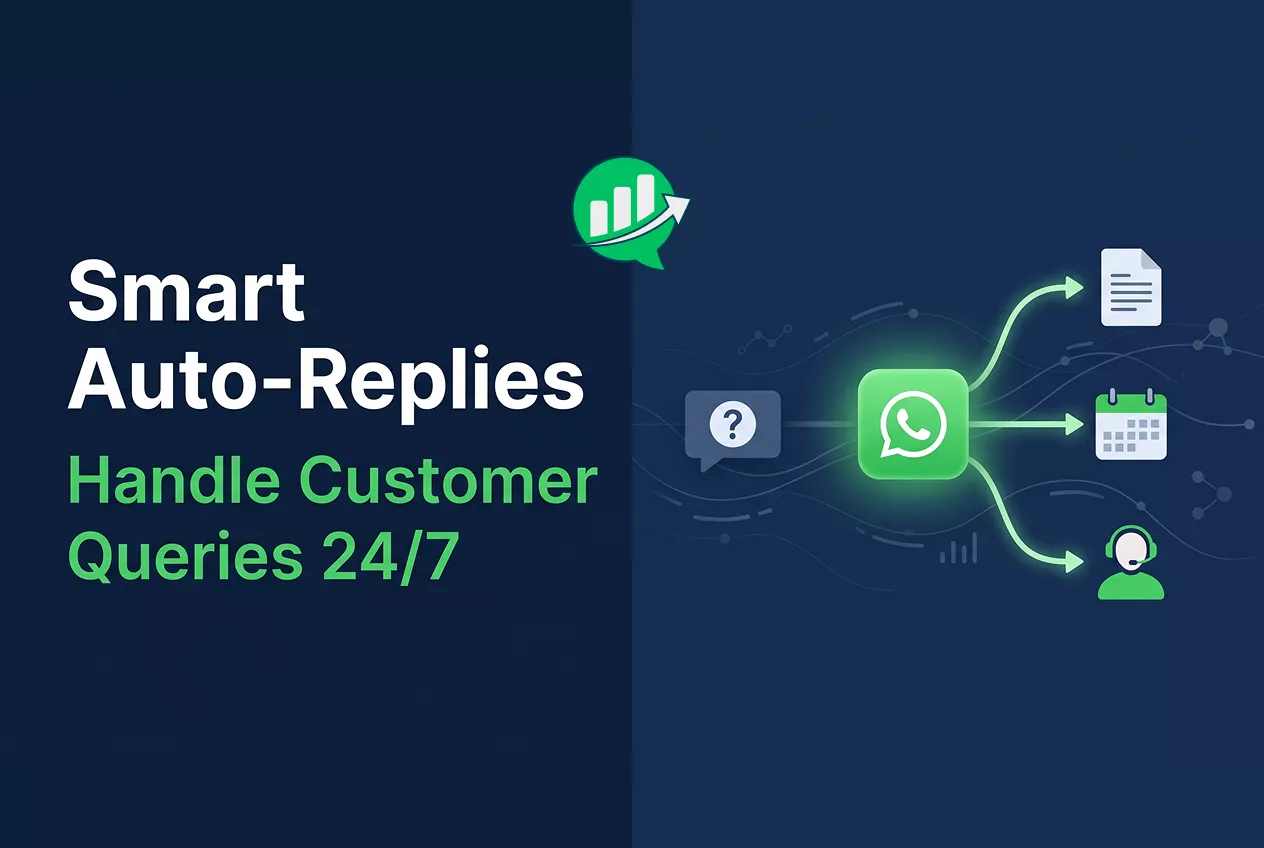
There is a version of automated replies that destroys trust: the hollow away message that says ‘Our team will contact you shortly’ and then doesn’t. The customer knows they have been deposited into a queue. They do not know if anyone will actually come back. The message does not resolve anything — it just delays the disappointment.
And then there is the version that builds trust. A customer messages a home loan provider at 9 PM asking about eligibility criteria. The automated reply sends a clear breakdown of the eligibility conditions, asks two qualifying questions about income and employment type, and tells the customer that a loan advisor will call them the next morning between 10 and 11. The customer has useful information, a clear expectation, and a specific commitment.
The difference is not in whether the response is automated. It is in whether the response actually serves the customer. When automation is built around what the customer genuinely needs at that moment — an answer, a timeline, a next step — it reads as attentiveness rather than deflection.
Critically, the commitment automation makes must be kept. If the automated reply promises a callback between 10 and 11, and the agent calls at 2 PM, the automation has done more damage than good. The customer trusted the system’s promise. It was broken. That registers as a broken promise from the brand, not a scheduling mix-up from an individual.
The Human Moment: Where Trust Gets Cemented or Lost
Automation handles volume. Humans handle the moments that matter most — a complaint from a long-standing customer, a high-stakes decision, a situation where someone feels let down and is deciding whether to stay or leave.
The multi-agent inbox is where these moments either go well or fall apart. When a frustrated customer’s WhatsApp thread lands in a shared inbox with no owner and no context, the agent who eventually picks it up starts cold. They ask the customer to explain the problem again. The customer — who already explained it to a bot and then to another agent — is now doing it a third time. Their frustration is not about the original issue anymore. It is about feeling invisible.
A properly run multi-agent inbox prevents this. Conversations are assigned with full history visible. Escalated complaints are flagged and routed to agents with the experience to handle them. The agent opens the thread, reads the entire exchange, and enters the conversation with genuine context: ‘I can see you have been waiting and I understand why that is frustrating. Let me resolve this right now.’ That opening — informed, direct, human — does more for trust recovery than any discount or apology template.
The Compound Effect of Getting WhatsApp Right
Trust built through WhatsApp communication compounds the same way interest compounds in a bank account. A customer who receives a relevant campaign, gets an accurate auto-reply at midnight, speaks to an agent who already knows their history, and has their issue resolved cleanly — that customer does not just come back. They bring others. Their referral is not a formal recommendation. It is a mention in a family group chat or to a colleague: ‘Message them on WhatsApp, they actually respond.’
In a market where most businesses are still figuring out how to use WhatsApp beyond sending price lists, being the brand that genuinely communicates well on the channel is a real differentiator. Not because the technology is complicated, but because the discipline of using it consistently and thoughtfully is rare.
At 24/7 Marketing, every part of the WhatsApp system we build — campaigns, templates, automated replies, and the multi-agent inbox — is designed around one outcome: a customer who trusts your business more after every interaction than they did before it. That is not a soft goal. It is the most durable competitive advantage a business can build.
Want to build a WhatsApp presence your customers actually trust? Start at 247marketing.in.