Most growing businesses hit the same wall. Customer queries increase because the product is selling. The support team gets stretched because there are more people to help. The options seem binary: hire more staff or let service quality drop. Neither is acceptable — one bleeds money, the other bleeds customers.
There is a third option, and it does not require a new hire or a compromised experience. It requires a different architecture for how your support runs — one built around WhatsApp, where the majority of your customers already are, and where the right systems handle the volume that used to require people.
This is not about replacing your support team. It is about making the team you have capable of handling three to five times the query volume without the response quality dropping or the team burning out.
The Real Problem Is Not Volume -- It Is Distribution
When businesses say they need more support staff, what they usually mean is that queries are piling up faster than people can respond. But when you look at what those queries actually contain, a pattern emerges almost every time. Sixty to seventy percent of the daily inbound volume is the same handful of questions — order status, pricing, return policy, service timings, how to use a product, where to find information that already exists somewhere.
Trained human agents are answering these questions dozens of times a day. They know the answers cold. The problem is not the knowledge — it is the repetition. Every minute a skilled agent spends typing out the return policy for the fifteenth time that morning is a minute they are not spending on the complex query that actually needs them: the unhappy customer who received a damaged product and is about to leave a public review, the high-value lead who has four specific questions before they commit, the long-term client whose issue sits outside standard process.
Scale is not a headcount problem. It is a distribution problem. The work that should go to automation is going to humans, and the work that needs humans is getting whatever attention is left over.
Automating the Repeatable Without Losing the Human Feel
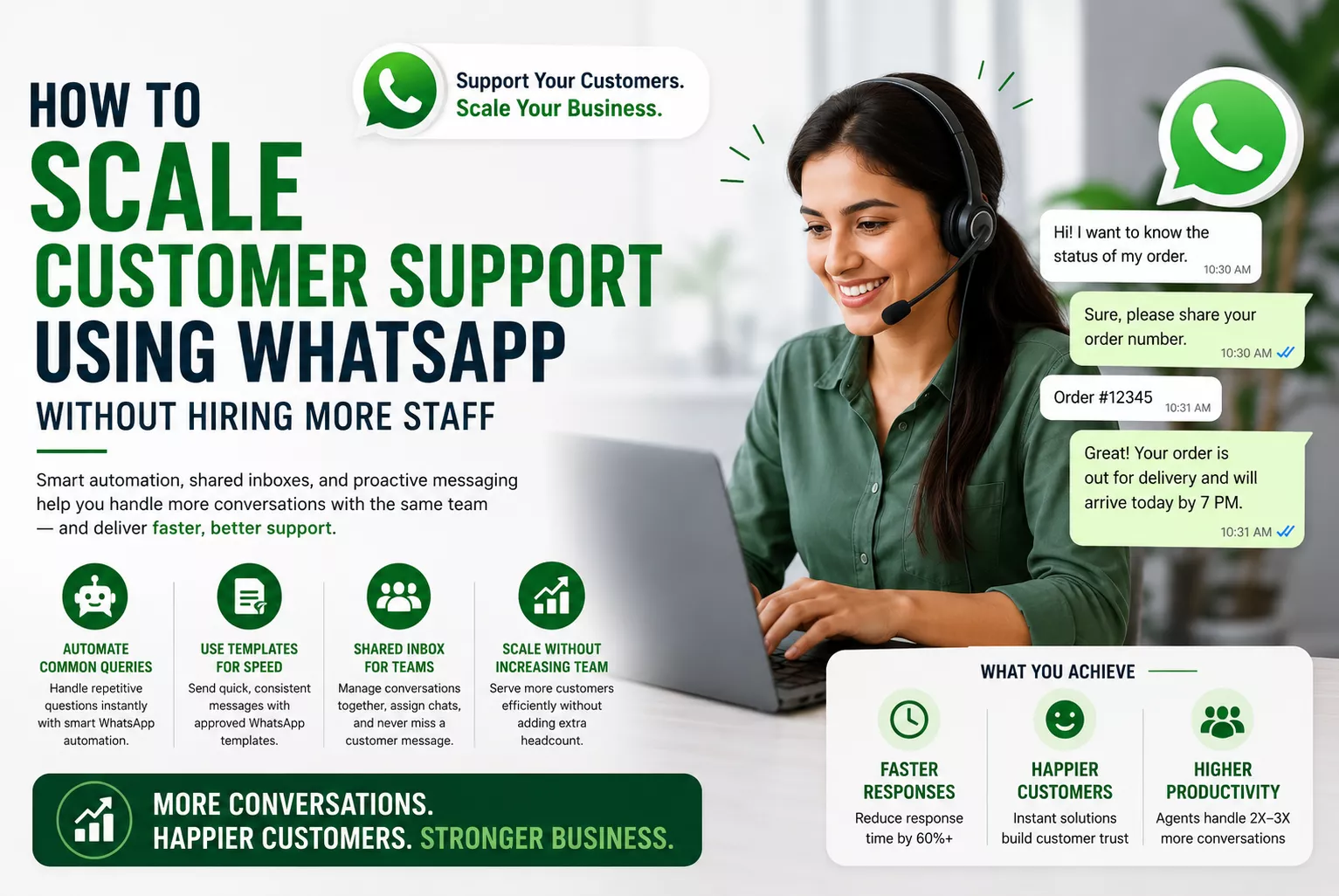
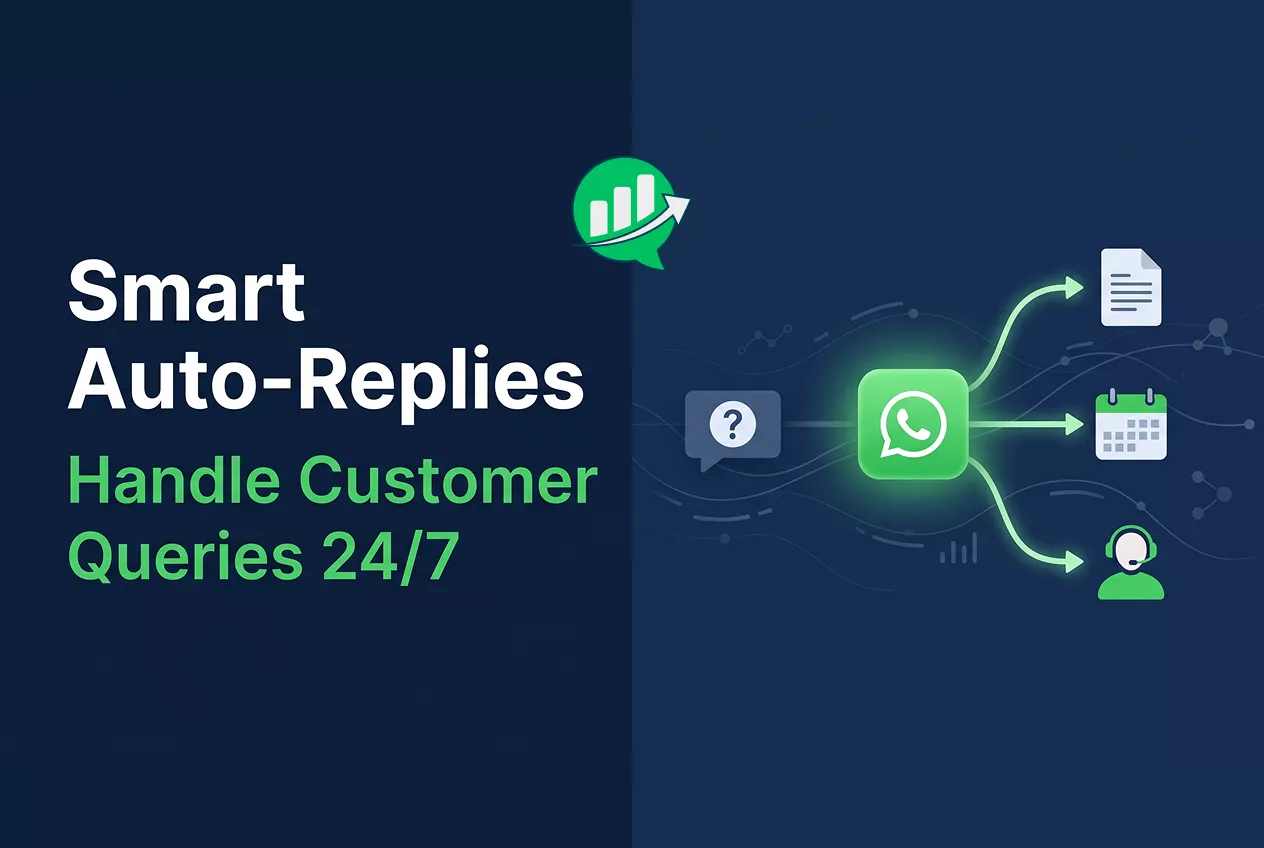
The first structural change is moving the repetitive sixty to seventy percent out of your agents’ queue entirely. WhatsApp automated reply flows do this — they identify the intent of an incoming message and respond with the appropriate, accurate information without a human in the loop.
An electronics retailer sets up flows for their ten most common queries. A customer types ‘warranty’ — they get a clear breakdown of the warranty terms, a link to register their product, and an option to speak to someone if their situation is not covered. A customer types ‘delivery date’ — they get a prompt to share their order number, the flow checks status and replies with the exact date. A customer types ‘exchange’ — they receive the exchange policy, the conditions, and the steps to initiate one.
None of these interactions required an agent. All of them left the customer with a useful, immediate answer. The agents’ queue is now the thirty to forty percent that automation cannot handle — and that queue is where human skill actually makes a difference.
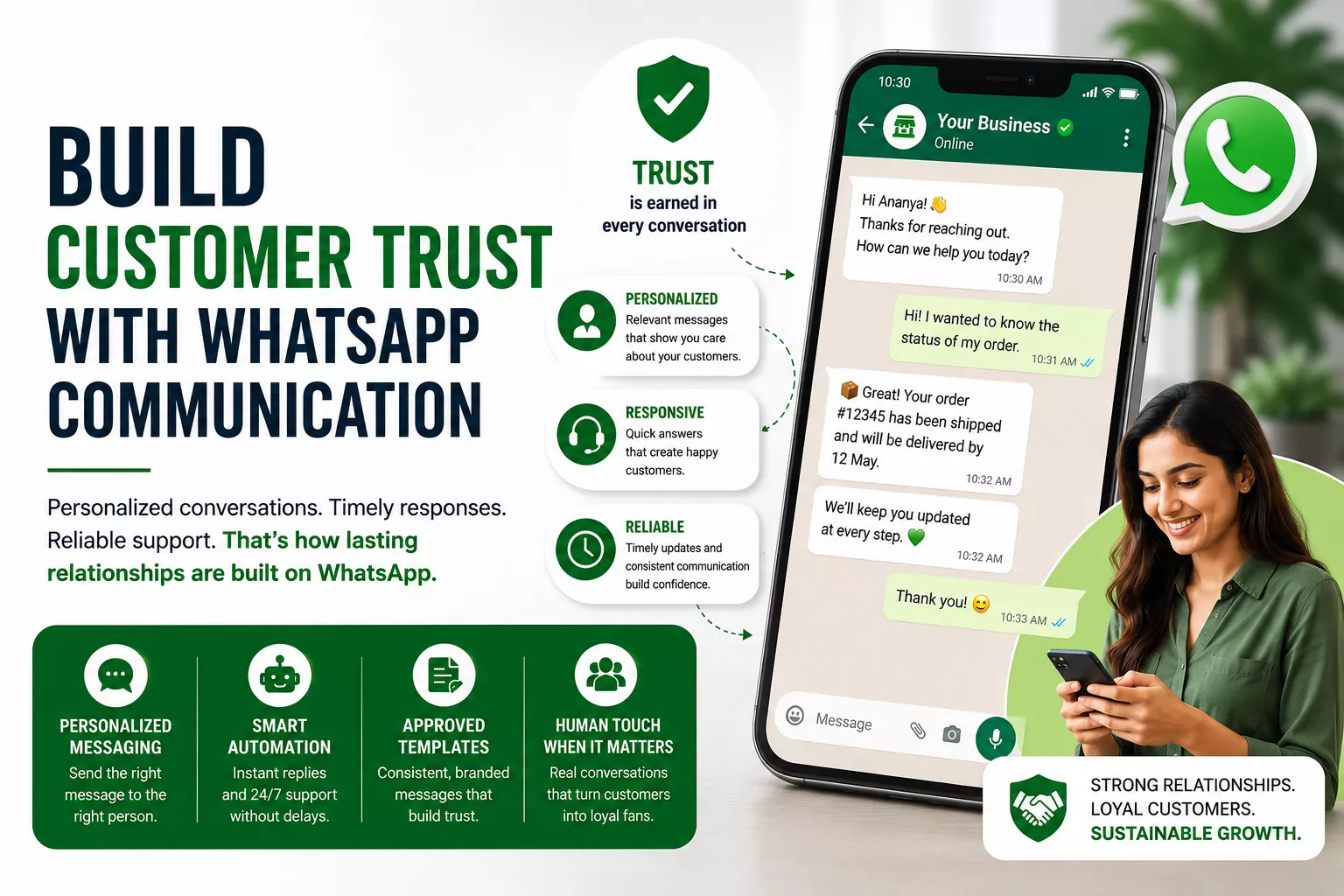
The concern most businesses have is that automation will feel cold and robotic. This is a design problem, not a technology problem. When flows are built with natural language, personalised with the customer’s name, and structured around genuinely useful responses rather than generic holding messages, customers do not experience them as impersonal. They experience them as fast and effective — which is exactly what they wanted.
Templates: Cutting Agent Response Time on the Queries That Do Need Humans
Even the queries that require a human agent do not all require the agent to compose a response from scratch. Approved WhatsApp templates eliminate the typing overhead for structured outbound messages — follow-up confirmations, escalation acknowledgements, resolution summaries, callback scheduling.
In practice this means an agent handling a complaint spends their time reading the customer’s situation, understanding the problem, and making the right decision — not writing and rewriting the same confirmation message every time. The template sends the confirmation in two taps. The agent is already on the next conversation.
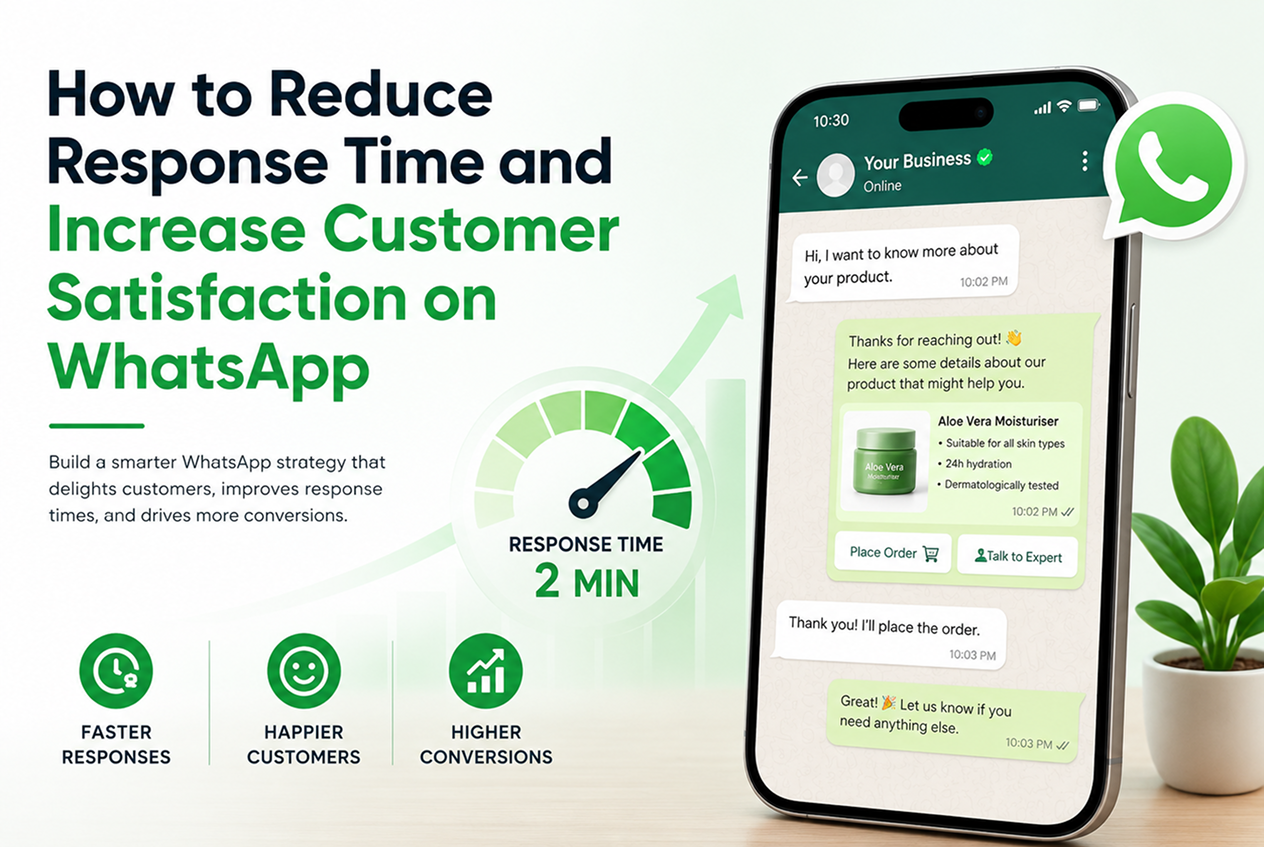
When you audit how a support agent actually spends their time, a significant portion is formatting and typing messages the system could handle. Templates reclaim that time. The same agent who was handling 25 conversations a day can handle 40 or 50 with the same quality because the mechanical work has been removed.
The Multi-Agent Inbox: Removing the Structural Ceiling on Team Capacity
The most common support setup for a growing business: one WhatsApp number, accessed from one device, shared between two or three people who take turns or just message whenever they see something. This creates three predictable failures. Conversations get missed when the device is with someone unavailable. Queries get double-answered because no one knows who already picked it up. No one can see overall queue size or workload distribution, so some agents are overloaded while others are underutilised.
A multi-agent inbox replaces this with a shared dashboard where every incoming conversation is visible to the whole team, assigned to a specific agent, and tracked through to resolution. No message sits unclaimed. No conversation gets answered twice. A supervisor can see in real time that one agent has 18 open conversations while another has six, and rebalance accordingly.
Routing rules add another layer of capacity. After a marketing campaign goes out, the replies route to the sales team. Technical queries route to the product support team. Billing questions go to accounts. High-priority or flagged conversations route to senior agents. The inbox is not just a shared view — it is a managed workflow with logic that removes the human overhead of sorting and directing.
The result is that five agents with a multi-agent inbox can handle the volume that previously required eight, because the time they were losing to coordination, duplication, and queue management is gone. The ceiling on your team’s capacity moves without adding a single person.
Proactive Communication That Prevents Queries From Happening
One aspect of scaling support that most businesses overlook: reducing inbound volume proactively. Every customer who sends a ‘where is my order?’ message is a query that could have been prevented by a dispatch notification they never received.
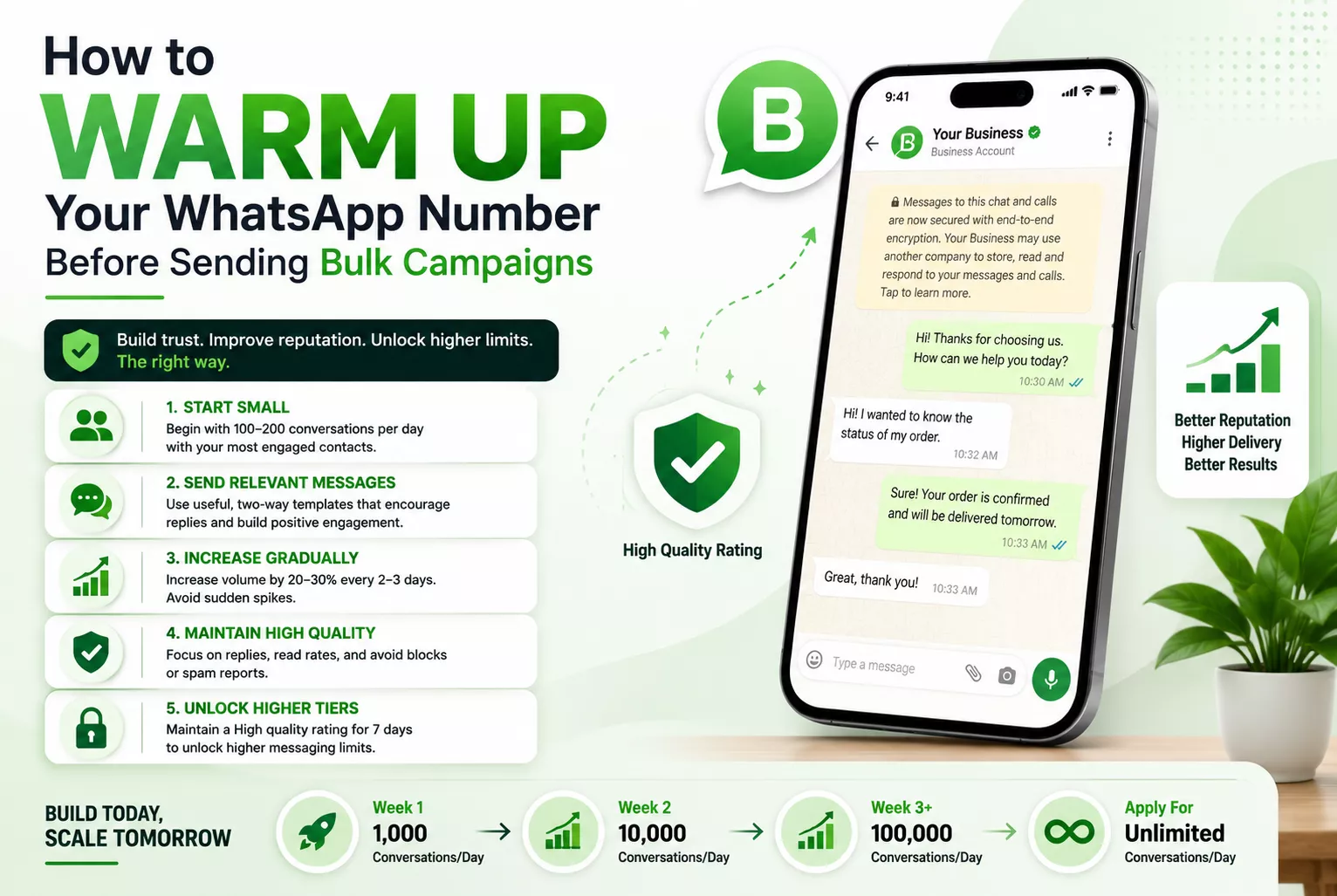
WhatsApp campaigns sent proactively at the right moments — order dispatched, delivery scheduled, appointment confirmed, payment received, renewal due — answer the customer’s question before they think to ask it. An e-commerce brand that sends a real-time dispatch notification to every customer eliminates the single most common query in their support queue. The support team just got lighter without anyone being removed.
This is how proactive campaigns and support automation connect. The campaigns prevent reactive queries. The automated replies handle the queries that still come in. The agents handle what is genuinely complex. The multi-agent inbox makes sure nothing gets dropped at any stage. Each component reduces load on the others.
What the Numbers Look Like After Six Months
Businesses that implement this full system — automated reply flows, approved templates, proactive campaigns, and a multi-agent inbox — consistently report the same pattern at the six-month mark. Inbound query volume has grown because the customer base has grown. But the support team size has not changed. Response times have dropped. Customer satisfaction scores have improved. And the team is no longer running on fumes at the end of the day because they stopped spending half their time on questions a machine can answer.
The economics are straightforward. A new hire costs a salary, training time, management overhead, and several months before they reach full productivity. A well-built WhatsApp support system costs a fraction of that and starts working on day one. For a business handling 300 queries a month today and expecting 900 in a year, the system is not just a convenience — it is what makes that growth financially viable.
At 24/7 Marketing, we build these systems end to end — campaigns, templates, automation flows, and inbox configuration — as a connected unit that is designed to handle the query volume you have now and the volume you will have in twelve months. The goal is a support operation that scales with your business rather than one that holds it back.
Ready to scale your support without scaling your headcount? Visit 247marketing.in.