Two businesses send WhatsApp messages to their contact lists this week. One generates 40 replies, five booked calls, and two confirmed sales by Thursday. The other collects 18 blocks, a quality rating warning from Meta, and zero responses worth having. Both sent campaigns. Only one ran a campaign. The other sent spam — and the distinction matters more than most businesses appreciate until their number gets flagged.
Spam is not just illegal bulk messages or scam offers. On WhatsApp, spam is any message a recipient did not want to receive, from a business they do not recognise, saying something that is not relevant to them, at a time that serves the sender and not the reader. By that definition, a lot of WhatsApp campaigns being run right now are spam — just spam with a legitimate business’s name attached to it.
The businesses generating actual revenue from WhatsApp campaigns know what makes the difference. Here is the honest breakdown.
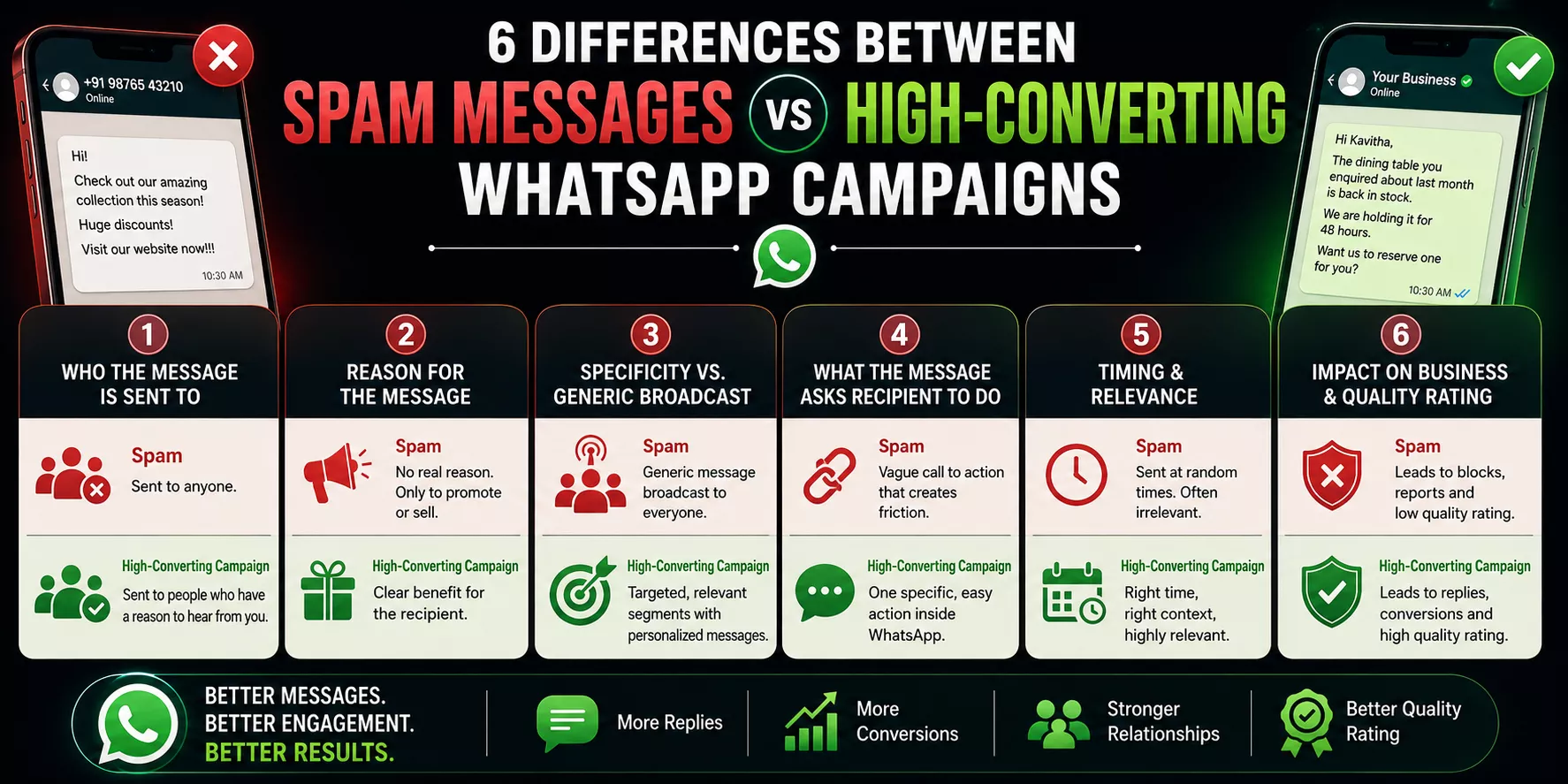
Difference One: Who the Message Is Sent To
Spam goes to anyone. A high-converting campaign goes to people who have a reason to hear from you — because they opted in, enquired, purchased, or specifically gave you their number in exchange for something they wanted.
This is not a compliance point dressed up as strategy. It is the most direct lever on response rate. A message sent to 1,000 opted-in, recently engaged contacts will outperform the same message sent to 5,000 cold or unverified numbers on every metric — replies, conversions, and quality rating. The cold list looks bigger. The warm list produces better outcomes and does not get your number banned in the process.
List source is the first question to ask before any campaign goes out. Where did these numbers come from? Did these people actively choose to receive messages from this business? If the answer involves a purchased list, a scraped database, or contacts imported without explicit consent, the campaign is starting on the wrong foundation regardless of how good the message is.
Difference Two: Whether the Message Has a Reason to Exist
Spam exists because the sender wants to be heard. High-converting campaigns exist because the recipient would benefit from them — and the message makes that benefit clear immediately.
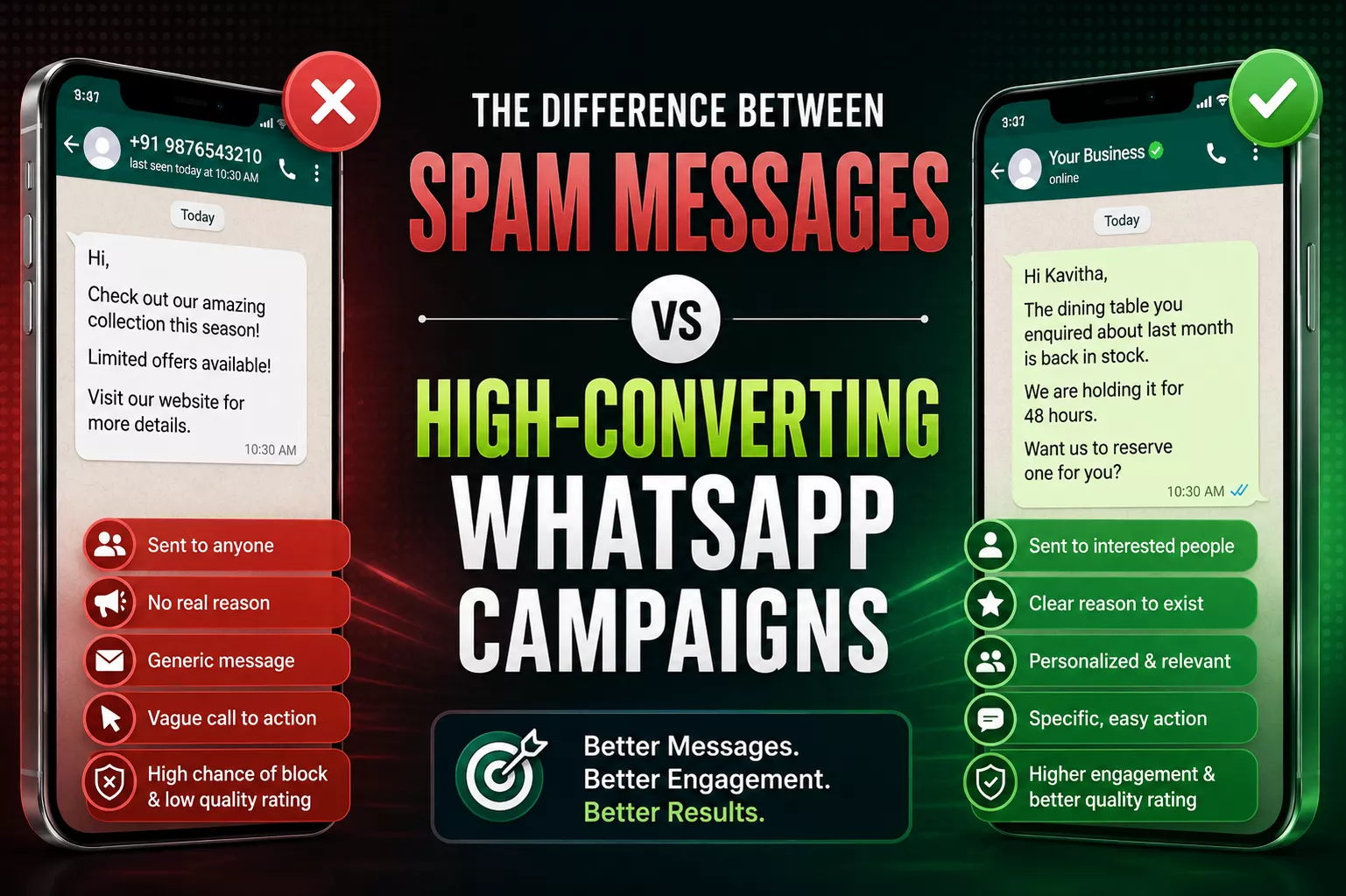
A message that says ‘Hi, check out our amazing collection this season, limited offers available!’ exists to push a sale. A message that says ‘Hi Kavitha, the dining table you enquired about last month is back in stock. We are holding it for 48 hours — want us to reserve one for you?’ exists because Kavitha had a specific interest and the information is genuinely useful to her right now.
The test: if you received this message from a business you do not know well, would you feel it was sent for your benefit or the business’s benefit? Spam fails this test. High-converting campaigns pass it easily because the value to the reader is obvious from the first line.
Approved WhatsApp templates, when written well, force this clarity. The template review process screens for messages that are vague, misleading, or purely promotional without context. Getting a template approved is easier when the message has a genuine, specific reason to exist — which is a useful forcing function for campaign quality.
Difference Three: Specificity vs. Generic Broadcast
Spam is the same message sent to everyone. High-converting campaigns are built around segments where the same message is genuinely relevant to every person in the group.
An insurance company with 10,000 contacts does not send one campaign to all of them. It sends a health insurance renewal reminder to the 800 whose policies expire this quarter. It sends a family floater upgrade offer to the 400 who recently added a dependent. It sends a claim-process guide to the 200 who filed a claim in the last month. Four different segments, four different messages, each one relevant to exactly the people receiving it.
This segmentation is what converts a WhatsApp campaign from a broadcast into a personalised communication. The 800 people getting the renewal reminder do not know or care that the company has 10,000 contacts. They know they received a message about something specific to them. That is the experience of a high-converting campaign from the recipient’s side.
Difference Four: What the Message Asks the Recipient to Do
Spam messages typically end with something vague: ‘Visit our website for more details’ or ‘Call us to know more.’ These calls to action add friction. The recipient has to leave the conversation, open a browser, navigate a website, and do several things before making any connection with the business. Most do not bother.
High-converting campaigns end with one specific, immediate, low-effort action that can be completed inside the WhatsApp conversation. ‘Reply YES to reserve.’ ‘Type PRICE for the latest rates.’ ‘Reply DEMO and we will set one up this week.’ One word. One tap. The conversation continues rather than requiring the prospect to leave and return.
This is where automated reply flows become part of the campaign itself rather than a separate support function. When a prospect replies YES, the flow picks up immediately, sends the next relevant step, and keeps moving the conversation forward without requiring an agent to be available the moment the reply comes in. The campaign and the reply system need to be designed together — one without the other breaks the experience.
Difference Five: Frequency and Spacing
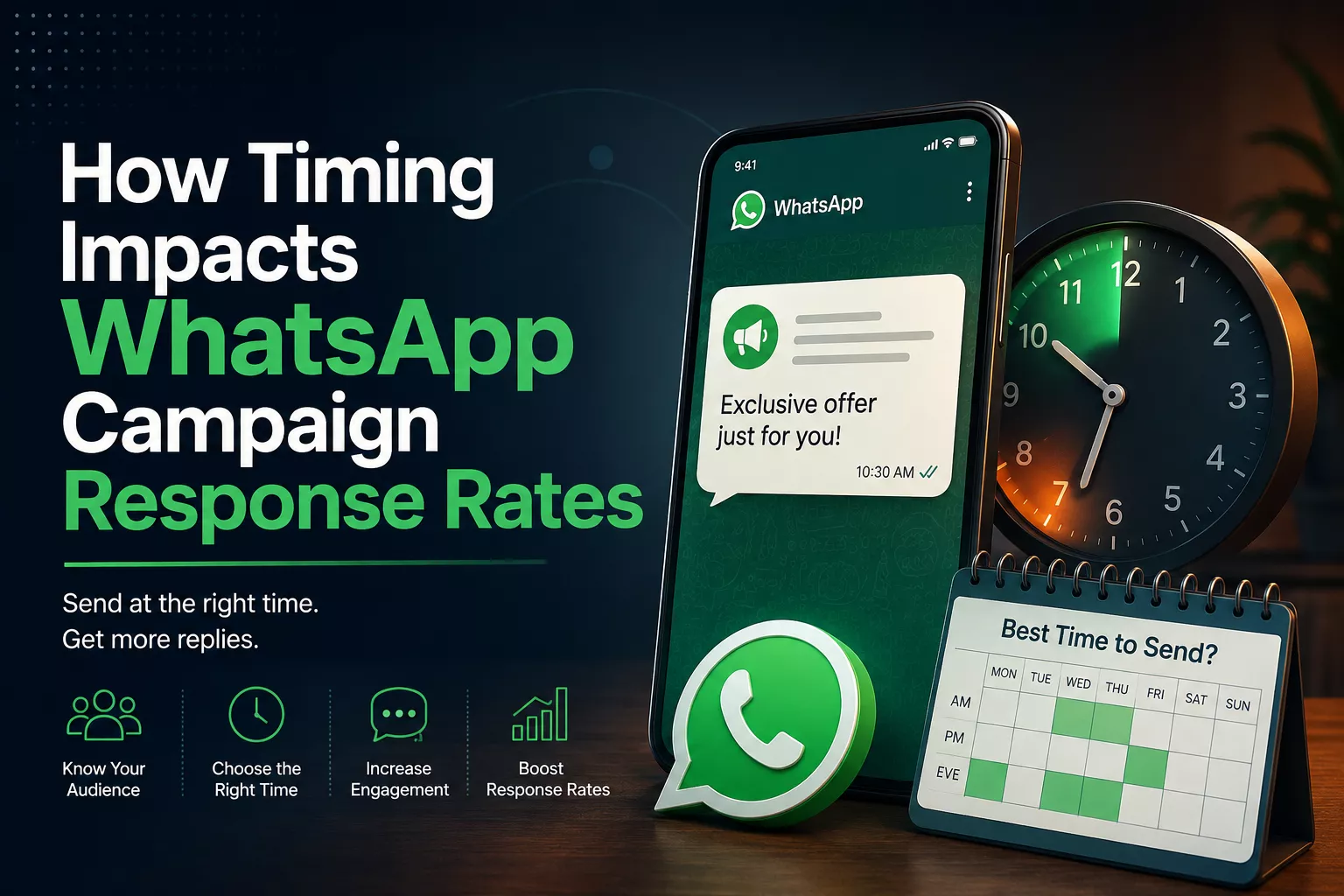
Spam arrives too often. It does not calibrate to what the recipient already received. It prioritises the sender’s calendar — ‘we send a campaign every Monday’ — over the recipient’s experience. After two or three messages in a week from a business with nothing new to say, even warm contacts start blocking.
High-converting campaigns think in terms of the recipient’s relationship timeline, not the sender’s marketing calendar. A customer who just made a purchase does not need a discount offer today — they need confirmation that the purchase was handled and that someone is paying attention to the experience post-sale. A lead who enquired two weeks ago and has not responded needs a different angle, not a repeat of the first message.
The practical rule: every WhatsApp campaign message should give the recipient something they did not already have — new information, a new offer, a different angle on a problem they expressed, or a specific piece of timing that makes the message relevant now rather than on an arbitrary schedule.
Difference Six: What Happens After the Reply Comes In
This is where the gap between spam and a real campaign is most visible in outcomes. Spam generates no replies worth having, or generates replies that nobody has a system to handle. A business that runs a campaign generating 200 replies and then takes four hours to respond to any of them has run a campaign that looked like a high-converting campaign but behaved like spam once the clock started on response time.
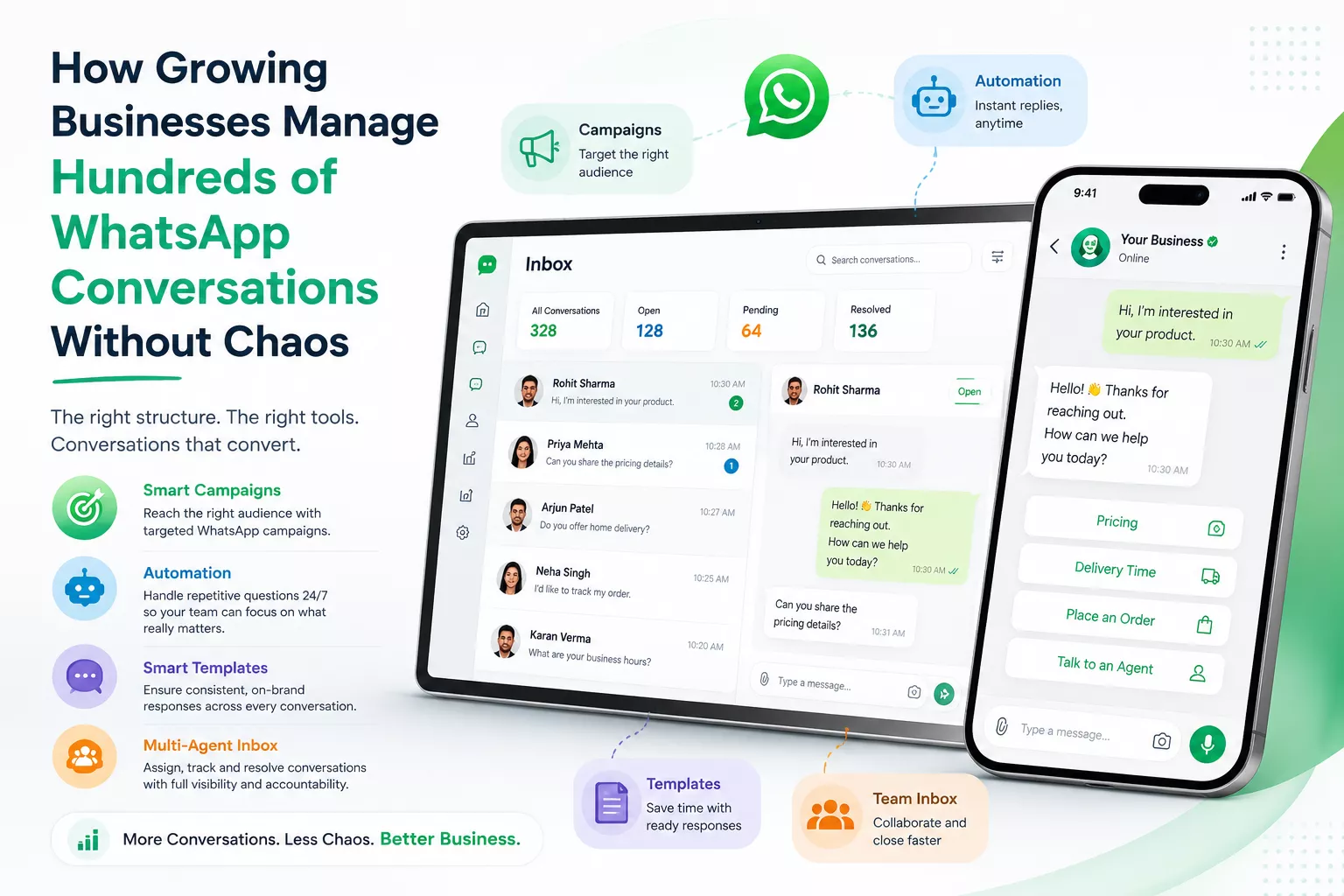
High-converting campaigns are designed so that a reply is the beginning, not the end. Automated flows pick up immediately. Templates ensure consistent, accurate information goes back fast. A multi-agent inbox ensures that as more replies come in, they are distributed across the team, tracked, assigned, and followed through — not piling up in a queue that one person cannot clear.
The campaign is the opening. Everything after it — the instant automated response, the qualifying conversation, the handoff to an agent with full context, the follow-through — is what converts interest into a sale. A campaign without the infrastructure behind it is just a message with no follow-through. At volume, that is barely better than spam.
At 24/7 Marketing, campaigns are built as complete systems — the message, the approved templates, the automated reply flows, and the multi-agent inbox that handles everything the campaign generates. Because a campaign that produces great replies and has no system to convert them is a very expensive way to stay exactly where you started.
Ready to run WhatsApp campaigns that actually convert? Visit 247marketing.in.