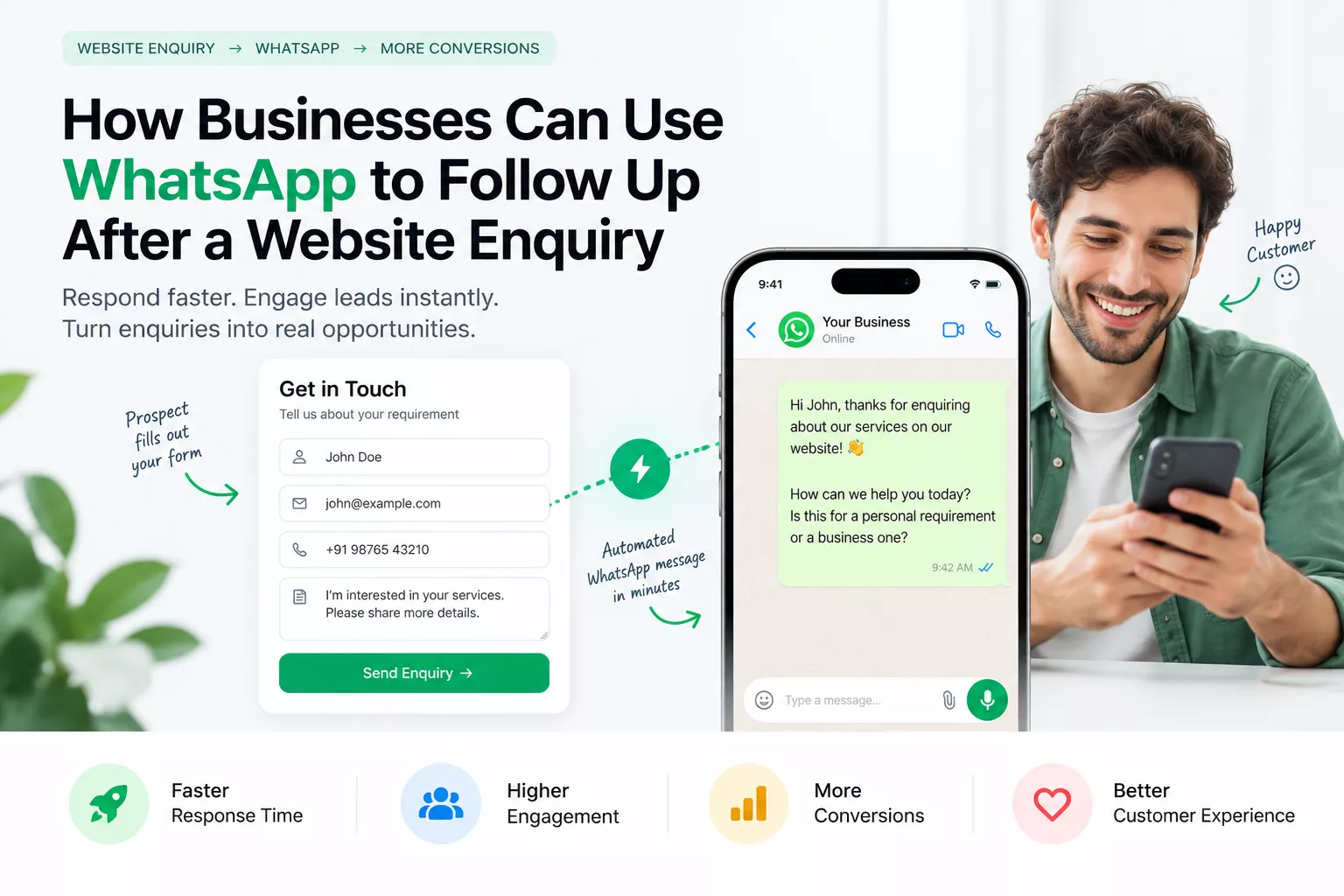
At 30 WhatsApp conversations a day, one person can manage everything. They know each lead, remember the context of every conversation, and follow up without a system because the volume fits inside a single person’s working memory. It is inefficient by design standards, but it works.
At 300 conversations a day, that same approach produces a different result entirely. Messages go unanswered because nobody noticed they came in. Two agents reply to the same customer within minutes of each other. A high-intent lead from yesterday is buried under today’s volume and never followed up on. The team is working hard but the system is working against them.
This is the inflection point that growing businesses hit on WhatsApp, and most of them hit it without seeing it coming. The conversation volume that once felt manageable crosses a threshold and the same process that worked fine at lower scale starts producing visible failures. Understanding how businesses on the other side of that threshold manage it is what this is actually about.
The Problem Is Not the Number of Conversations -- It Is the Lack of Structure
Businesses that manage hundreds of WhatsApp conversations without chaos do not do it by having more people than everyone else. They do it by having a structure that makes the work manageable regardless of how many conversations are happening simultaneously.
The chaos that comes with scale is almost never caused by the conversations themselves. It is caused by the absence of clarity around ownership, priority, and status. When nobody knows which conversations are assigned, which are waiting for a reply, which have been resolved, and which are urgent, the team is operating blind. At 30 conversations that blindness is manageable. At 300 it is a crisis.
The structure that eliminates this chaos has four components, and they work together: campaigns that bring conversations in from the right people, automation that handles the predictable volume, templates that keep every agent’s output consistent, and an inbox that makes every conversation visible, owned, and trackable.
Starting Clean: Campaigns That Generate the Right Conversations
One of the most underappreciated causes of WhatsApp chaos is undifferentiated inbound. When campaigns go out to everyone on a list without segmentation, the replies that come in are a mixed bag — high-intent leads ready to buy, casual browsers who just wanted to know the price, existing customers with service queries, and cold contacts who had no real interest and are now asking general questions. The team has to process all of it without knowing which conversations deserve priority.
Businesses that manage volume well segment their campaigns before they send. A campaign going to recent leads who visited a pricing page generates a fundamentally different type of reply than a campaign going to people who enquired six months ago and went quiet. When the inbound is segmented, the replies arrive with context — the team already knows who is likely warm, who needs nurturing, and who needs a specific type of response.
At 24/7 Marketing, campaign segmentation is built into the setup process specifically because the quality of the inbound determines how manageable the conversation load becomes. A campaign that generates 200 replies from a well-matched segment is far easier to work through than one that generates 200 replies from a mixed, unsegmented list where every conversation requires the agent to figure out context from scratch.
Automation: Removing the Repetitive Load Before It Reaches the Team
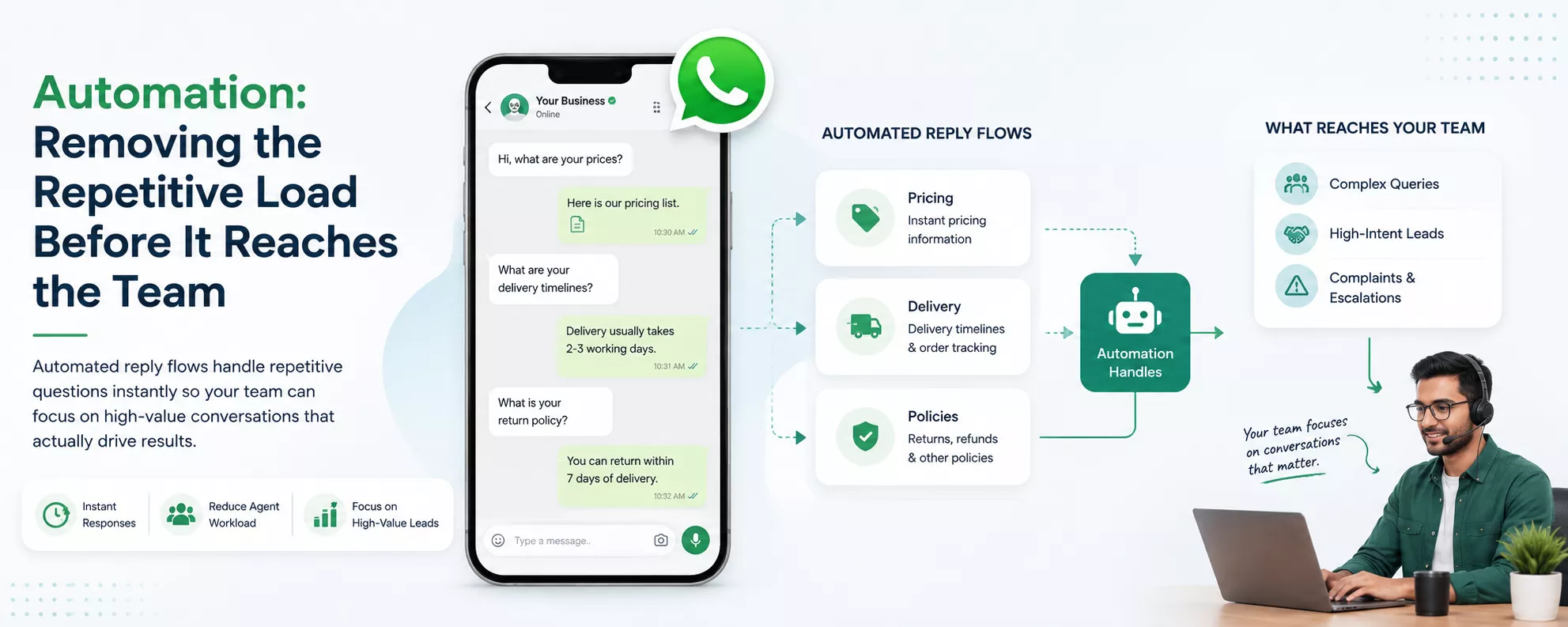
In any business receiving large WhatsApp volumes, a consistent pattern appears when you audit the inbound: a significant majority of messages are asking some version of the same five to eight questions. Pricing. Delivery timelines. Return policy. Product availability. Business hours. How to place an order. These do not require a trained agent. They require an accurate, fast answer.
Automated reply flows handle this category of conversation without a human in the loop. A customer messages at any hour asking about pricing — the automation responds immediately with accurate pricing information and an option to speak with someone. A customer asks about delivery — the automation provides the standard timelines and an option to track an existing order. The conversation resolves without ever entering the team’s queue.
What reaches the team is what automation could not handle — complex queries, complaints, negotiations, high-intent leads who have specific requirements. This is a much smaller volume of conversations, and it is all high-value. Agents are no longer spending the majority of their day on questions that a well-built flow could have resolved. They are spending it on conversations that actually need them.
A business that was previously drowning in 400 daily WhatsApp messages can, with well-designed automation, reduce the conversations requiring human handling to 80 or 100. The same team now works through a manageable, prioritised queue rather than an undifferentiated flood.
Templates: Consistency at Every Conversation, Regardless of Who Handles It
When five agents are handling WhatsApp conversations simultaneously, the customer experience across those conversations should feel consistent. That rarely happens without templates. One agent sends a detailed, warm follow-up. Another sends a two-line reply with the wrong pricing. A third uses language that does not match the brand’s tone. Customers notice the inconsistency even when they cannot articulate why the experience felt off.
Approved WhatsApp templates solve this by standardising the outbound messages that cover predictable situations — confirmations, follow-ups, escalation acknowledgements, pricing breakdowns, re-engagement messages. Every agent sends the same quality of communication because the template does not vary. The agent’s role is to decide which template applies and personalise the dynamic fields — name, order number, date — not to compose the message from scratch under time pressure.
For a team managing hundreds of conversations, this also reduces the cognitive load on each agent. They are not writing bespoke responses to every message. They are selecting the right structured response, personalising it, and moving to the next conversation. The pace of handling increases without the quality dropping.
The Multi-Agent Inbox: Where Visibility Replaces Chaos
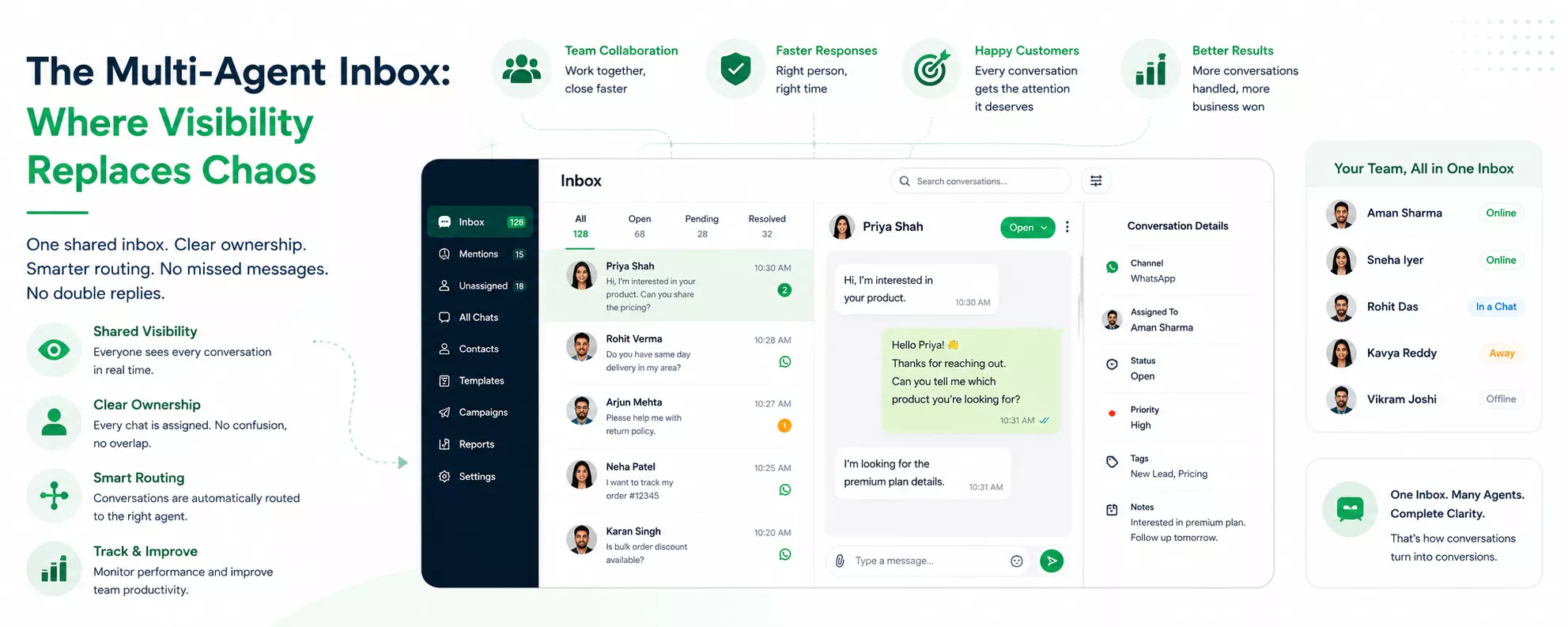
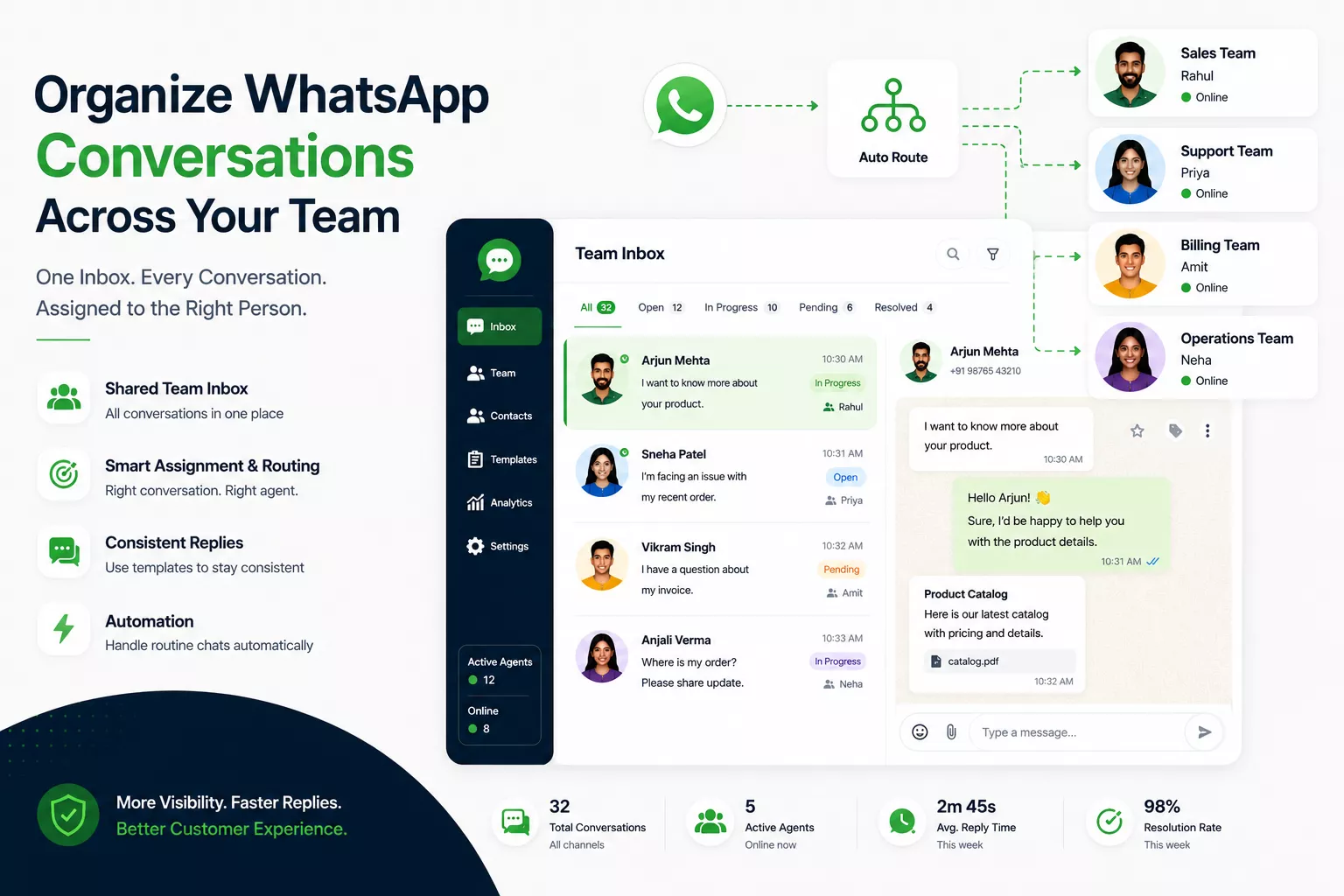
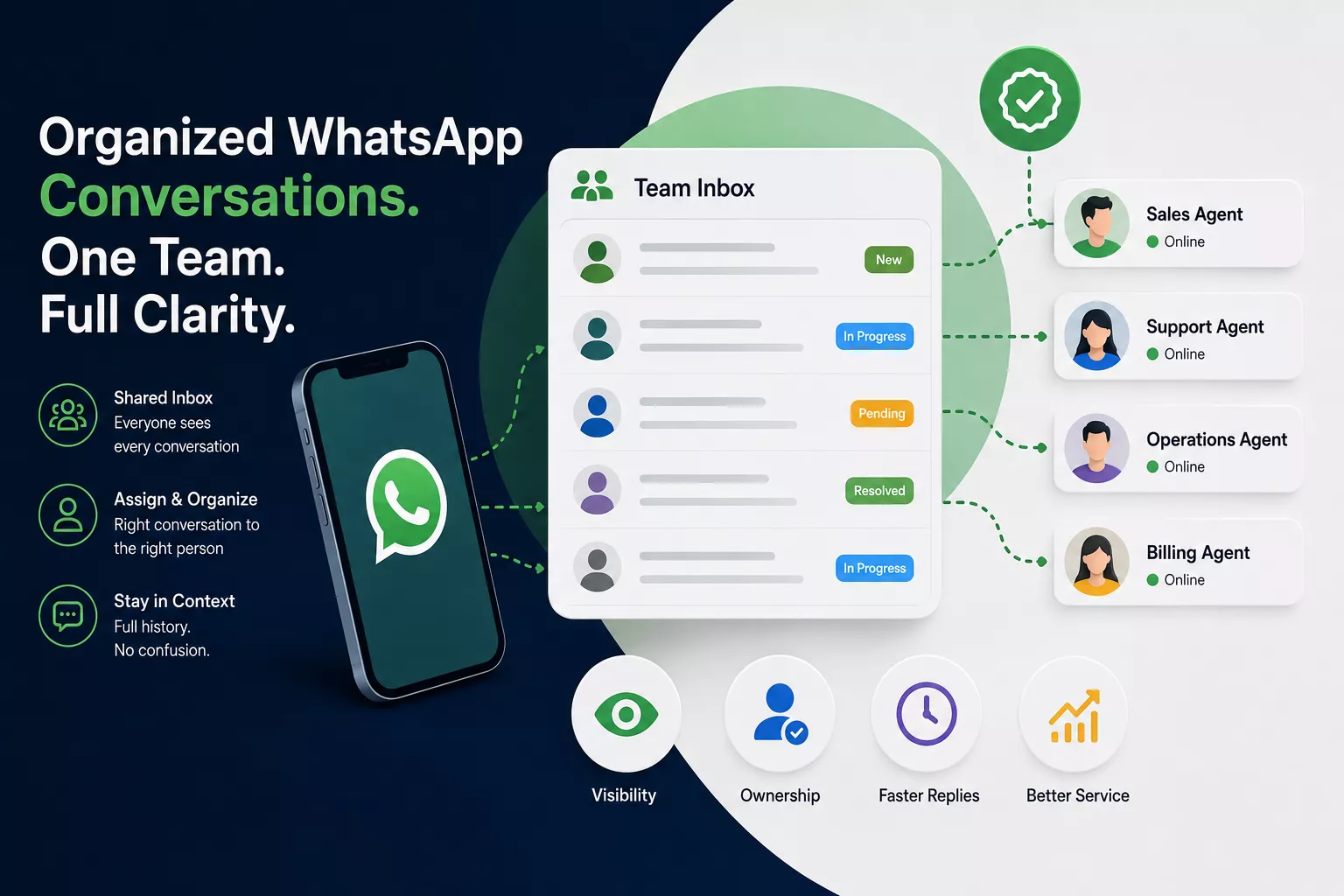
Every other piece of the system feeds into this: the inbox where the team actually works. A multi-agent inbox connected to the WhatsApp Business API gives every team member a shared view of all active conversations, the status of each one, and who owns what.
Conversations are assigned, not grabbed. When a new message arrives, it goes into a queue visible to everyone. A supervisor or routing rule assigns it to the right agent based on their workload, expertise, or the nature of the conversation. No two agents accidentally work the same thread. No thread sits unassigned because everyone assumed someone else picked it up.
Status tracking means every conversation has a defined state — new, in progress, awaiting customer reply, resolved. Supervisors can see, in real time, which agents are at capacity and which have bandwidth. They can reallocate without needing a status meeting. A team of five handling 150 conversations a day with a structured inbox operates at a completely different efficiency level than the same five people managing the same volume through a shared device or a disorganised group setup.
Routing rules add another layer. Post-campaign replies route to sales. Billing questions route to accounts. Technical complaints route to the product team. The inbox becomes a managed workflow, not a pile of unread messages.
What It Actually Looks Like When the System Is Running
A campaign goes out Tuesday morning to a segmented list of 3,000 warm leads. By noon, 350 have replied. Automated flows handle 220 of them — pricing queries, standard availability questions, catalogue requests. The remaining 130 enter the multi-agent inbox, segmented by campaign tag, assigned to three agents based on routing rules and current workload. Each agent opens their queue to see organised, prioritised conversations with full context. Templates handle the structural responses. Agents focus on the judgment calls.
By end of day, 25 conversations have progressed to a booked call or purchase. No message was missed. No lead was double-handled. No agent was overwhelmed because the system distributed the load rather than dumping it on whoever was available.
This is what managing WhatsApp at scale actually looks like when the infrastructure is right. It is not a larger team or longer hours. It is the same team working through a system designed for the volume they are handling — and growing into higher volumes without the system breaking down.
At 24/7 Marketing, this is exactly what we build — campaigns, templates, automated flows, and a structured multi-agent inbox configured as one connected system so that growing businesses can handle more conversations, not more chaos.
Ready to manage WhatsApp at scale without the chaos? Visit 247marketing.in.