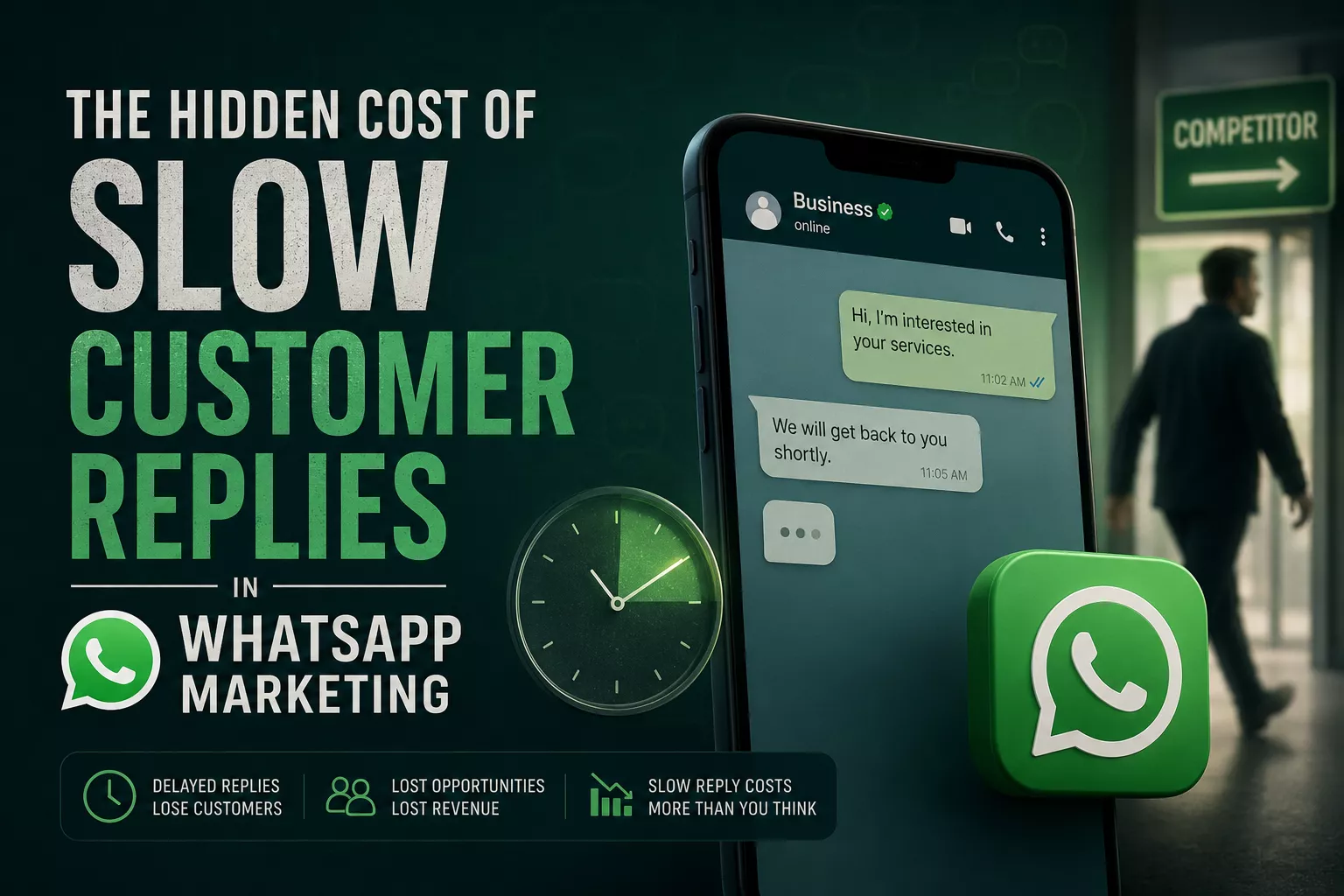
A prospect visits your website, reads through the services page, finds what they need, and fills out the contact form. They hit submit and get an automated confirmation email: ‘Thank you for reaching out, we will get back to you within 24 to 48 hours.’ They close the tab. By the time the business calls or emails the next morning, the prospect has already moved through three other vendor websites, spoken to one of them on the phone, and is considerably less interested in a 48-hour-later email from the first business.
This sequence is the standard experience for a web enquiry in most industries. The form creates an expectation of follow-up. The follow-up is delayed. The lead cools. The cost of acquiring that website visitor — through SEO, paid ads, content, or any other channel — is partially or entirely wasted.
WhatsApp changes this equation when it is built into the follow-up process. Not as an afterthought or an additional channel to manage, but as the primary follow-up channel for web enquiries — one that reaches the prospect faster, on a platform they check constantly, with a message that feels direct rather than transactional.
The Form-to-WhatsApp Connection
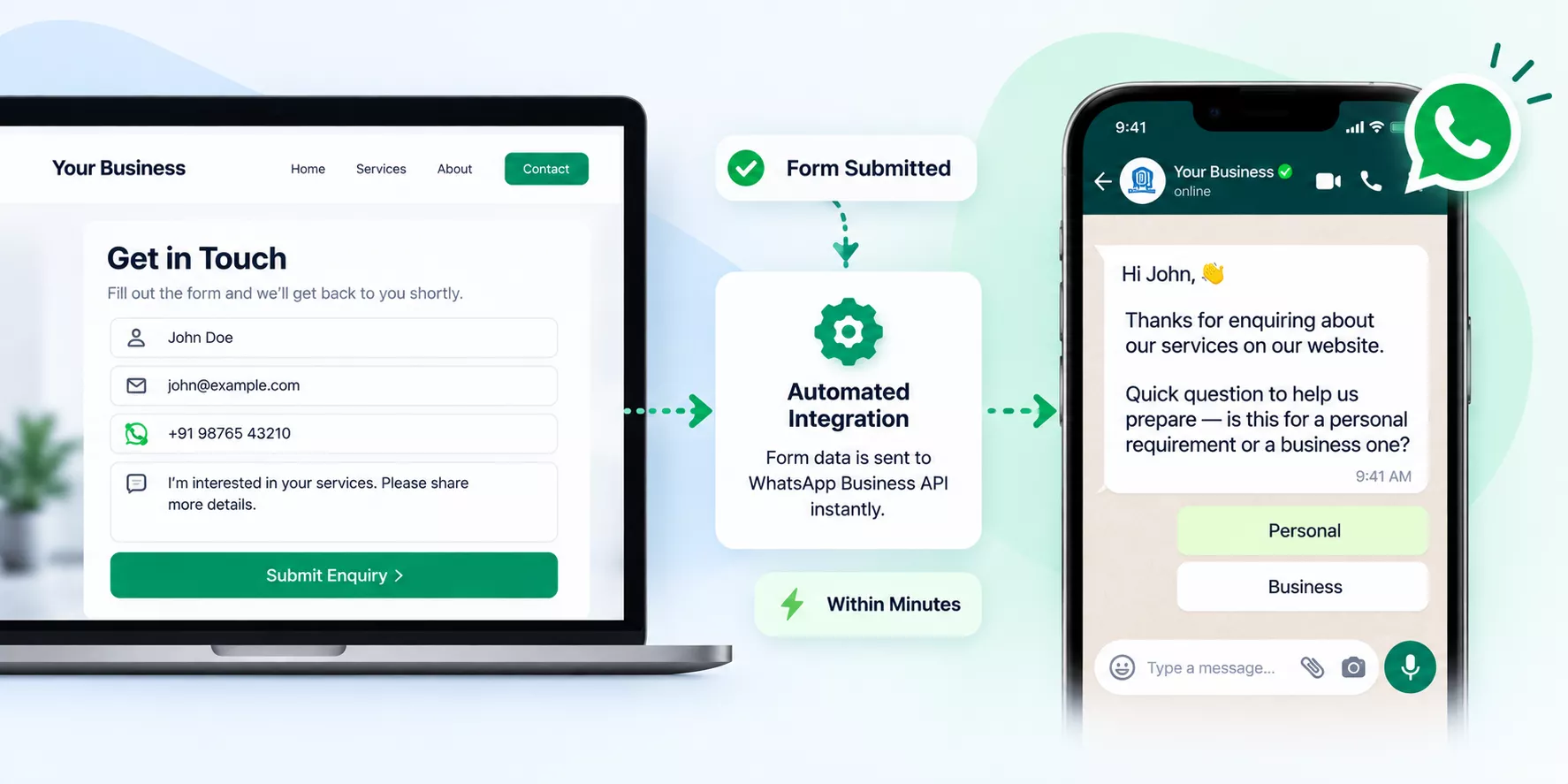
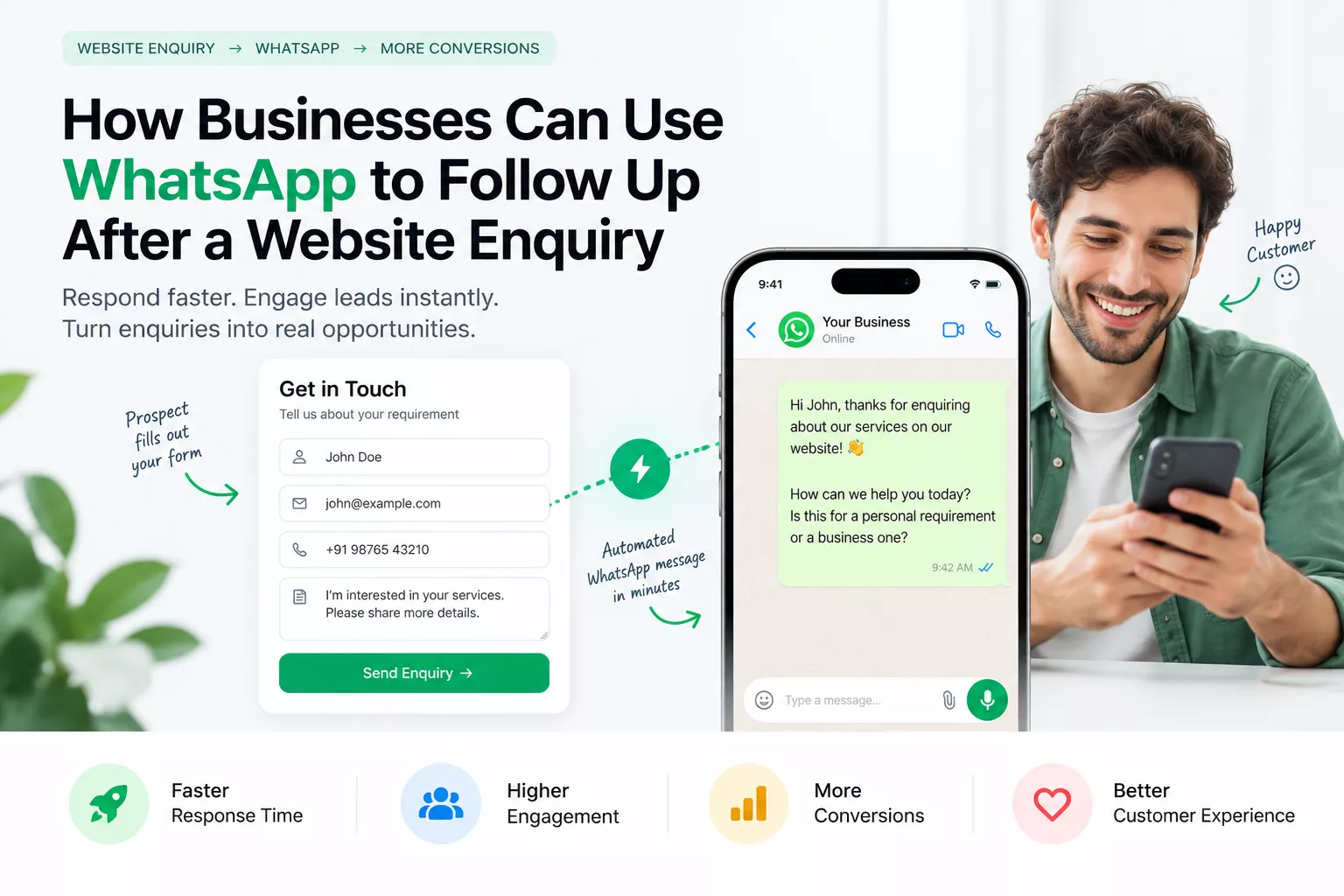
The starting point is simple: when a prospect fills out a contact form and includes their WhatsApp number — or a phone number that doubles as their WhatsApp — the form submission triggers an automated WhatsApp message within minutes. Not within hours. Within minutes.
The message does not say ‘Thank you for your enquiry, someone will be in touch.’ That is an email response dressed up as a WhatsApp message, and it wastes the channel’s biggest advantage. It says something that makes immediate use of the information the prospect just submitted: ‘Hi {{name}}, thanks for enquiring about {{service}} on our website. Quick question to help us prepare — is this for a personal requirement or a business one?’ That message does three things at once. It confirms the enquiry was received. It references what the prospect actually filled in. And it opens the conversation by asking something that requires a reply.
For this to work, the contact form needs to be set up to trigger the WhatsApp message automatically — through an integration with the WhatsApp Business API that passes the form data into the message template at the point of submission. The prospect does not wait for someone to see the form, copy the number, and manually send a message. The system handles it instantly.
Why the First Five Minutes Matter More Than the First Five Hours
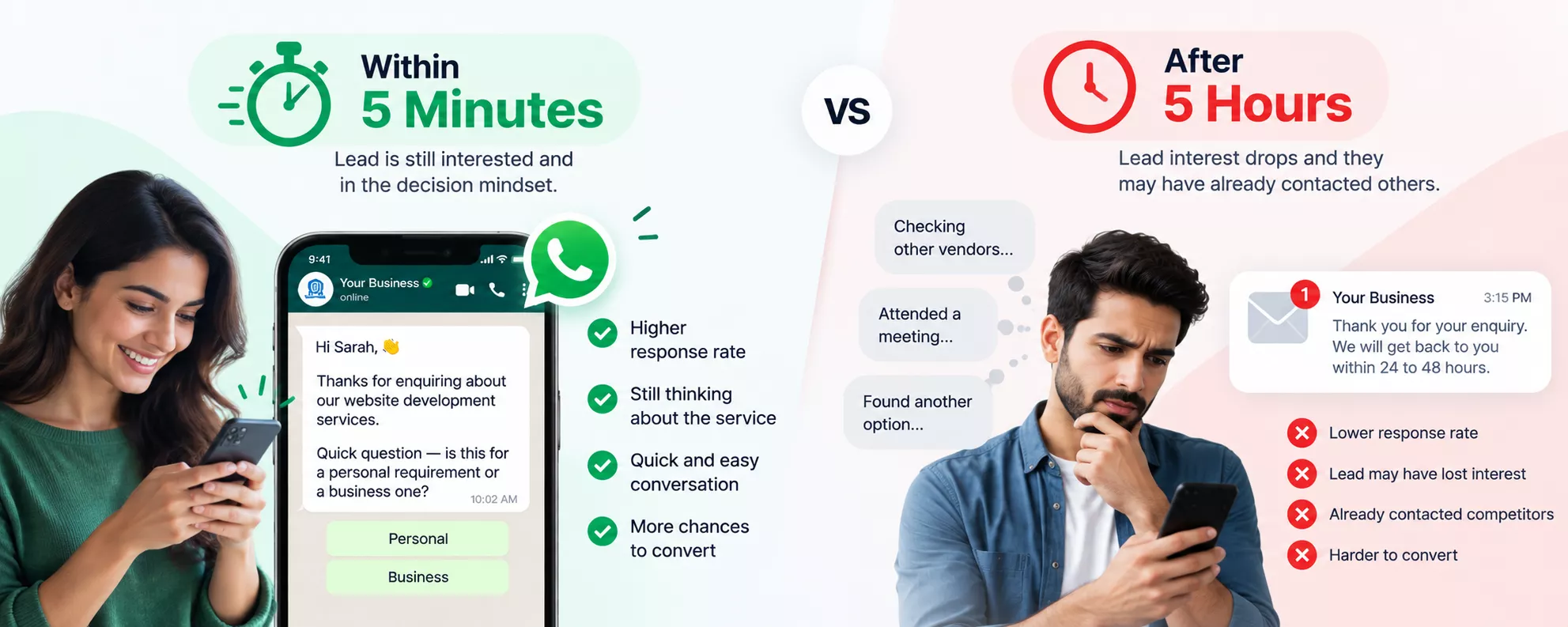
There is well-documented data on lead response time showing that the probability of qualifying a web lead drops dramatically after the first few minutes. The five-minute mark is not chosen arbitrarily. It reflects what happens to a prospect’s mental state after they submit a form: for the first few minutes, they are still in the context of their decision, still thinking about the problem, still oriented toward the business they just contacted. After that, life interrupts. Another tab opens. A meeting starts. The moment passes.
A WhatsApp message that arrives within two to three minutes of form submission catches the prospect in that window. They are literally still on their device, often still on a browser tab near yours. The message is not an interruption — it is a continuation of something they just did. The response rate in this window is dramatically higher than any follow-up that comes later, regardless of how good the later follow-up message is.
This is why building the automation before the first form submission is processed matters more than any copy or template refinement that comes later. Speed is the first variable. Everything else is secondary to getting the first message there while the prospect is still in the moment.
What the First Automated Message Should and Should Not Do
The first WhatsApp message after a web enquiry has one job: start a conversation. Not close a deal. Not explain the entire service. Not provide a price list. Start a conversation by acknowledging the enquiry with specificity and asking one clear question that prompts an easy, natural reply.
A pest control company receives a web enquiry. The automated WhatsApp follow-up: ‘Hi Sanjay, we got your enquiry about pest control services. Is this for a residential property or a commercial one?’ Two options. One question. Takes Sanjay three seconds to reply. The moment he does, the conversation is alive and the next automated message can go deeper based on his answer.
What the first message should not do: ask five questions at once, send a brochure link as the first touchpoint, or provide a paragraph of information that requires the prospect to read and process before knowing how to respond. Every additional step between the prospect receiving the message and them replying is a drop-off opportunity. The simpler the ask, the higher the response.
Building the Flow That Qualifies While Engaging
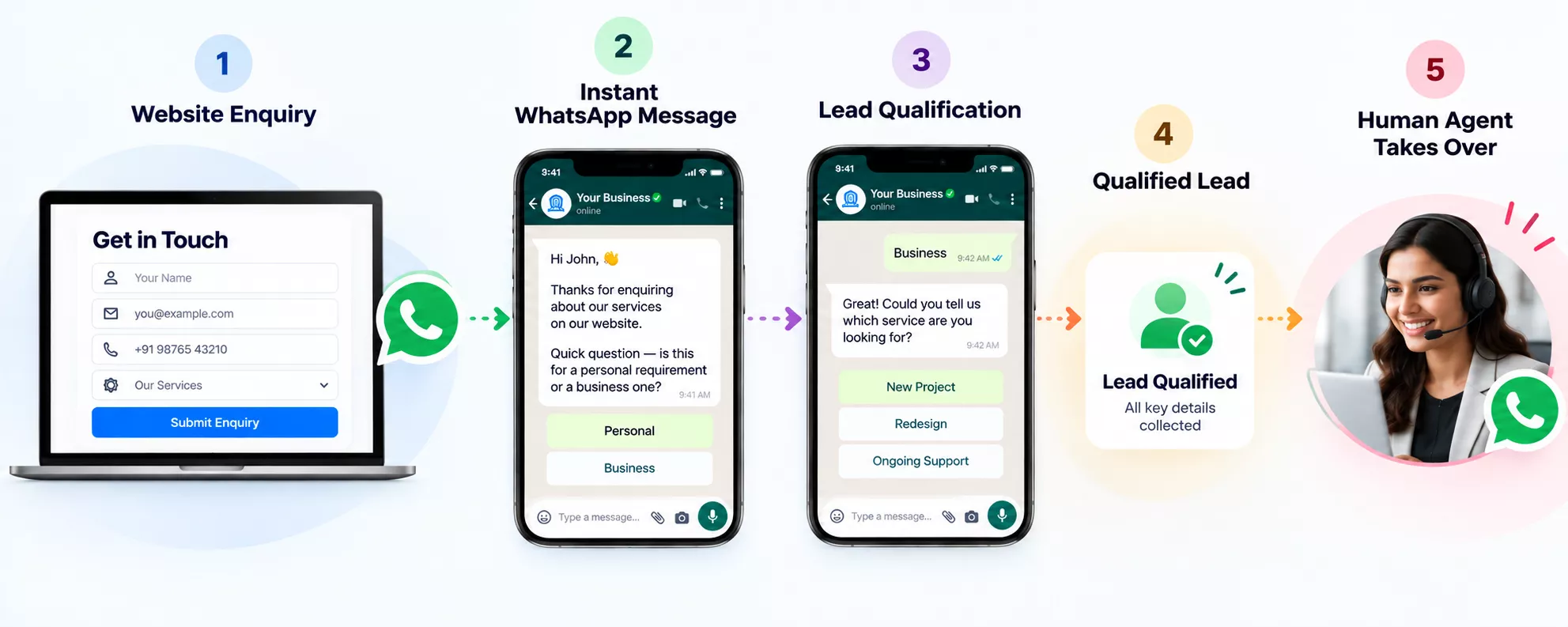
Once the first reply comes in, the automated flow continues — gathering qualification information across a natural back-and-forth exchange rather than presenting the prospect with a form inside a conversation. Each question builds on the previous answer. The prospect does not feel like they are being processed. They feel like they are having a conversation with a business that knows what it needs to know.
For the pest control example: Sanjay replies ‘residential.’ The flow sends: ‘Got it — how many rooms approximately, and have you noticed the issue in a specific area of the property?’ Sanjay answers. The flow sends: ‘We can arrange an inspection this week. Would Thursday or Friday work better for you?’ If he confirms, the booking is captured. If he asks a question the flow cannot answer, the conversation is escalated to a human agent with the full exchange visible.
The qualification information collected through this flow — property type, size, area of concern, preferred timing — is the same information a sales agent would spend five minutes extracting on a phone call. The flow collects it in three or four WhatsApp exchanges before the agent ever gets involved. The agent’s first human message is not a discovery call. It is a closing conversation.
Approved Templates as the Foundation of the Follow-Up Sequence
Every outbound message in a WhatsApp follow-up sequence — the initial acknowledgement, the qualifying questions, the booking confirmation, the reminder before the appointment — must use Meta-approved templates when sent through the WhatsApp Business API. This is not a limitation. It is the quality control mechanism that forces every message in the sequence to be specific, clear, and purposeful.
For a web enquiry follow-up system to work reliably, the template library needs to cover every stage: the first contact, the qualifying questions for each possible segment of enquiry type, the confirmation once a call or visit is booked, the reminder 24 hours before, and the follow-up if the prospect goes quiet mid-flow. Each of these templates uses dynamic variables — the prospect’s name, the service they enquired about, the booking date and time — so every message feels specific to the individual.
At 24/7 Marketing, template development for web enquiry sequences is done before the integration goes live. The templates are written for the specific enquiry types a business typically receives, approved through Meta’s review, and mapped to the exact points in the flow where they trigger. A system that goes live with placeholder templates or generic follow-up messages defeats the purpose of the automation.
When the Human Agent Takes Over
The automated flow handles everything it was designed for. What it cannot handle — a prospect who asks a complex question mid-flow, who wants to negotiate, who has a specific situation that does not fit the standard path — gets escalated to a human agent. The escalation should feel seamless to the prospect.
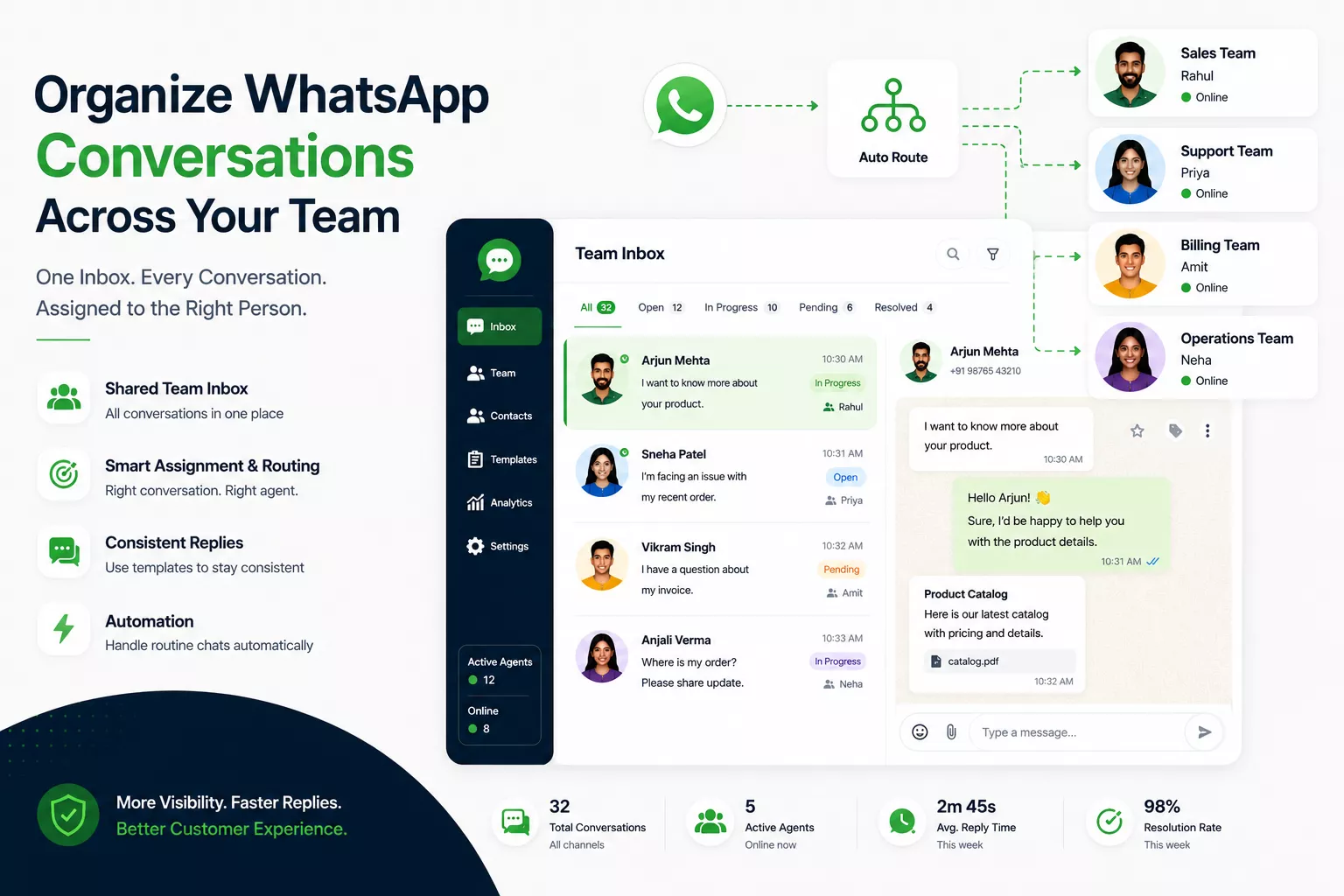
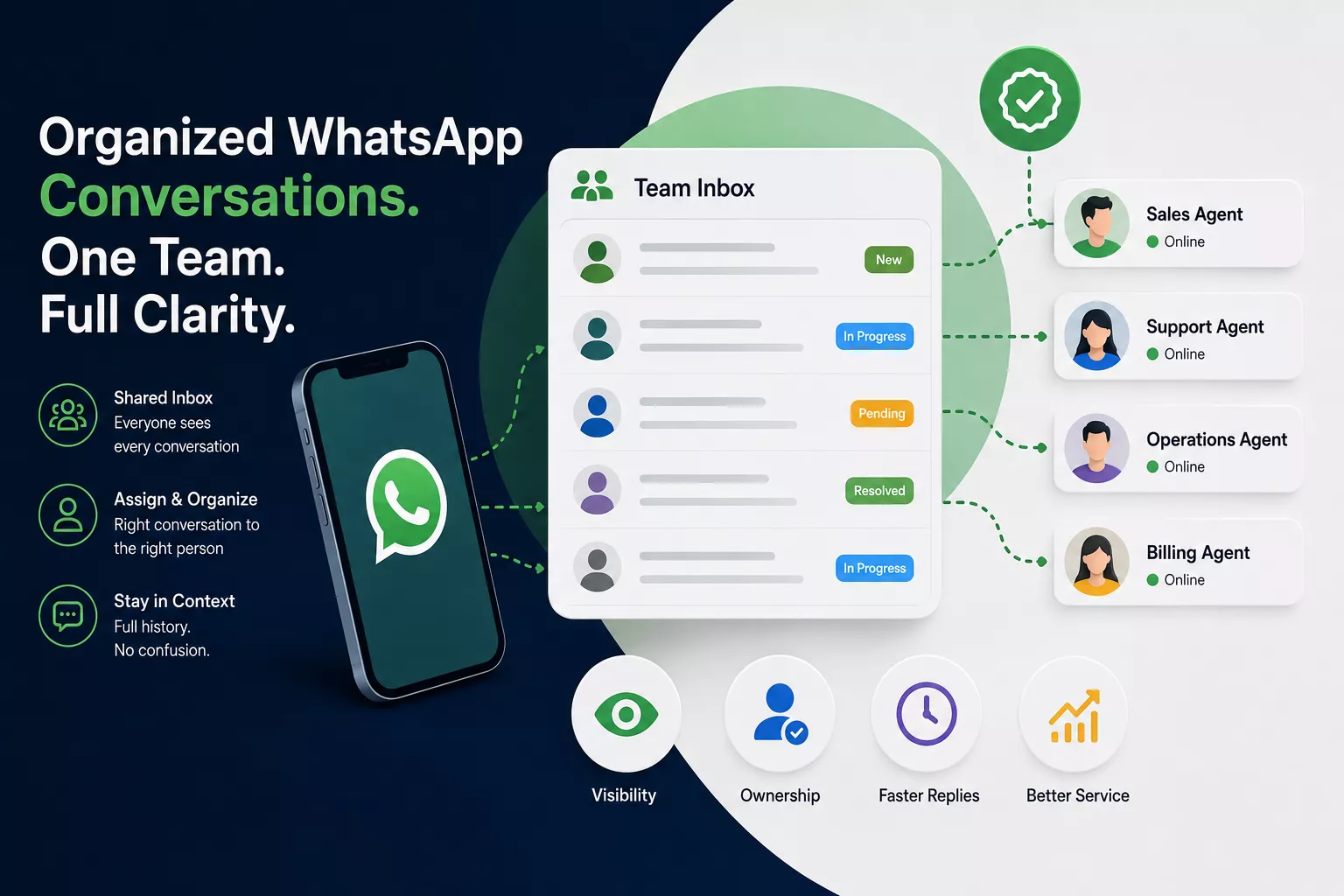
In the multi-agent inbox, the escalated conversation arrives tagged as a web enquiry, with the form submission details, the full automated exchange, and the point at which the flow could not proceed. The agent reads the thread before sending a single word. Their first message references what has already been discussed. The prospect does not experience a reset — they experience a continuation.
Routing rules in the inbox ensure web enquiry conversations go to the right agent or team. A high-value enquiry flagged by the flow’s qualification logic goes to a senior sales agent. A standard service enquiry goes to the appropriate support team. Nobody is handling a conversation outside their area because the system sorted it before any human touched it.
What Happens When the Prospect Does Not Reply to the First Message
Not every prospect will reply to the first WhatsApp message, even when it arrives quickly and asks a simple question. Some people submit forms and then get pulled away. Some saw the notification but did not open it yet. A structured follow-up sequence handles these cases without requiring manual intervention.
A second message goes out 24 hours later — a different angle, not a repeat of the first. A brief check-in: ‘Hi Sanjay, just following up on your enquiry from yesterday. Happy to answer any questions before you decide — what would be most helpful?’ If there is still no response after a second touchpoint, a third message at day three takes a different approach — a useful piece of information, a relevant case example, or a specific time-limited reason to respond.
Each message in the sequence changes the angle without repeating the same ask. Three touches across a week, all different, all automated, all using approved templates. If the prospect responds to any of them, the flow picks up from there. If none of them land, the lead is logged as non-responsive with the full sequence recorded — and can be revisited in a re-engagement campaign later.
At 24/7 Marketing, web enquiry follow-up on WhatsApp is designed as a full system — the form-to-API connection, the initial template, the qualifying flow, the agent inbox with routing, and the non-response sequence. Because a website that generates enquiries but has no system to convert them is a revenue leak that never appears on any report.
Ready to turn website enquiries into WhatsApp conversations that convert? Visit 247marketing.in.