There is no alert when a lead goes cold because of a slow reply. No notification, no report line, no visible failure. The prospect simply stops responding and the conversation gets buried under newer messages. From the inside, it looks like a lead that did not work out. From the outside, it looks like a business that did not show up when it mattered.
This is the nature of slow reply costs on WhatsApp — they are invisible at the individual level and damaging at the aggregate level. No single unanswered message looks like a crisis. A hundred unanswered messages across a month, each one a prospect who moved on because nothing came back fast enough, represents a significant and entirely avoidable revenue hole.
The businesses that understand this do not just try to reply faster. They build systems that make slow replies structurally impossible. Here is what the cost actually looks like when you trace it properly.
The Revenue Cost That Never Appears in the Spreadsheet
Every business tracks the leads it converts. Very few track the leads that were actively interested, sent a message, waited, and then quietly bought from someone else. The absence of a deal in your pipeline does not tell you whether that deal was ever possible. It just tells you it did not happen.
But consider what a typical slow-reply situation looks like in a business running WhatsApp campaigns. A campaign goes out to 2,000 contacts. 180 reply with genuine interest. The team is stretched — two people managing the inbox on top of other responsibilities. By the time some replies get answered, four to six hours have passed. Of the 180 who replied, a meaningful portion have already gone elsewhere or lost the urgency they had when they first sent that message.
If even 20 percent of those 180 were convertible with a fast response and were lost to slow ones, that is 36 opportunities per campaign that never showed up anywhere as a loss — because you cannot count what you never captured. Multiply that across twelve campaigns a year and the number becomes significant against whatever was spent acquiring those contacts in the first place.
The Acquisition Cost That Gets Wasted Twice
Every contact in a WhatsApp campaign cost something to acquire. They came through a paid ad, a content download, an exhibition, a referral programme, or some other mechanism that took time or money or both. When that contact responds to a campaign and the business fails to follow up quickly enough, the acquisition cost is effectively wasted — the contact was reached, interest was generated, and then the opportunity was squandered in the follow-up.
The second waste comes when the business tries to re-acquire the same or similar contacts through future campaigns. Some of the prospects who went cold because of a slow reply will appear on the list again — now with a worse impression of the business than they had the first time. The second campaign costs the same as the first but starts from a lower trust baseline, because the previous interaction left them with the impression that this business does not respond well.
Fast replies do not just save individual deals. They protect the investment already made in building and reaching the list.
The Competitor Advantage You Are Handing Over
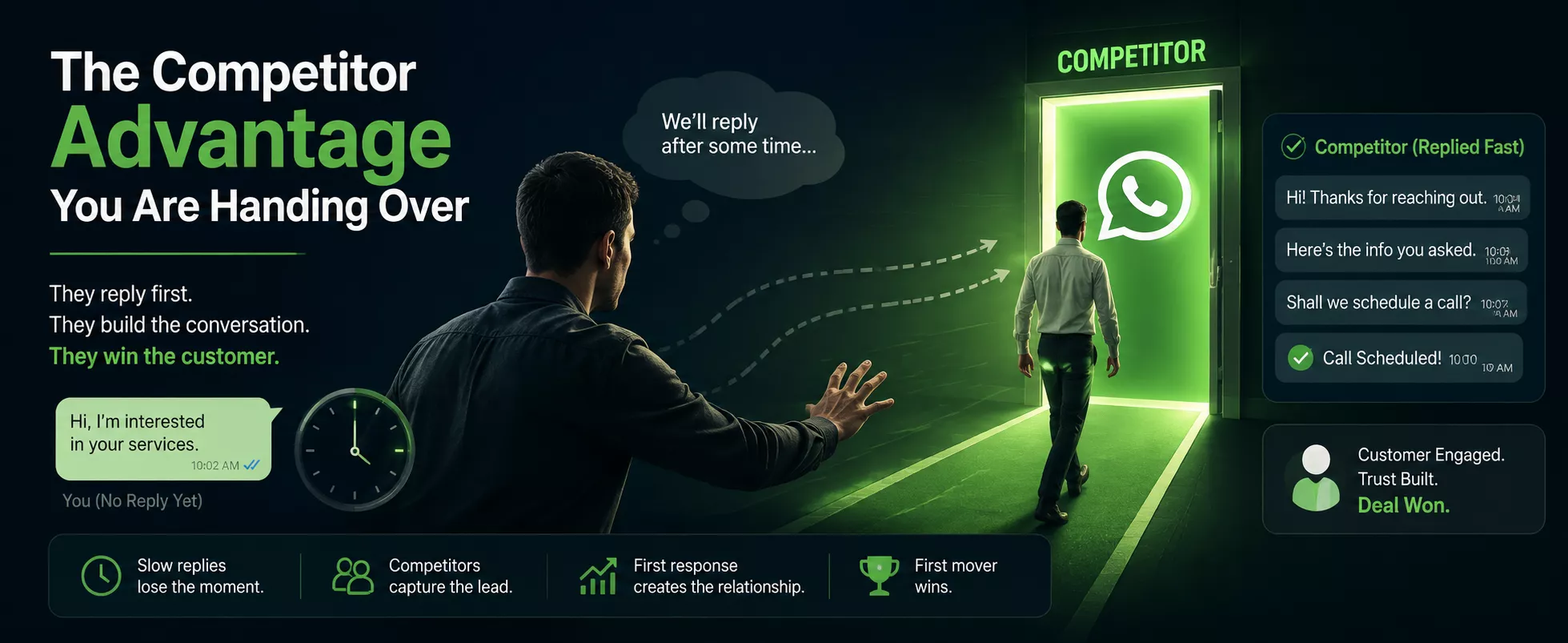
Most prospects who are evaluating a purchase or service are not talking to only one business. They are messaging two or three options simultaneously. The one that responds first gets the conversation. The one that gets the conversation has the relationship. The others are playing catch-up from behind, often without knowing that a competitor has already established themselves as the attentive option.
A prospect messages three financial advisors about investment options. Advisor A replies in eight minutes. Advisor B in two hours. Advisor C the next morning. Advisor A already has context about the prospect’s goals, has answered two follow-up questions, and has scheduled a call. By the time Advisor B and C arrive, they are not competing on quality — they are competing with a relationship that already exists. That is a contest they are unlikely to win regardless of how good their eventual reply is.
The slow reply does not just lose one deal. It cedes first-mover advantage in every situation where multiple businesses are in consideration simultaneously — which is most situations.
The Reputation Cost That Compounds Over Time
A prospect who waits four hours for a reply does not just move on. They often share the experience. Not in a formal review necessarily, but in the way that shapes word of mouth: a casual mention to a colleague who asks about vendors, a comment in a community group, an anecdote that colours how several people who heard it think about the business.
The reverse is also true and more valuable. A prospect who messages at 11 PM and gets a relevant, helpful automated response within seconds — followed by a well-informed human agent in the morning — talks about that too. In a market where most businesses still leave WhatsApp messages sitting unread overnight, being the one that actually responds becomes a differentiator people mention unprompted.
Reputation is built through repeated interactions, not single ones. But it is the pattern of slow or fast replies that creates the reputation, one interaction at a time.
The Team Cost That Shows Up as Burnout, Not Numbers
Slow replies frequently have a structural cause that costs the team as much as the business. When WhatsApp conversations are managed manually, with no inbox structure and no automation handling the repetitive volume, the people responsible for replies spend a disproportionate amount of their energy on triage — figuring out which messages came in, who is handling what, which ones have been answered, and which ones need a follow-up.
This is not conversation management. It is operational overhead that has been misidentified as conversation management. The team is busy, but much of that busyness is caused by the absence of a system rather than the actual volume of conversations. A structured inbox with assigned conversations, clear status, and automation handling the repetitive queries dramatically reduces this overhead — which means the team’s actual capacity increases without anyone working harder.
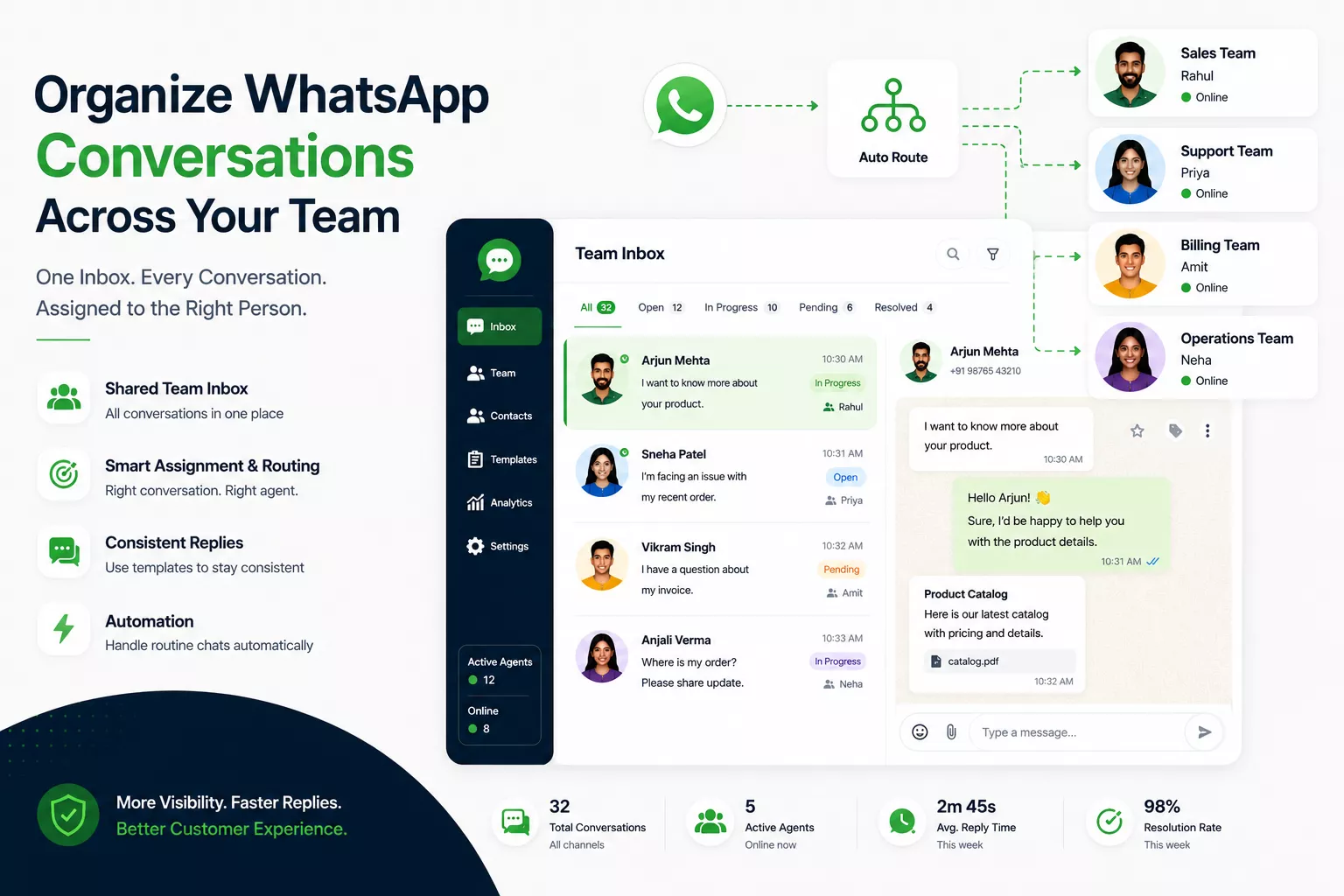
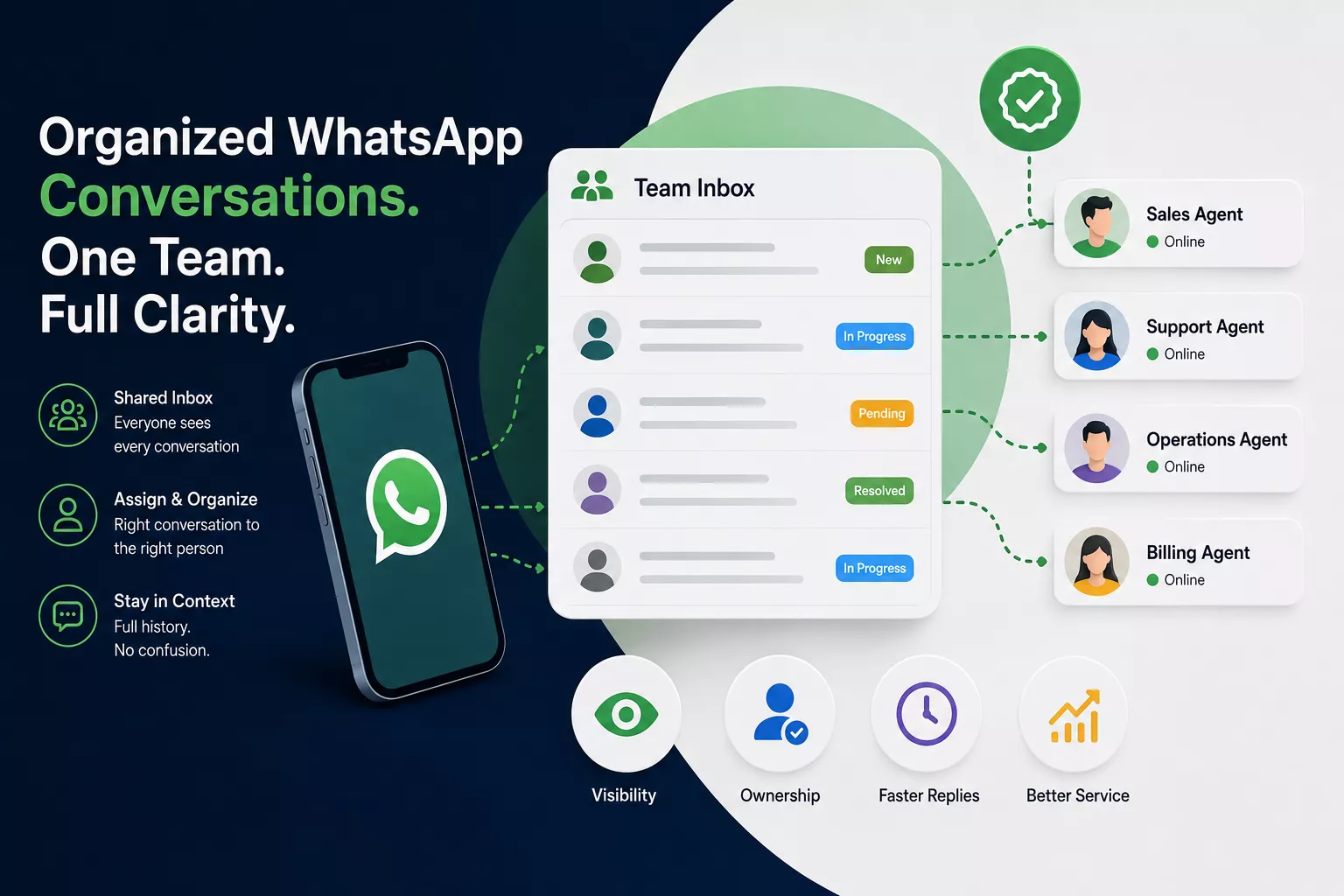
A multi-agent inbox where conversations are assigned, tracked, and visible to supervisors removes the coordination cost that slows teams down. Routing rules send the right conversation to the right agent without manual sorting. Status tracking means nothing sits unacknowledged without anyone noticing. The team’s reply speed improves not because individuals are faster but because the system stops working against them.
Making Fast Replies Structural, Not Effortful
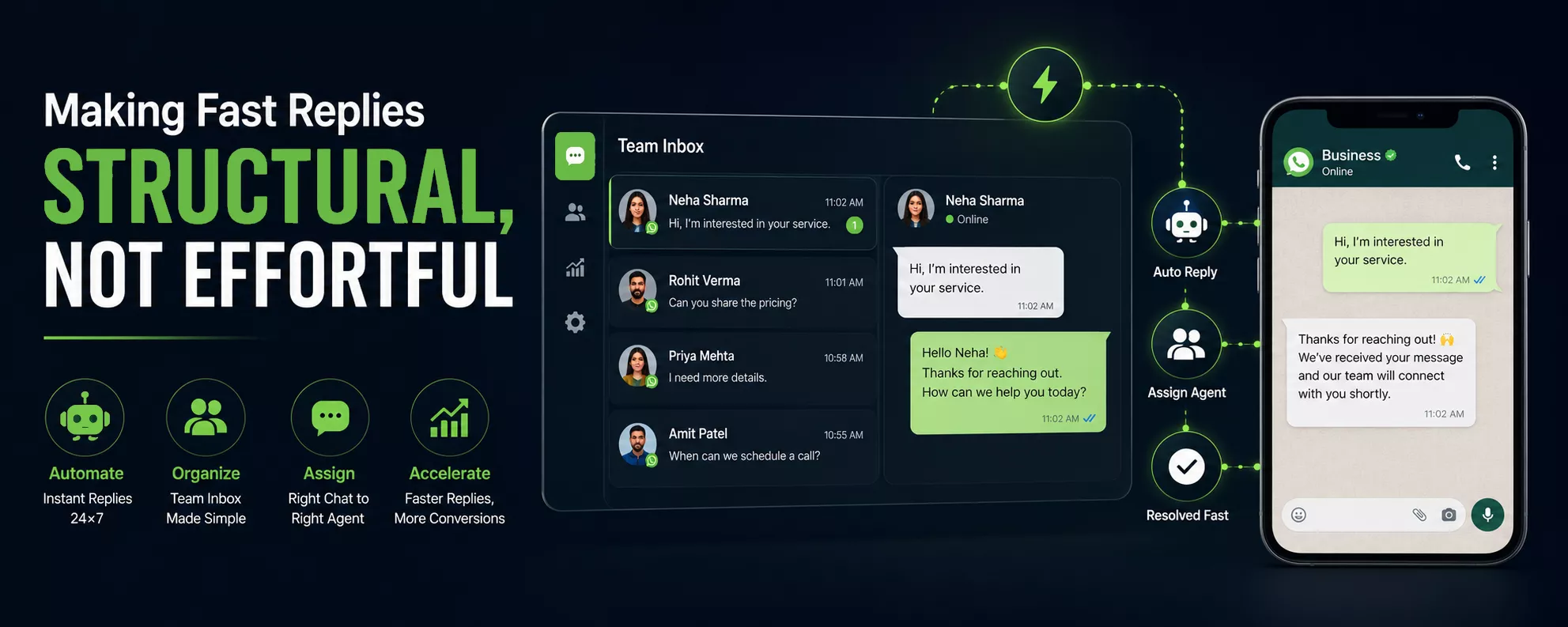
The fix for slow replies is not telling the team to try harder. Effort-based solutions cap out at whatever the team’s maximum capacity is and break down the moment volume increases. Structural solutions remove the dependency on maximum effort as the baseline.
Automated reply flows cover the after-hours gap and the high-volume periods when human capacity is temporarily exceeded. Every inbound message gets an immediate, relevant response while the human queue catches up. Approved templates remove the time agents spend composing repetitive responses from scratch — the same answer goes out faster, more consistently, and with less cognitive load on the person sending it.
Campaigns built around segmented lists reduce the volume of low-quality inbound by ensuring the messages going out are relevant to the people receiving them. Relevant messages generate higher-quality replies that are easier for the team to handle, rather than a flood of unfocused inbound from unsegmented blasts.
The cost of slow replies is real, measurable when you look for it, and entirely preventable with the right infrastructure. At 24/7 Marketing, we build that infrastructure — campaigns, templates, automated flows, and a structured multi-agent inbox — as a connected system that makes fast, consistent replies the default rather than the exception.
Stop paying the hidden cost of slow replies. Build a system that responds when it matters. Visit 247marketing.in.