Sales has always been a conversation sport. The channel that gets you closest to a real two-way exchange with a potential customer is, almost by definition, the channel with the highest conversion potential. For most of the last decade, that meant phone calls and face-to-face meetings — channels that are high-quality but hard to scale. Email tried to fill the gap but ended up creating a medium that is easy to ignore and slow to respond to.
WhatsApp does something neither of those channels does particularly well: it creates the intimacy and speed of a real conversation at a scale that email cannot match and at a cost that phone cannot match. That combination is why businesses across industries — real estate, financial services, healthcare, education, e-commerce, professional services — are treating WhatsApp as a primary sales channel rather than a customer service afterthought.
This shift did not happen because someone decided WhatsApp should be a sales tool. It happened because customers started using it that way, and businesses that noticed started winning deals that businesses clinging to email and cold calls were losing.
The Attention Problem That WhatsApp Solves
Getting a prospect’s attention in 2026 is not a nice-to-have — it is the first and hardest problem in sales. Email inboxes are flooded. Phone calls from unknown numbers get declined by default. LinkedIn messages from salespeople are ignored at the same rate as unsolicited emails.
WhatsApp messages get read. Not because the content is necessarily more compelling, but because the channel carries a fundamentally different expectation. When a WhatsApp notification arrives, the default behaviour for most people is to check it. That open reflex — built through years of using the platform for personal and important communication — does not fully switch off when the message comes from a business, provided the business has earned the right to be there through opt-in.
A sales team operating on WhatsApp starts every outreach attempt with the attention problem already half-solved. The message will be seen. What happens next depends on the quality of the message and the speed of the follow-up — but the starting position is dramatically better than it is on email or phone.
From Broadcast to Conversation in One Reply
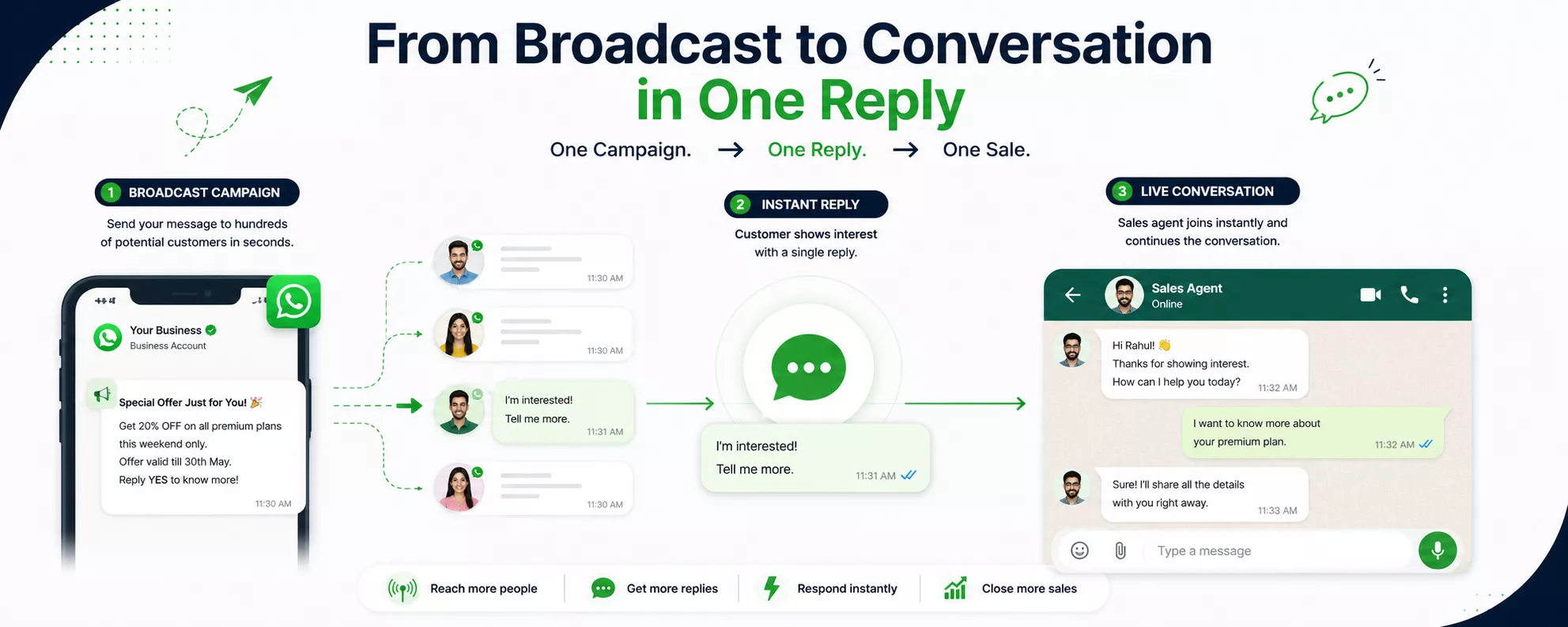
Every other sales channel requires multiple steps to get from an outbound message to a live conversation. An email might prompt a phone call, which requires scheduling, which leads to a meeting, which produces a proposal. Each transition is a potential drop-off point. The prospect loses interest, gets busy, or simply stops responding somewhere along that chain.
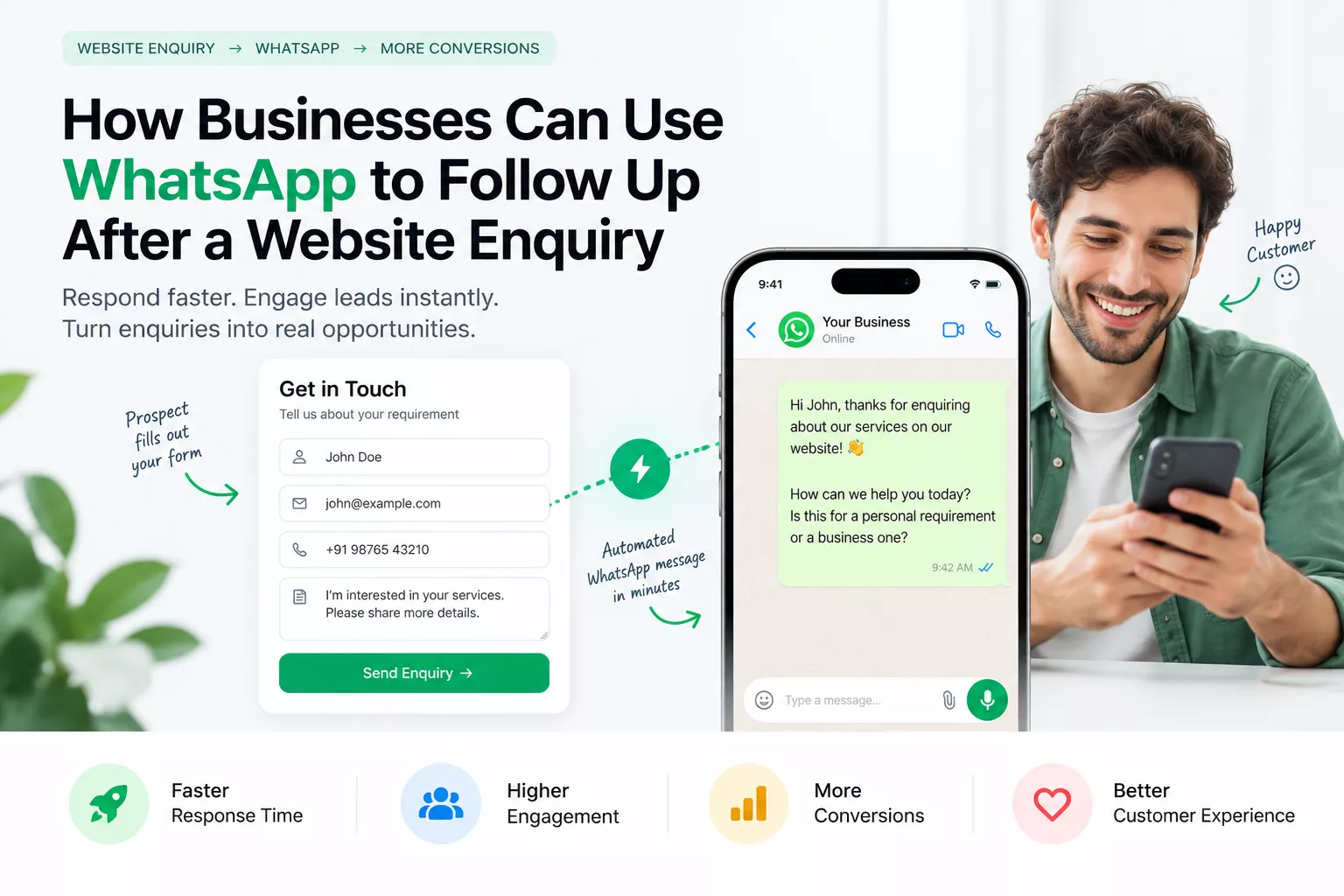
On WhatsApp, the campaign message and the sales conversation happen in the same thread. A prospect who receives a campaign about a new product offering replies with a question. An automated flow captures the initial intent and qualifies them. A sales agent enters the thread with full context and continues the conversation in real time. From first touch to active sales conversation, the whole sequence happened within the same interface the prospect uses to message their family.
The reduction in friction between a prospect showing interest and a salesperson having a meaningful conversation with them is the core reason WhatsApp converts at higher rates than the channels it replaces for direct outreach. Fewer steps mean fewer drop-offs. Fewer drop-offs mean more deals.
The Speed of the Conversation Changes the Outcome
Sales cycles shorten on WhatsApp not just because the channel is more convenient but because the pace of exchange compresses decision-making. A prospect who would have taken two weeks to reply to email threads — waiting for a response, waiting to respond, waiting for the next thing — can cover the same ground in a WhatsApp thread in an afternoon.
A prospect considering a business software subscription might exchange fifteen messages over a WhatsApp thread in one evening: features, pricing, implementation, team size requirements, trial options, payment. By the end of the evening they know everything they need to make a decision. That same exchange on email would take five business days minimum, with a call required somewhere in the middle to answer the questions that the email chain made confusing.
The speed advantage compounds across the sales team. More conversations can be run simultaneously because WhatsApp’s asynchronous nature allows agents to manage multiple threads without the scheduling conflicts that phone calls create. A single agent handling eight WhatsApp sales conversations in parallel is common. Eight simultaneous phone calls is physically impossible.
Campaigns as the Top of the Sales Funnel
WhatsApp campaigns to opted-in prospects are not just a marketing function — they are the entry point to the sales process. When a campaign goes out to a segmented list of contacts who have previously shown interest in a product or service, the replies that come back are not casual enquiries. They are raised hands from people who are actively considering a purchase.
A property developer sending a WhatsApp campaign to prospects who attended a site visit six months ago is not doing brand marketing. They are directly targeting people who demonstrated buying intent and giving them a specific reason to re-engage — a new phase launch, a price revision, a limited inventory update. The replies that come back from that campaign are not cold enquiries to be nurtured over months. They are warm conversations that a sales agent can move toward a closing decision within days.
The approved template structure that the WhatsApp Business API requires for these campaigns is not a constraint — it is a quality filter. Templates that get approved are specific, clear, and relevant. Generic, vague promotional messages rarely pass the review process. The campaign that reaches the prospect was vetted to be worth sending, which raises the baseline quality of every outreach the sales team does on the channel.
Automation as the Sales Team's Multiplier
The human sales team is not infinitely scalable. There are only so many conversations a person can manage well at the same time, and only so many hours in a working day. WhatsApp automation extends the reach and effectiveness of the sales team without adding headcount.
Automated reply flows handle the initial qualification — asking the right questions, capturing relevant details, filtering out contacts who are not ready to buy from those who are. By the time a human sales agent picks up a thread, the prospect has already been asked about their budget, timeline, and specific requirement. The agent enters as a closer, not as someone starting the discovery process from zero.
After-hours automation means the sales team is effectively present around the clock even when nobody is at their desk. A prospect who reaches out at 10 PM gets a meaningful, intelligent response that keeps the conversation alive. The agent picks it up in the morning with context already established and a lead that is warmer than it would have been after nine hours of silence.
The Inbox That Makes a Sales Team Accountable
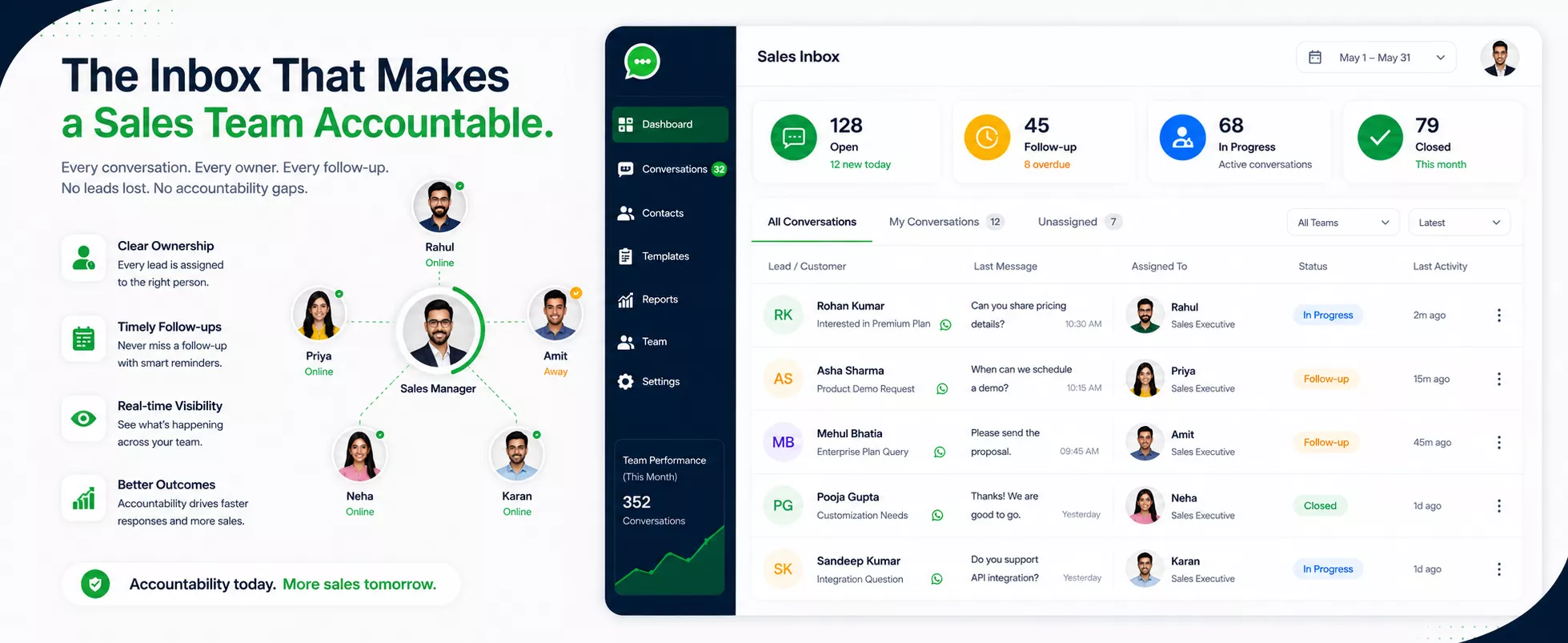
Sales on WhatsApp without a structured inbox is like having a great product with no inventory management. Leads come in, some get handled, some disappear, and there is no reliable way to know which is which until the end of the month when the conversion numbers come in below expectation.
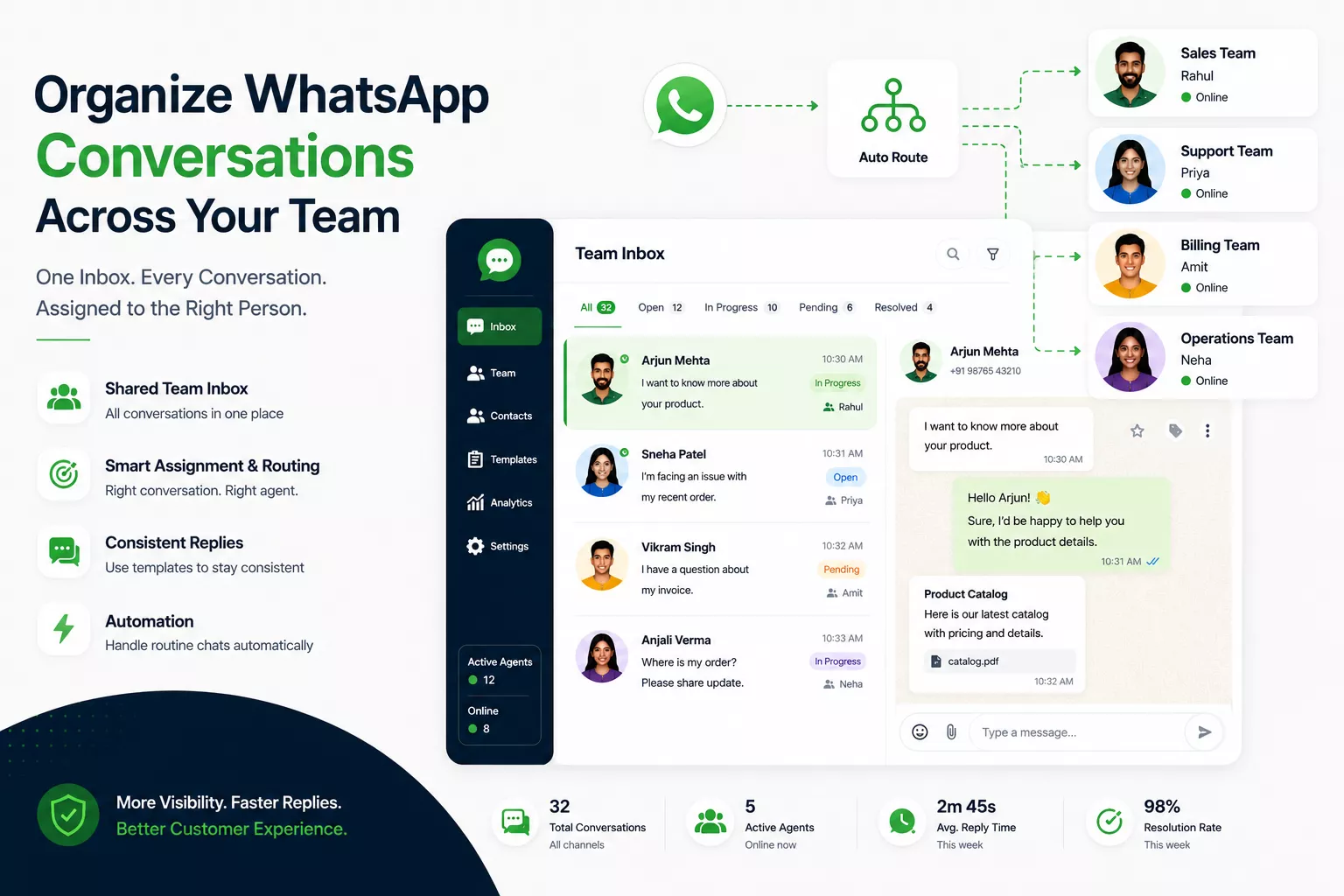
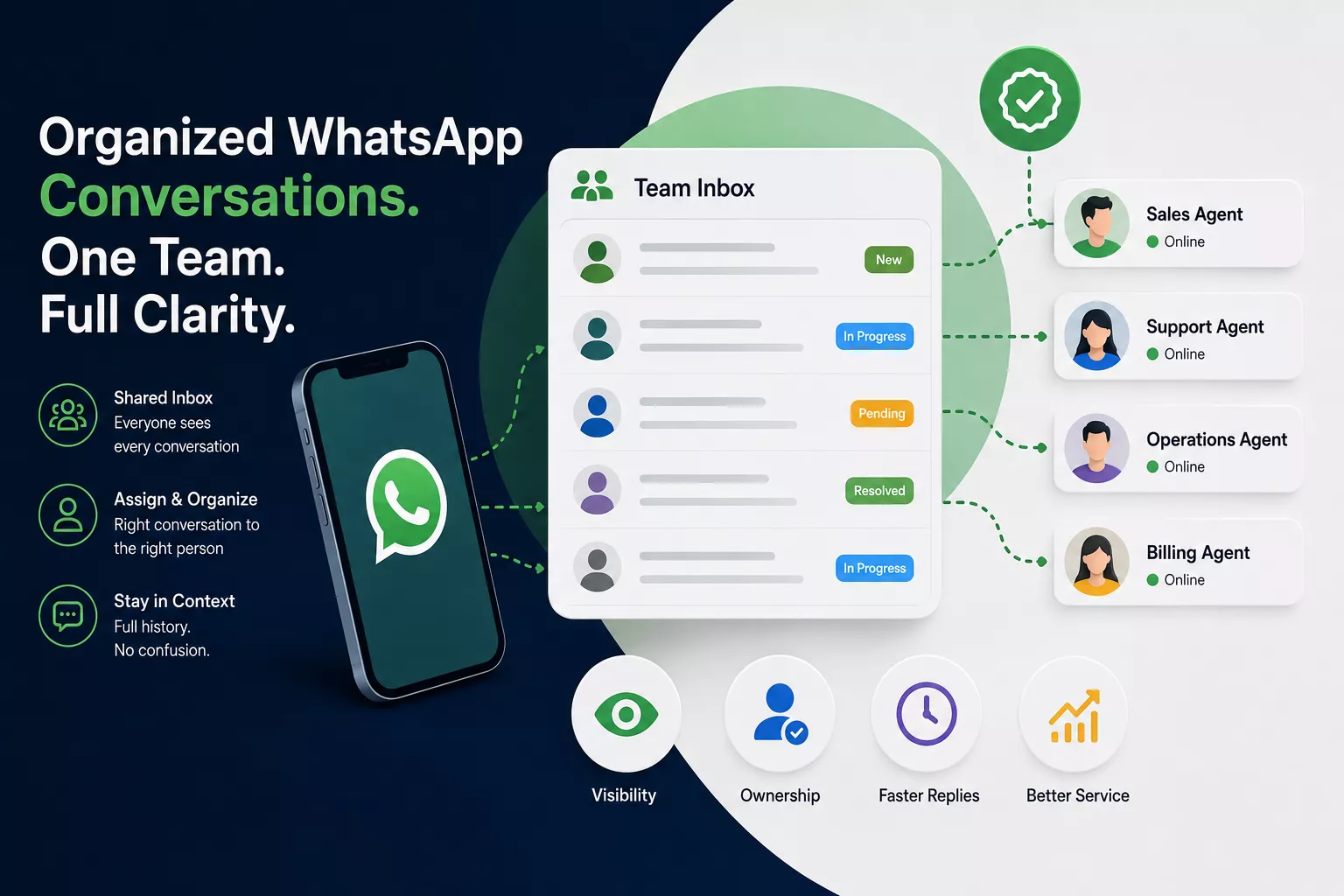
A multi-agent inbox makes every conversation visible, assigned, and trackable. Sales managers can see in real time which leads are in progress, which have been sitting too long, and which agents are carrying the heaviest load. Conversations from high-priority campaigns can be routed to the senior sellers. Follow-up timers ensure warm leads do not age into cold ones while sitting in a queue.
The inbox is what turns WhatsApp from a communication tool into a sales operation. Without it, the channel has great raw material — high attention, fast replies, warm prospects — but no system to convert that material into consistent revenue.
At 24/7 Marketing, we build WhatsApp sales infrastructure end to end — campaigns that bring in warm prospects, templates that keep every outreach consistent, automated flows that qualify leads before they reach a human, and a multi-agent inbox that gives the sales team the visibility and structure to close. WhatsApp became a serious sales channel because customers made it one. The businesses winning on it are the ones that built a serious system to match.
Ready to build WhatsApp into a proper sales channel for your business? Visit 247marketing.in.