Peak hours are when a business’s customer experience is most exposed. A campaign goes out on Monday morning and 300 people reply before noon. A sale announcement triggers a spike of inbound messages in the first two hours. A seasonal campaign during a festival period generates more conversations than the team has seen all quarter. These are not edge cases — they are the moments that determine how customers actually experience the brand under real conditions.
What happens to customer experience during these peak windows depends almost entirely on whether the business has built the infrastructure to handle them. Without it, the team scrambles. Response times stretch from minutes to hours. Quality drops because agents are rushing. Some messages get missed. The customers who messaged during the spike have an experience that contrasts sharply with everything the campaign that prompted them promised.
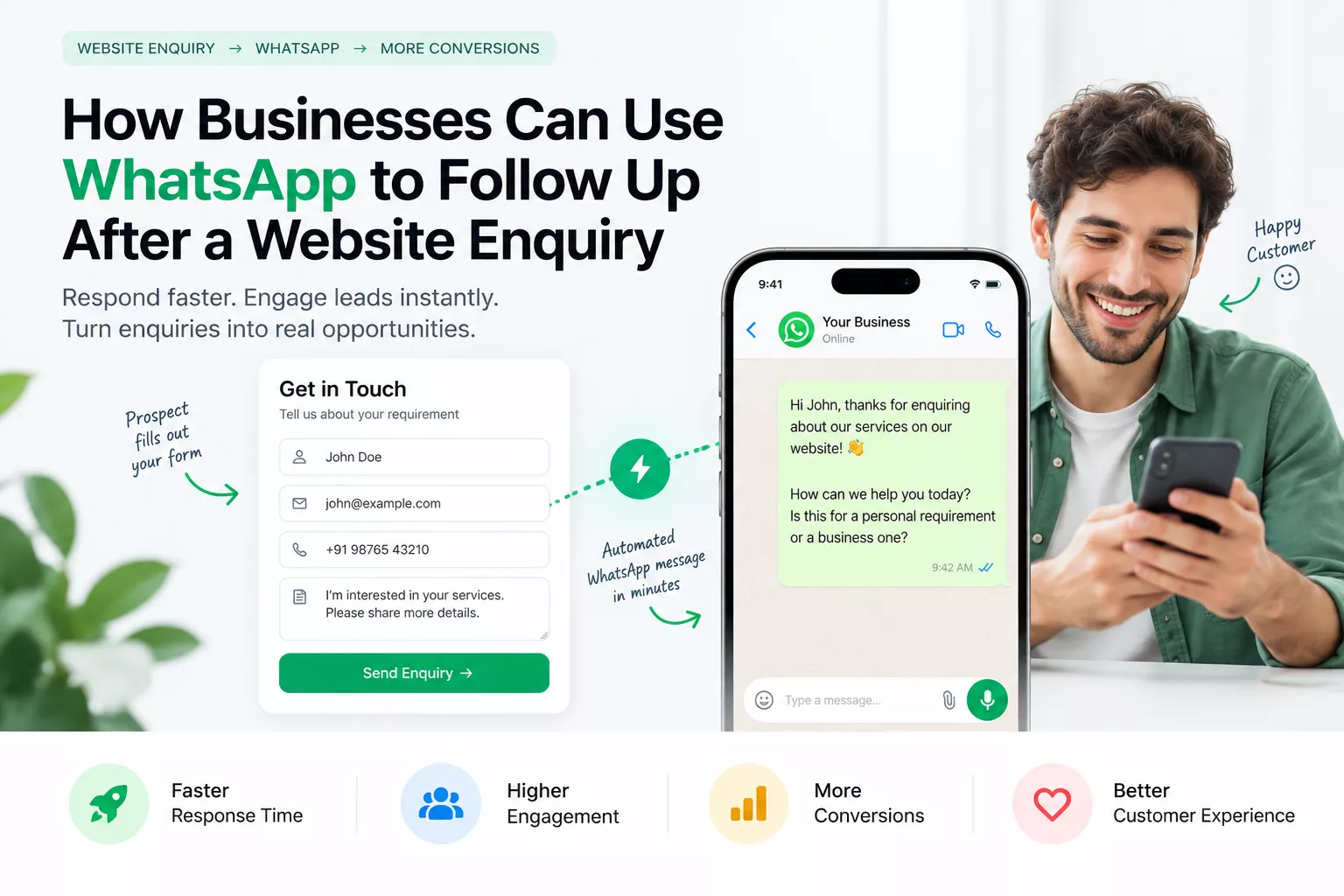
Automated WhatsApp replies are the infrastructure that prevents this. Not because they replace human judgment, but because they absorb the predictable, high-volume portion of peak inbound and keep every customer’s experience consistent whether the message arrived during a quiet Tuesday afternoon or the first two hours after a campaign launch.
What Peak Hours Actually Look Like Inside a Business
Peak hours on WhatsApp are not always predictable by clock time alone. They are triggered by events: a campaign send, a sale announcement, a news story that makes your service suddenly relevant, a competitor going offline. Any of these can produce an inbound spike that bears no resemblance to the typical daily volume the team plans for.
Inside the business, a peak hour looks like this: two or three agents who normally manage a steady flow of 30 to 40 conversations are suddenly looking at 180 new messages, all arriving within the same 90-minute window. They start with the newest ones, losing track of the older ones. They copy-paste responses to save time, introducing errors. Customers who asked specific questions get generic answers because there is no time to read carefully. By the time the spike subsides, 20 percent of the conversations were never responded to at all.
From the customer’s perspective, this is simply a business that cannot handle its own success. They do not see the internal scramble. They see a slow reply, a generic answer, or silence. That experience shapes their relationship with the business going forward — and not in the direction the campaign was designed to take it.
The Automation Layer That Absorbs the Spike
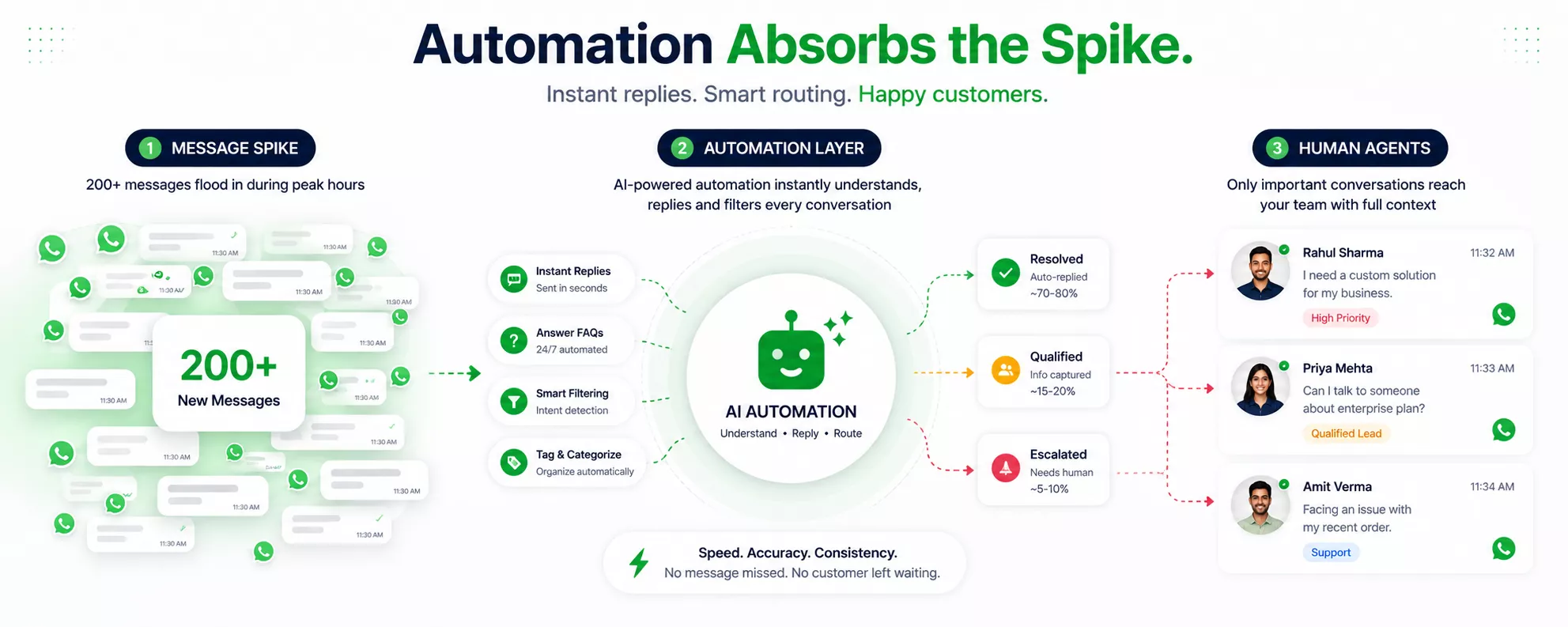
Automated reply flows are built to handle volume without the performance degradation that human agents experience under pressure. When 180 messages arrive in 90 minutes, the automation processes all 180 at the same speed it would process 18. There is no cognitive fatigue. There is no prioritisation error. Every customer gets an immediate, accurate response at the same quality level as the first.
The automation does not try to handle everything. It handles what it was designed for: the predictable, high-frequency questions that make up the majority of peak inbound. A product campaign generates questions about pricing, availability, and delivery timelines. An event registration campaign generates questions about schedule, location, and how to confirm a spot. A service promotion generates questions about what is included, how long it takes, and how to book. These categories can be mapped in advance and built into flows that activate the moment a keyword or intent pattern is detected.
What reaches the human team during a peak window is not the full spike — it is the smaller subset of conversations the automation flagged as needing judgment. A complaint. An unusual request. A high-value contact who indicated they want to speak with someone directly. The team’s workload during a peak window is dramatically lower than it would be without automation, and the quality of attention they can give each conversation is dramatically higher.
What a Customer Experiences With and Without Automation in Place
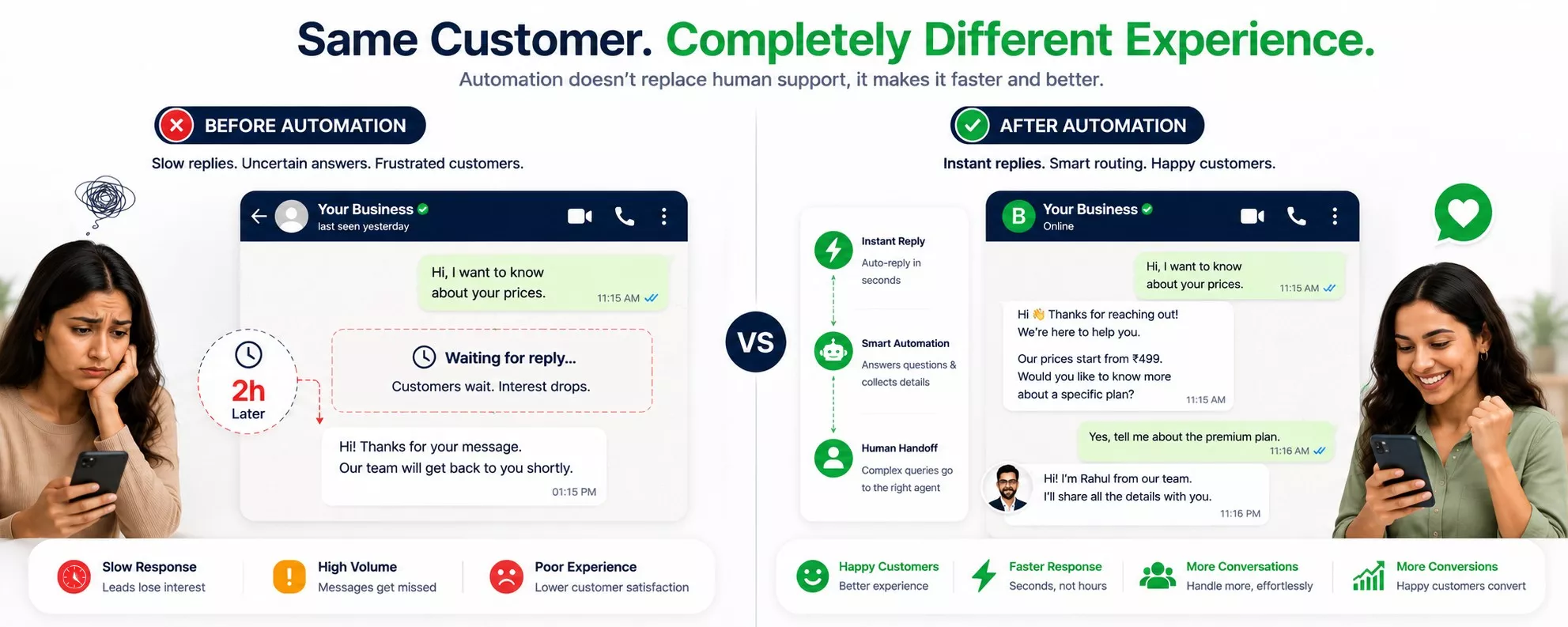
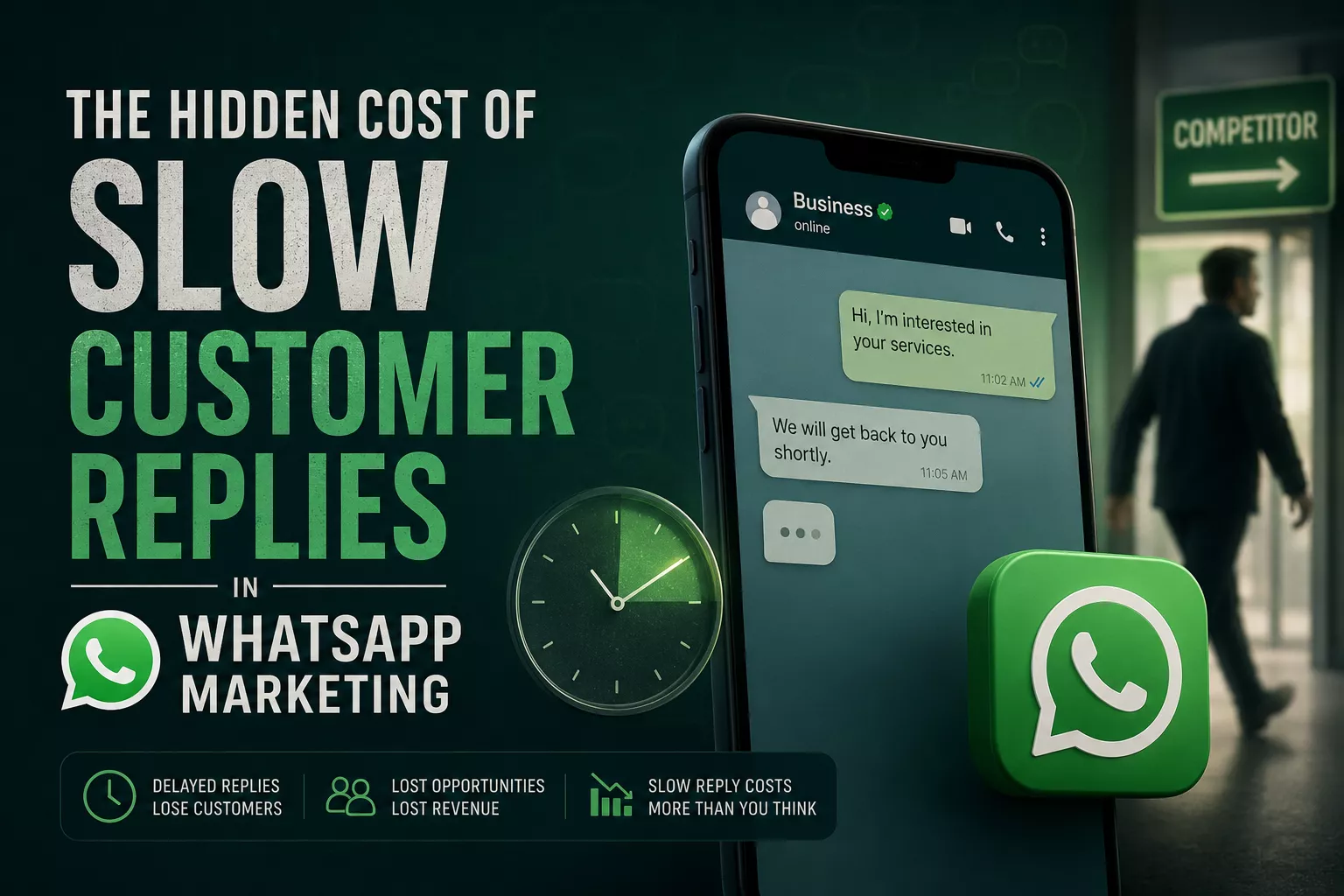
Without automation: A customer messages at 11:15 AM, thirty minutes after a campaign lands. The team is already overwhelmed by the first wave of replies. The customer’s message sits in the queue for two hours. When a response finally arrives, it is a brief, generic answer that partially addresses what they asked. They had a follow-up question but by now they have moved on — and so has the deal.
With automation: The same customer messages at 11:15 AM. Within 45 seconds, they receive a personalised response that addresses their specific question — pricing, delivery, availability, whatever they asked. The flow asks one qualifying question that narrows their need. They answer. The flow provides the relevant next step or flags the conversation for a human agent with full context already captured. The customer’s experience at 11:15 AM during a campaign spike is identical to what it would have been at 3 PM on a quiet Wednesday.
The difference is not between good and bad customer service. It is between customer experience that is consistent regardless of volume and customer experience that degrades when the business is most needed.
Templates That Keep Automation Accurate Under Pressure
The quality of automated replies during a peak window depends directly on the quality of the approved templates powering them. A template written vaguely — ‘We have received your message and will get back to you shortly’ — provides no value and is the automated equivalent of a slow human reply. A template built specifically for the question it answers — ‘Hi {{1}}, the {{2}} is currently in stock at Rs {{3}} with delivery in 3 to 5 business days. Reply YES to place your order or CALL to speak with us’ — resolves the query.
For peak hour performance specifically, the template library needs to cover every common query type the campaign is likely to generate. Before any campaign goes out, the inbound pattern it will create should be mapped: what will 80 percent of replies be asking? Build and approve templates for those categories first. The campaign creates the spike. The templates absorb it.
At 24/7 Marketing, template development for campaigns is done in parallel with campaign setup rather than after. The templates are approved before the send date, tested in the flow, and ready to activate when the campaign goes live. A campaign without its automation infrastructure in place is a campaign that will disappoint its own inbound.
The Multi-Agent Inbox During a Peak Window
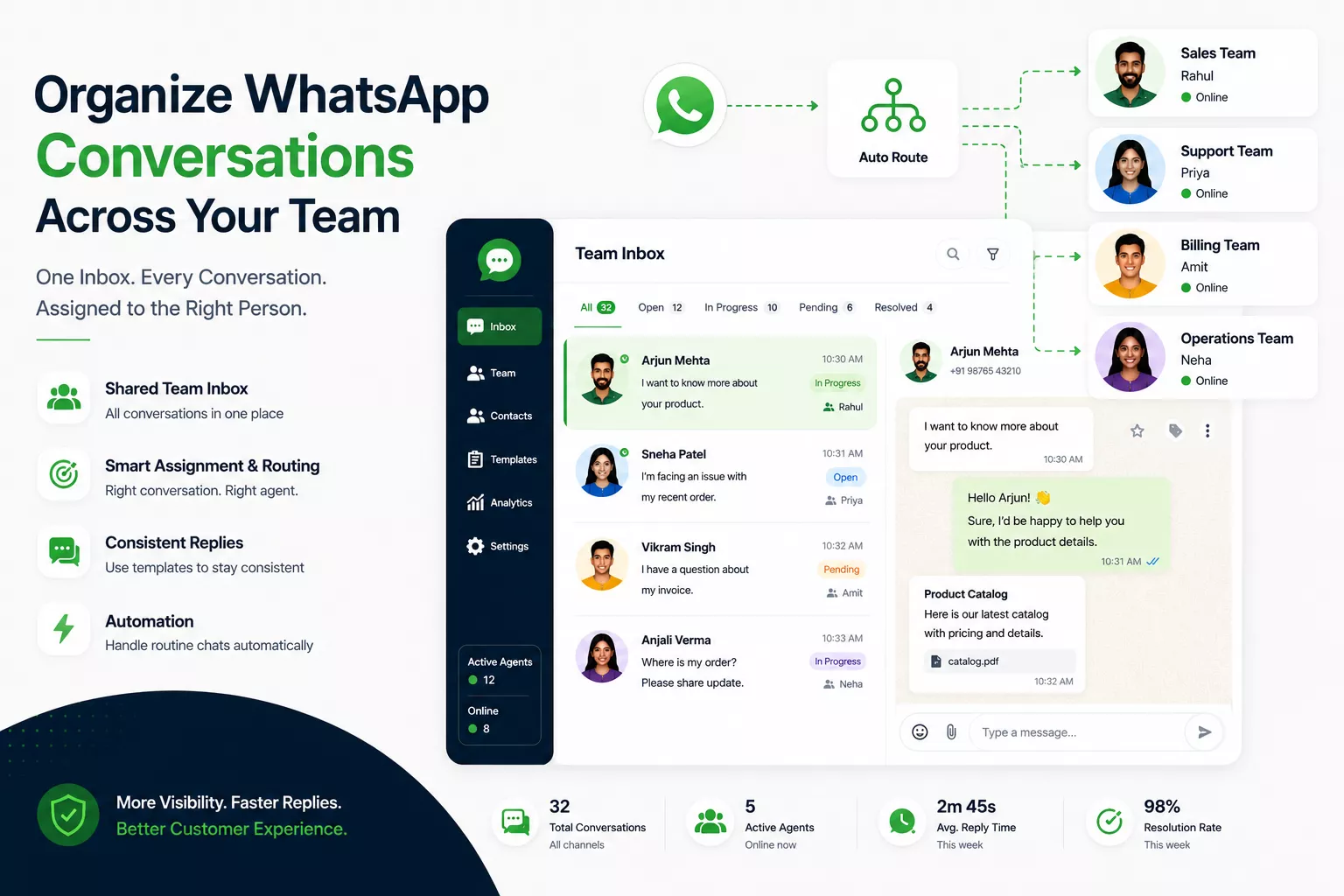
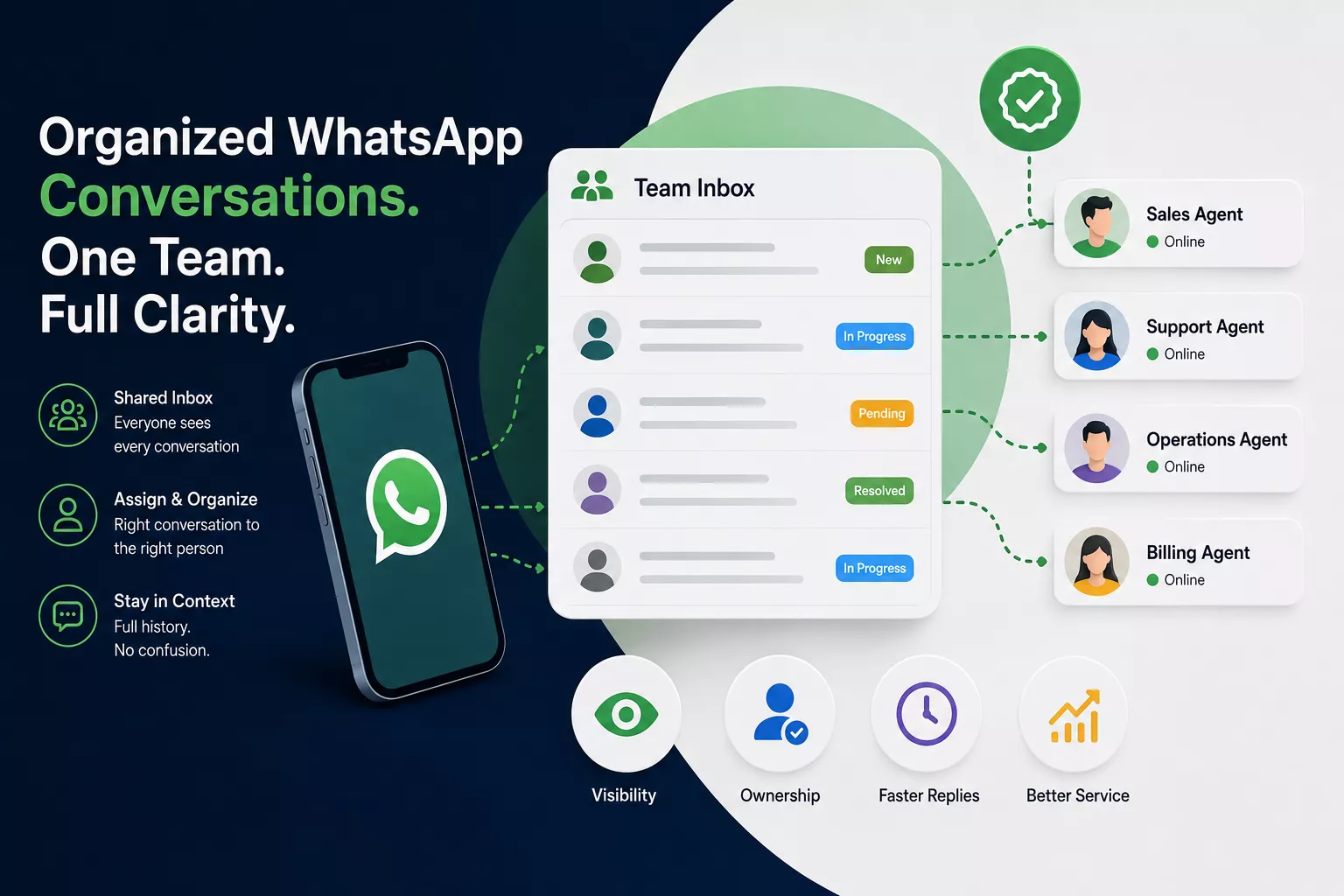
The conversations that automation escalates during a peak window arrive in the multi-agent inbox already organised. They are tagged by campaign, by intent category, and by any information the automated flow captured before handing off. The team does not open their inbox to find 80 undifferentiated messages. They find 80 conversations with context, ranked by priority based on rules the business defined in advance.
Supervisors see the full inbox view in real time. If one agent is assigned 25 escalated conversations and another has 8, the supervisor can redistribute before the queue creates delays. If a conversation has been sitting for longer than a defined threshold, it gets flagged automatically. The team is not managing a flood — they are working a structured queue that the automation organised for them.
This combination — automation absorbing the predictable peak volume and the inbox organising what remains — is what allows a team of four or five agents to deliver consistent customer experience during a spike that would overwhelm a team twice that size operating without the system.
Peak Hours Are Not the Exception -- They Are the Test
Every business that runs WhatsApp campaigns will have peak windows. They are the natural result of doing marketing well. A campaign that generates 300 replies in two hours is a successful campaign — and a test of whether the infrastructure behind it is good enough to convert that success into revenue rather than frustration.
The businesses that come out of peak windows with higher customer satisfaction scores and better conversion rates are not the ones with more staff. They are the ones where automation handled the volume, templates kept every response accurate, and the inbox gave the team the visibility to manage what needed managing without losing anything in the noise.
At 24/7 Marketing, every WhatsApp campaign setup includes the infrastructure to handle what the campaign generates — segmented sends, approved templates mapped to inbound intent categories, automated reply flows active before launch, and a structured multi-agent inbox ready to manage escalations. Because a campaign that creates a spike the business cannot handle does not build customer experience. It exposes the gaps in it.
Ready to handle your next campaign spike without the chaos? Visit 247marketing.in.