There is a specific experience most people have had at some point: a message arrives from a brand, it uses your name, references something you actually did or bought, and for a split second you wonder if someone from the company wrote it specifically for you. Then you catch yourself — it must be automated — but the feeling of being noticed does not entirely disappear. That split second is not an accident. It is the result of a message designed to produce exactly that response.
Most automated WhatsApp messages produce the opposite effect. You read the first line and immediately know it was not written for you — it was written for whoever happened to be on the list. It does not mention anything specific to your situation. The tone is broadcast-formal. The offer is generic. You swipe it away and forget it within thirty seconds.
The difference between these two outcomes has nothing to do with whether the message was automated or human-written. It has everything to do with how the message was constructed — what information it uses, how it opens, what it assumes about the person reading it, and whether it gives them a reason to feel like it was sent to them specifically.
The Name Is Not Personalisation -- It Is the Starting Point
Using someone’s first name in a WhatsApp message is so standard that it barely registers as personal anymore. Every automated campaign does it. Recipients know it is a merge field. The name alone does not make the message feel personal — it just makes it feel slightly less generic.
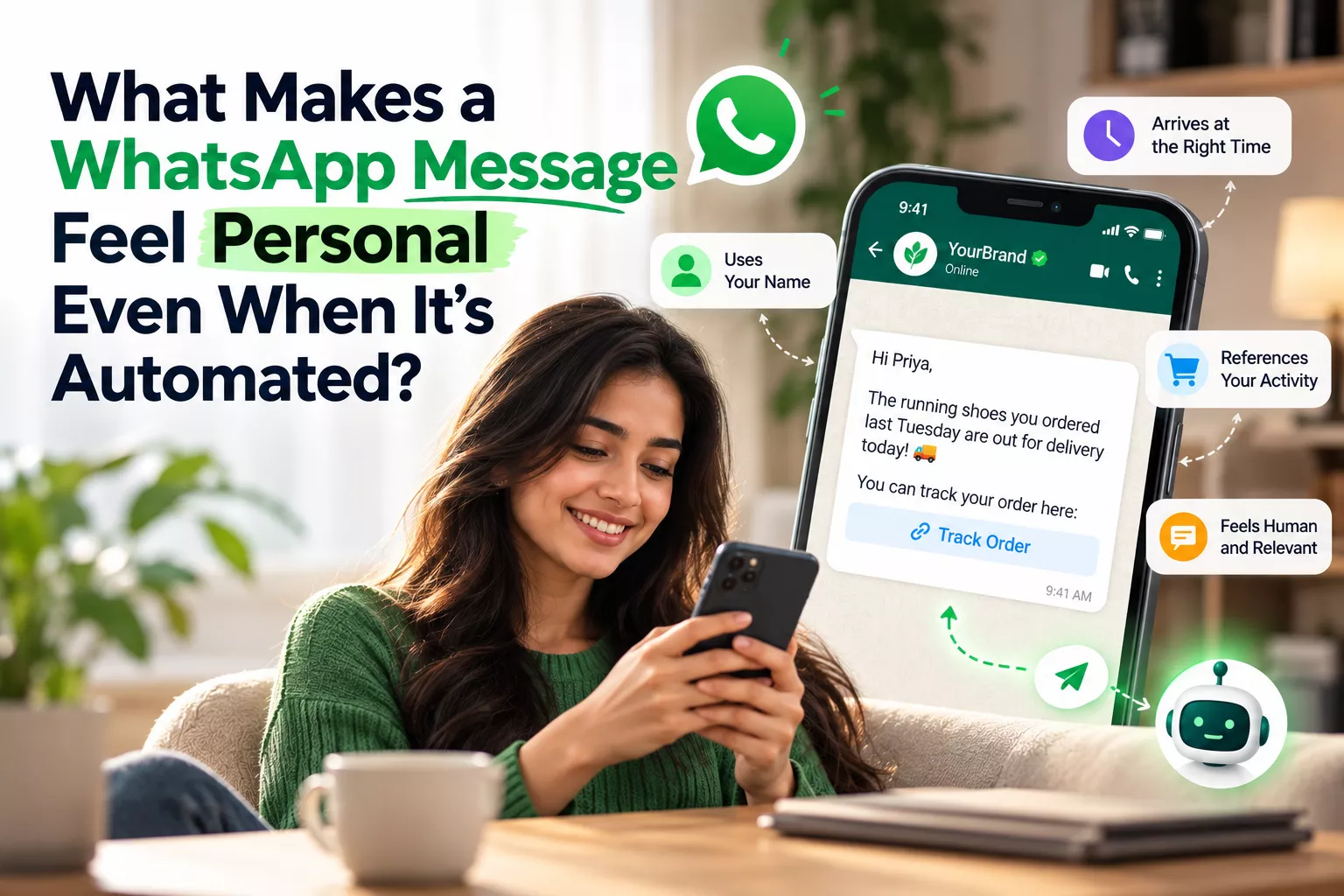
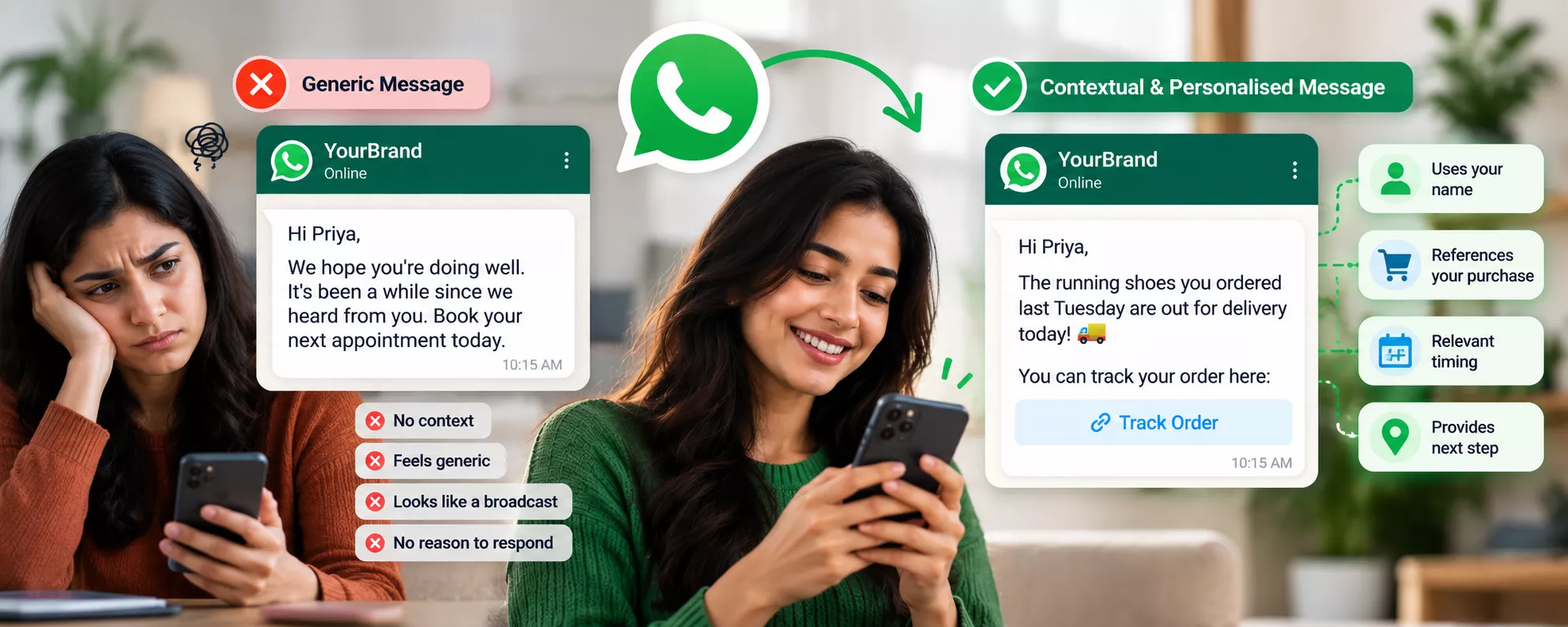
Real personalisation is what comes after the name. The message that says ‘Hi Rohan’ and then proceeds to discuss something completely unrelated to anything Rohan has ever done with the business is not personalised. The message that says ‘Hi Rohan, the running shoes you ordered last Tuesday are out for delivery today’ is personalised. The name is in both messages. The difference is in what follows it.
The variables that can be injected into a WhatsApp template go far beyond name. Order date, product purchased, location, last service date, enquiry topic, amount, renewal date, appointment time — any of these, when pulled into the right template, shifts the message from ‘sent to everyone’ to ‘sent because of something specific about you.’ The technical capability exists in every properly set-up WhatsApp Business API template. The difference is in whether the business has mapped that data to the message or settled for first name and nothing else.
Context Is What Makes a Message Feel Like It Was Written for Someone
Context means the message refers to something the recipient actually did, said, asked, or expressed. When a message contains context, it signals to the reader that the business paid attention at some point in the relationship. That signal is what creates the ‘this feels personal’ response, regardless of whether a human or a system composed the message.
A healthcare clinic sends an automated message to a patient: ‘Hi Priya, it’s been three months since your last check-up with Dr. Sharma. Based on your treatment notes, a follow-up visit this month would be a good idea. Want to book a slot?’ That message is automated. It was sent to everyone in the clinic’s system who matches the three-month post-visit trigger. But Priya reads it and thinks about her doctor and her health, not about the clinic’s CRM system. The context — Dr. Sharma’s name, the three-month timing, the implied continuity of care — makes it feel like the clinic is tracking her health, not just its appointment pipeline.
Contrast that with: ‘Hi Priya, we hope you’re doing well. It’s been a while since we heard from you. Book your next appointment today.’ Same intent. Zero context. Reads like every other re-engagement message Priya has ever received from any business that has her contact details.
Timing Is a Form of Personalisation Most Businesses Overlook
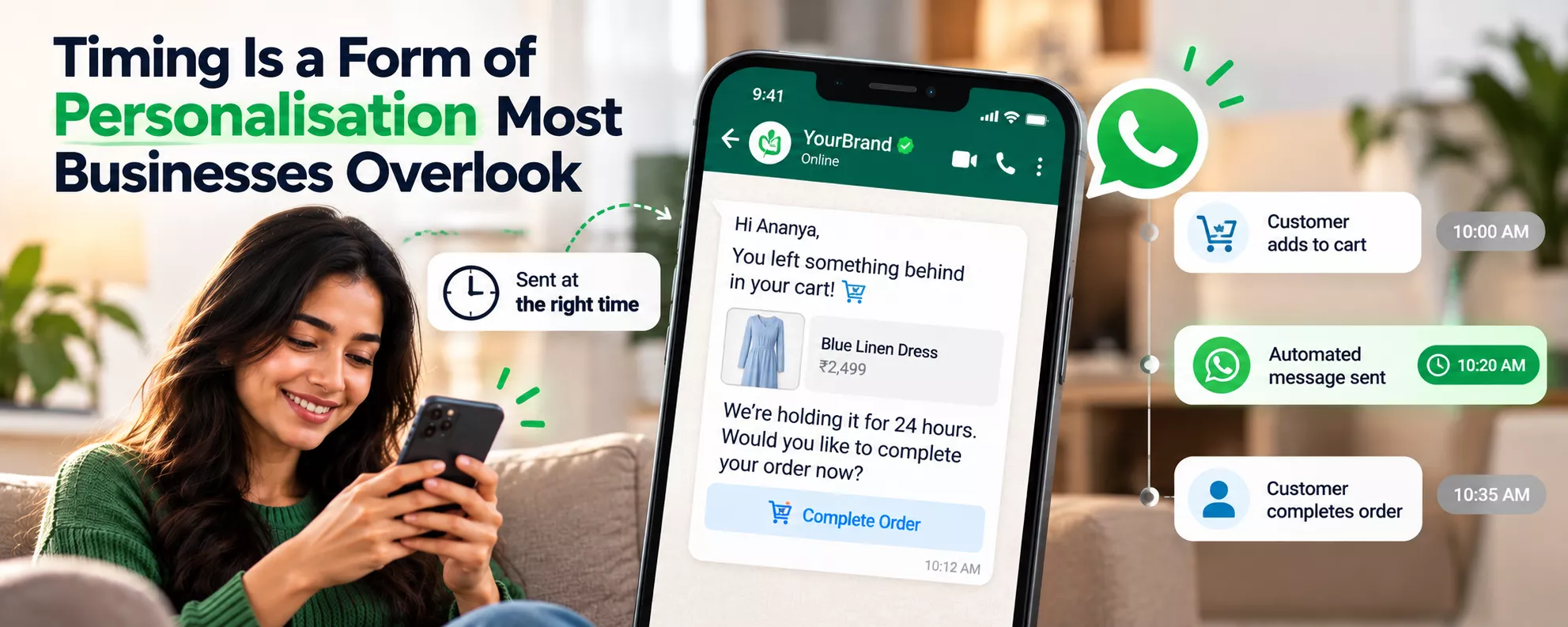
A message that arrives at the right moment feels personal even when its content is fairly generic, because the timing implies the business is paying attention to where the customer is in their journey. A message that arrives at the wrong moment — irrelevant to where the customer is right now — feels impersonal even if it uses their name and references their last purchase.
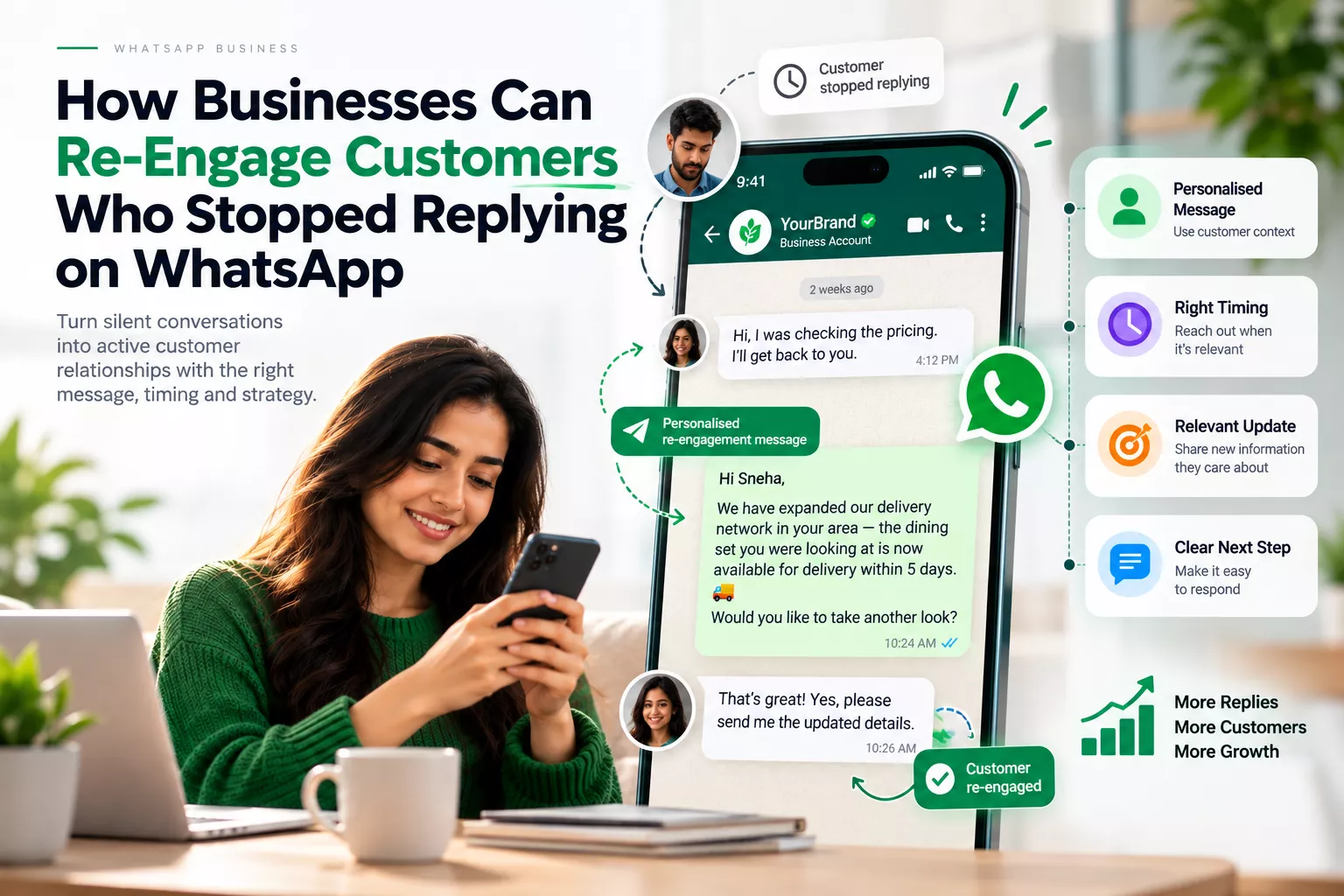
Timing personalisation means triggering messages based on what the customer just did or what the calendar says about where they are in their relationship with the business. A customer who just abandoned a cart on an e-commerce site receives a WhatsApp message within 20 minutes: ‘Hi Ananya, you left something behind — your cart with the blue linen dress is saved. We are holding it for 24 hours if you’d like to complete your order.’ That message is automated. But it landed at precisely the moment the customer is most likely to convert, which makes it feel like someone noticed.
Event-triggered messages — the abandoned cart, the post-purchase follow-up at day three, the renewal reminder 30 days before expiry, the re-engagement message timed to the exact week a customer typically reorders — feel personal because they are timed to the customer’s timeline, not the business’s broadcast schedule.
Length and Tone: Automated Messages That Sound Like a Human Sent Them
Automated messages that feel personal do not read like press releases. They read like a message from someone at the company who knows the customer. That means short sentences, a direct tone, and the absence of corporate language that signals the message was written for an audience rather than for an individual.
Three things that immediately mark a message as impersonal regardless of what variables it contains: opening with ‘We are pleased to inform you’, using passive voice throughout (‘your order has been dispatched by our team’), and closing with ‘Kindly revert at your earliest convenience’. These phrases exist in the vocabulary of formal communications written for no one in particular. They have no place in a WhatsApp message designed to feel like a direct communication.
The equivalent personal version uses active voice, present tense, and direct language. ‘Your order just shipped — track it here.’ ‘The item you asked about is back in stock.’ ‘Your trial ends in three days — want to carry on?’ These read like messages from a person. They happen to have been generated by a system.
Approved WhatsApp templates, when written with this discipline, carry that tone into every automated send. The template is structured once with the right language, approved through Meta’s process, and every deployment of it reads the same way — direct, specific, human-sounding — regardless of who is in the database field being populated.
The Reply That Tests Whether the Personal Feel Is Real
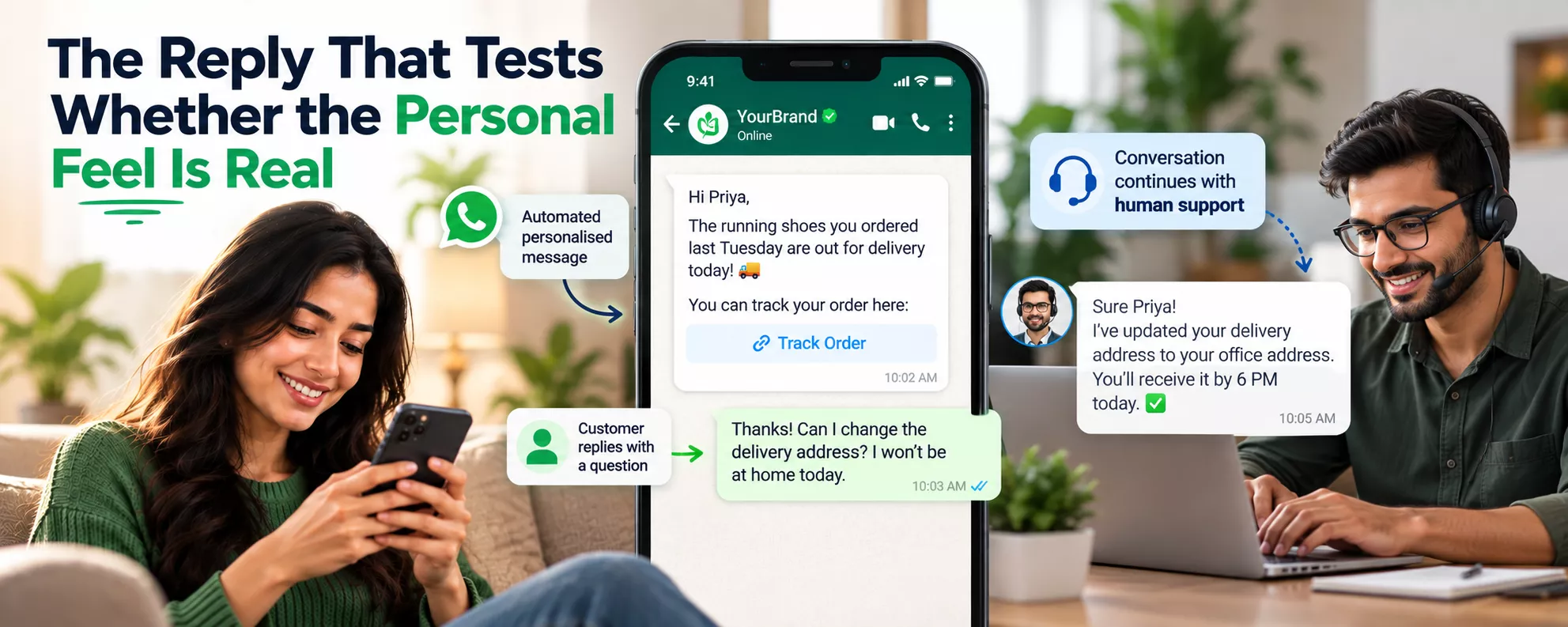
A message can feel personal and still fail to convert if the response to the customer’s reply does not match the experience the initial message created. A customer reads an automated WhatsApp message, feels like it was written for them, replies with a question — and waits two hours for a generic response from an agent who clearly does not know what campaign generated the conversation or what the customer was shown before they replied.
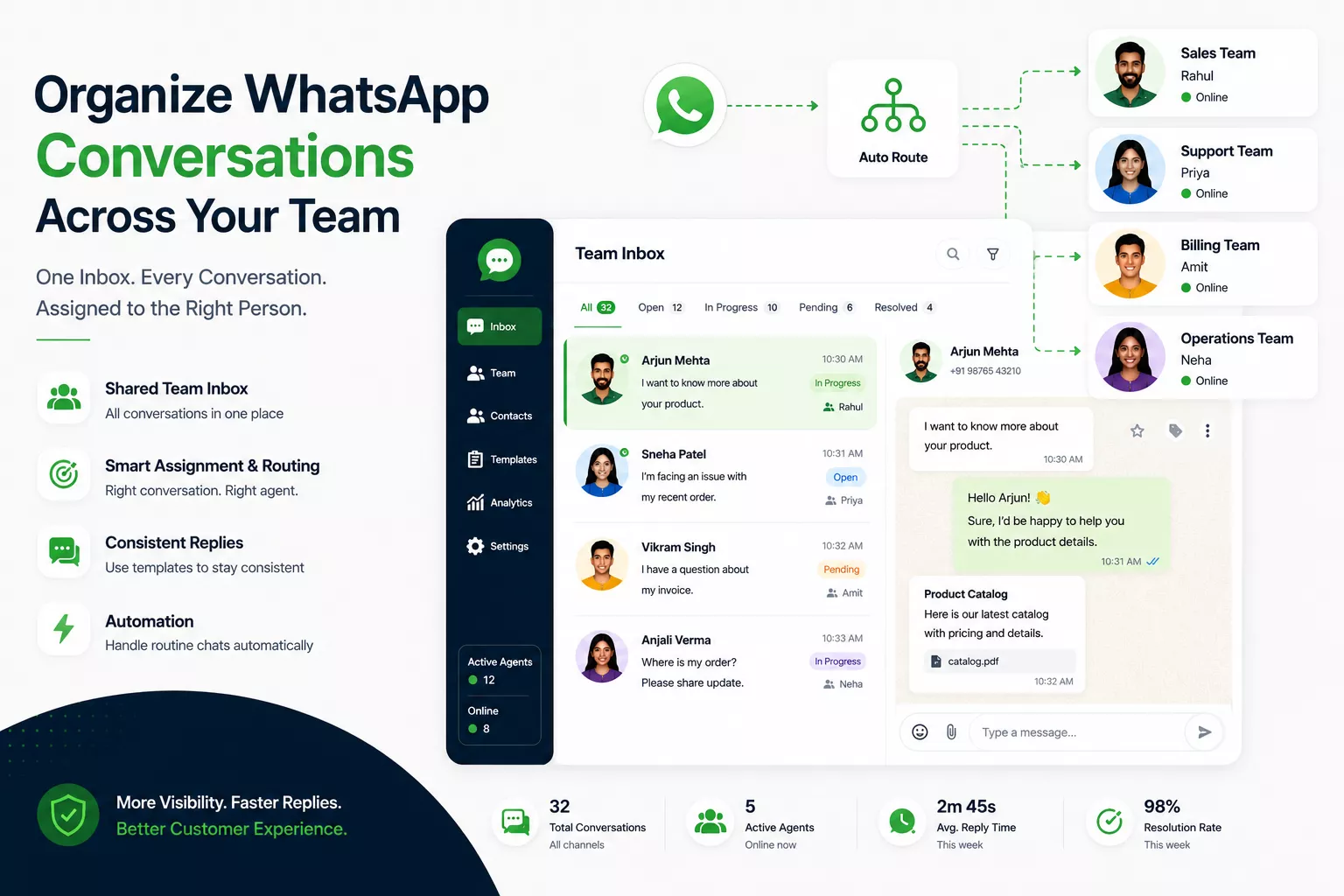
The personal feel breaks at the handoff. The initial message worked. The system behind it did not. This is why automated reply flows need to extend the context captured in the initial message, not reset it. When a customer replies to a contextual automated message, the first automated response should acknowledge the same context — referencing what they were shown, what they asked, and what the logical next step is. If and when a human agent enters the conversation, the multi-agent inbox gives them the full thread: the original campaign, the automated exchange, every message the customer sent.
The agent walks in informed. Their first message is not ‘Hi, how can I help?’ — it is something that continues the thread the customer was already in. That continuity is what makes the entire experience feel personal from start to finish, even when most of it was handled by a system.
Automation Does Not Remove the Personal -- It Scales It
The assumption that automation makes WhatsApp communication impersonal gets the relationship backwards. A well-designed automated system can deliver a contextually relevant, well-timed, appropriately toned message to every customer on a list of 10,000 simultaneously. A human being cannot. The automation does not replace the personal touch — it scales the conditions that make personal communication possible at volumes no individual could manage.
The personalisation is in the design of the message, the data that populates it, the timing logic that decides when it deploys, and the reply flows that continue the conversation in the same voice. None of that is diminished by the fact that it runs without a human composing it in real time.
At 24/7 Marketing, campaign templates are built around the specific data points that make messages feel relevant to individual recipients, automated flows are designed to extend that context through every exchange, and the multi-agent inbox ensures that when a human does enter the conversation, they arrive knowing everything the system already learned. The result is a customer experience that feels personal throughout — because it was designed to, not because it happened by accident.
Want automated WhatsApp messages that actually feel personal? Visit 247marketing.in.