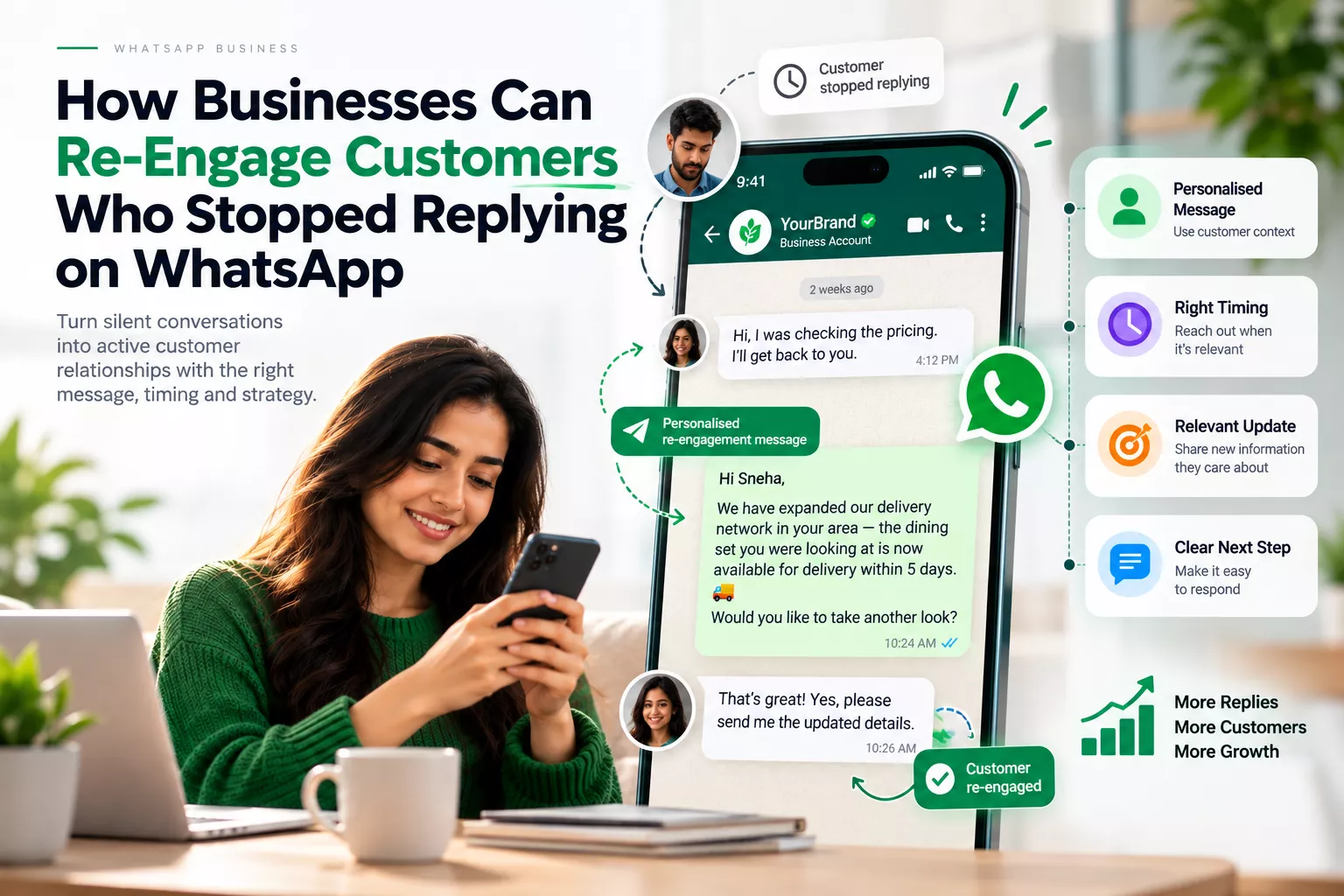
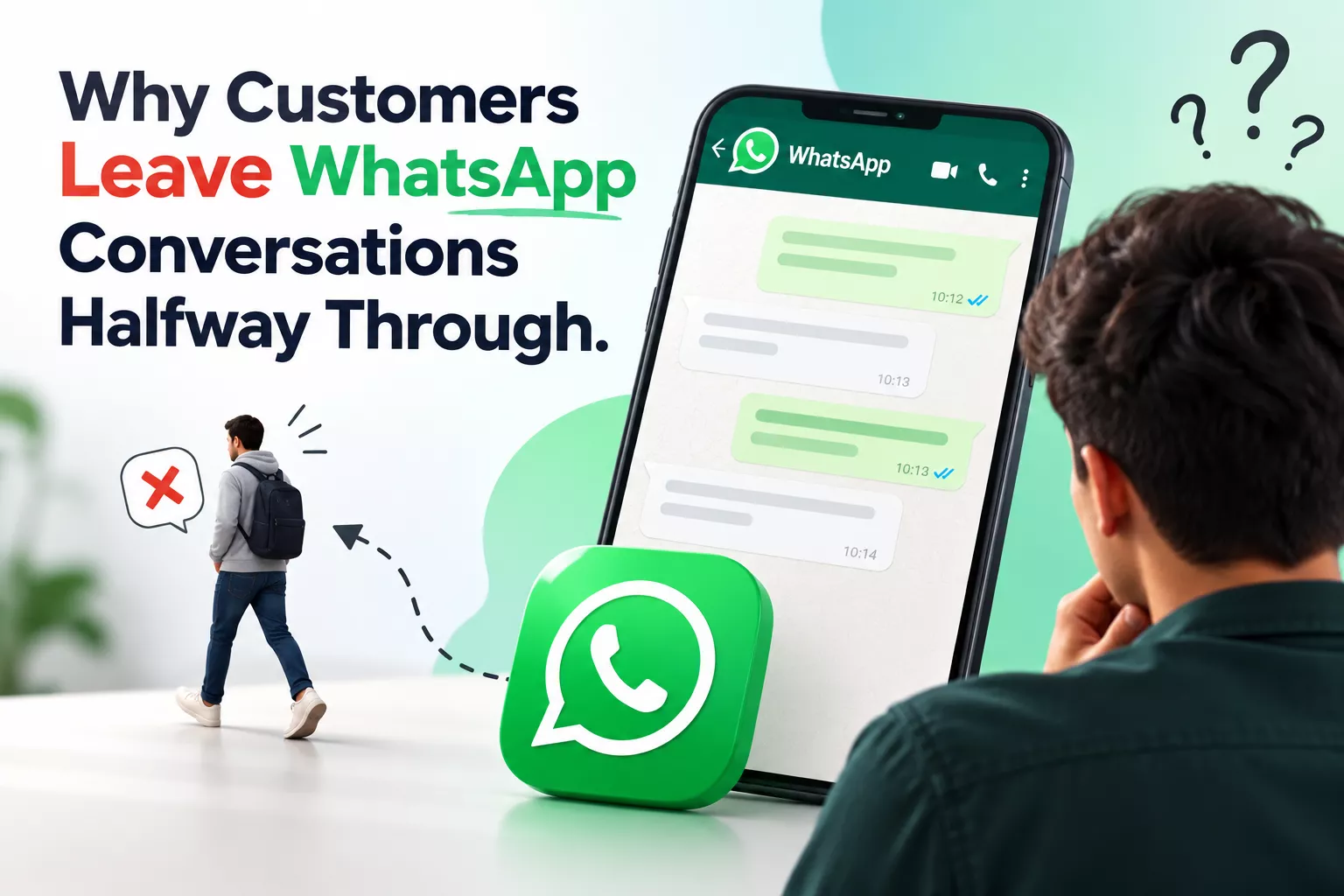
The lead started strong. They replied to a campaign, asked a specific question, and seemed ready to move forward. Then something shifted. They sent one more message, got a reply, and never came back. The conversation sits in the inbox with two or three exchanges on each side and no resolution. The business counts it as a lost lead. The customer has already forgotten the interaction.
Halfway drop-offs on WhatsApp are one of the most expensive and least examined failure points in business communication. They are expensive because these were not cold contacts who ignored a message — they were warm leads who engaged, showed intent, and then stopped. They are underexamined because the conversation technically happened. It just did not finish. And unfinished conversations rarely appear anywhere in the business’s reporting as a defined problem to solve.
Most halfway drop-offs are preventable. They happen for specific, identifiable reasons — and each reason has a corresponding fix that does not require hiring more people or fundamentally changing the product. It requires understanding what the customer experienced at the point they stopped and why that was enough to make them leave.
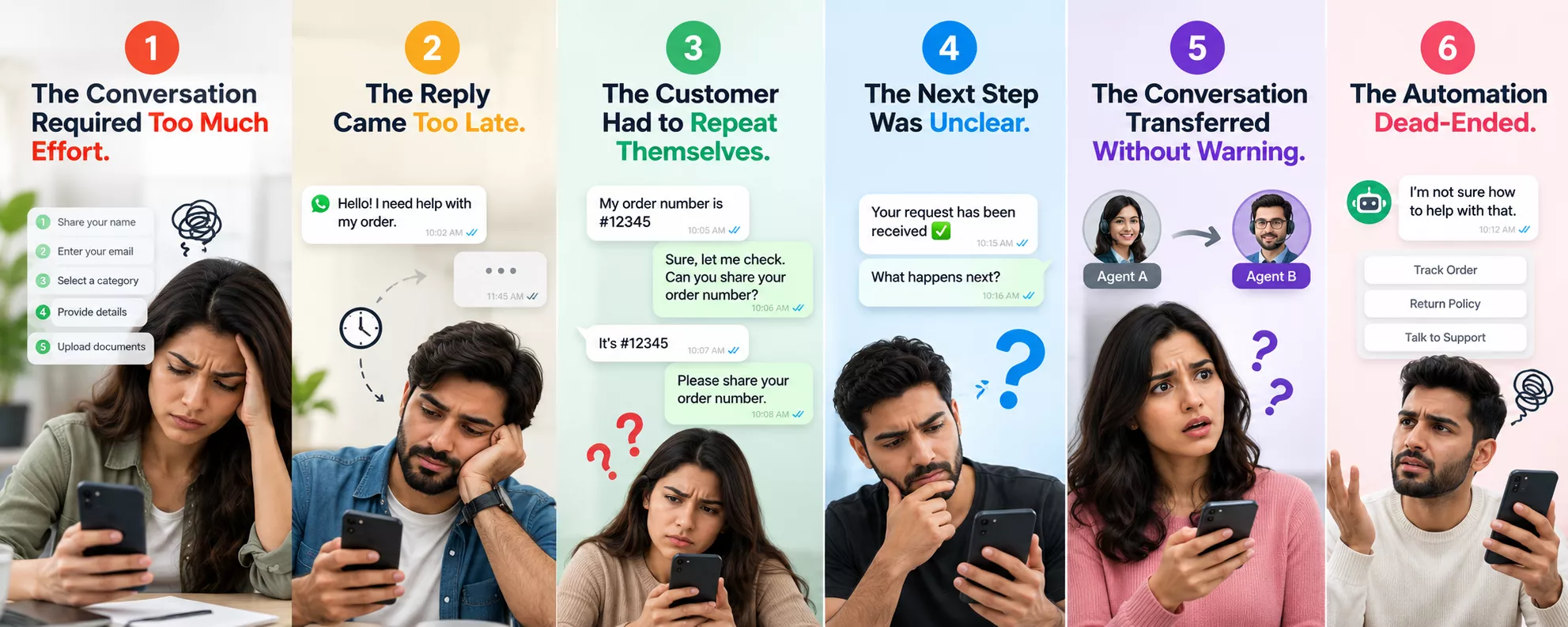
Reason One: The Conversation Required Too Much Effort
WhatsApp has a specific psychological profile: it is a low-effort channel. People use it for short, quick exchanges. When a business introduces high-effort steps into a WhatsApp conversation — long forms to fill, links that open external websites, multi-step processes that require the customer to leave the app and come back — the friction mounts against the channel’s nature and customers disengage.
A prospect interested in a home loan enquires through WhatsApp. The automated reply sends them a link to an application form on the bank’s website. They click it, see ten fields to fill, and close the browser. They intended to come back later. Later never came. The conversation was dropped not because they were not interested but because the next step asked for too much at once.
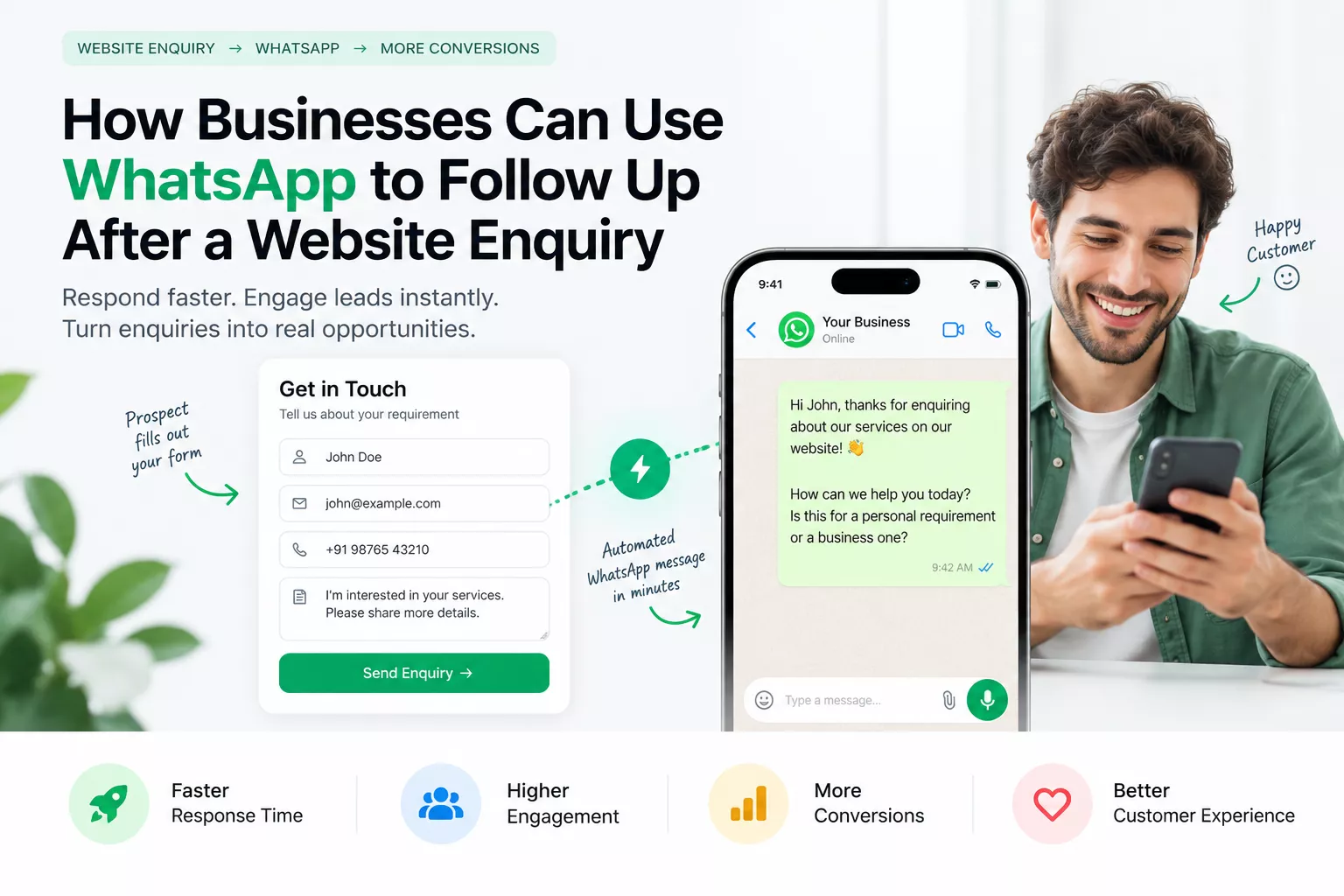
The fix is to keep the entire early conversation inside WhatsApp. Instead of sending a link to a form, the automated flow asks one question at a time — loan amount, property type, employment status — collecting the same information across four or five WhatsApp messages that take thirty seconds each. The customer’s effort per step is tiny. They complete the whole process without ever leaving the conversation.
Reason Two: The Reply Came Too Late
WhatsApp conversations have momentum. When two people are exchanging messages, there is a rhythm — each reply comes within a reasonable time and the conversation stays alive in both parties’ mental foreground. When one side goes silent for too long, the other party mentally moves on. By the time the reply arrives, the customer has shifted context and re-entering the conversation requires effort they no longer have.
A customer asks a question at 3 PM. The team is in a meeting. Nobody replies until 6 PM. By 6 PM the customer is home, making dinner, and not thinking about the product they were considering three hours earlier. The reply from the business lands as an interruption in a different context, and responding now requires the customer to mentally re-engage with something they had already set aside.
Automated reply flows prevent this gap. When a message arrives and no agent is immediately available, automation responds within seconds — acknowledging the question, providing partial information, or asking a clarifying question that keeps the conversation moving. The three-hour gap becomes irrelevant because the customer never experienced silence. The momentum stays intact.
Reason Three: The Customer Had to Repeat Themselves
This one is particularly damaging to the relationship. A customer explains their situation — what they need, what their budget is, what they have already tried. An automated flow captures it. Then a human agent joins the conversation and asks the same questions again because the context was not visible to them or they did not read the thread before jumping in.
The customer’s response to being asked to repeat themselves is almost always frustration, and the most common expression of that frustration on WhatsApp is simply stopping. They do not write back ‘I already told you this.’ They just do not write back at all. The conversation dies not because the product was wrong but because the experience of being ignored — even unintentionally — was enough to make them stop.
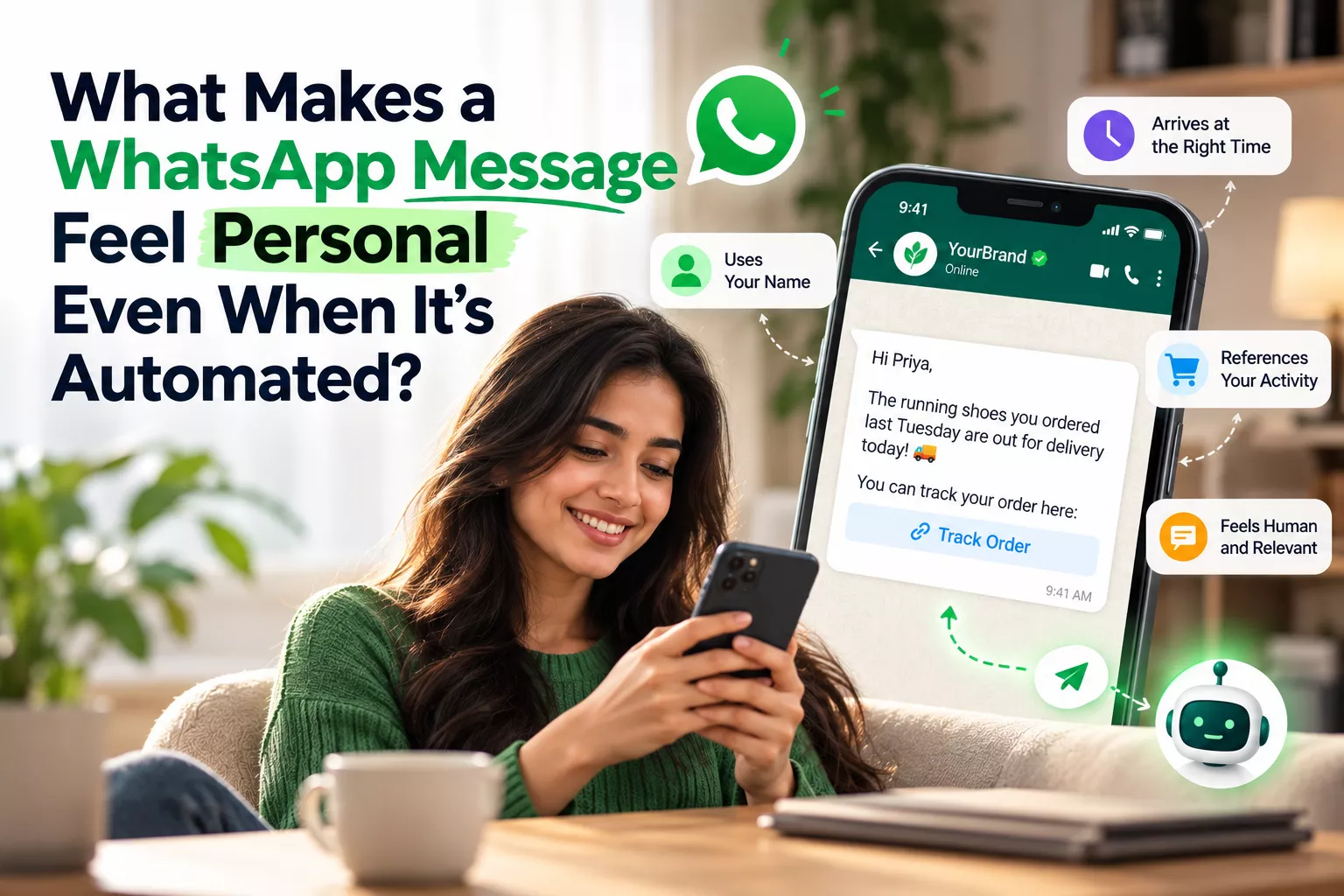
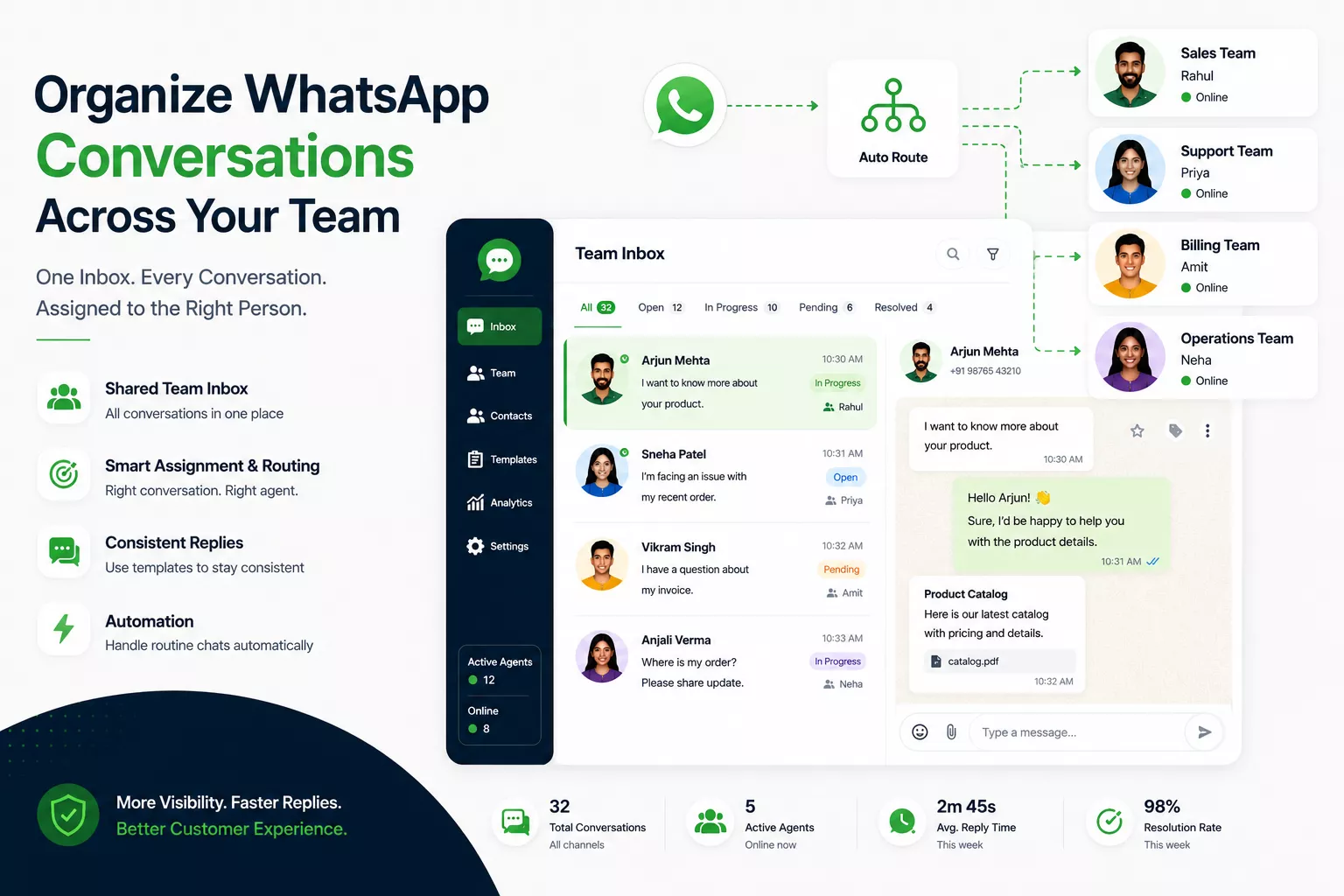
A multi-agent inbox where every agent can see the full conversation history before sending a single word eliminates this problem at its source. The agent’s first message picks up exactly where the conversation left off. ‘Hi Meera, I can see you mentioned you’re looking for a flooring option that works with underfloor heating and stays within 120 rupees per square foot — let me pull a few options that match.’ That opening requires no repetition. It signals that the business was actually paying attention.
Reason Four: The Next Step Was Unclear
Customers do not drop out of conversations because they lost interest. They often drop out because the conversation reached a point where they did not know what to do next, and the business did not tell them. The agent answered a question and signed off. The automated reply provided information but did not ask for anything in response. The message ended without giving the customer a defined next action.
On WhatsApp, every message that ends a logical exchange should either explicitly ask a question, offer a clear choice, or state a specific next step. ‘Let me know if you have any other questions’ is not a next step. It is a polite way of ending the message without directing the customer anywhere. On a channel where the baseline expectation is that conversation has direction, ambiguity reads as disengagement.
Approved WhatsApp templates for common exchange-ending situations build the next step in. ‘We have your details — would you like to book a call for Thursday or Friday this week?’ ‘Your quote is ready — reply YES to confirm or QUERY if you have questions.’ The customer always has somewhere to go. The conversation does not stall because someone forgot to add a clear call to action.
Reason Five: The Conversation Transferred Without Warning
Customers build a level of comfort with a conversation as it progresses. When it suddenly shifts — a different tone, a different name, a reply that clearly came from someone who read none of the prior exchange — they feel like they have been handed off to a call centre. The warmth that was building disappears, replaced by the feeling that whoever they were talking to was not important enough to stay.
Agent transitions happen — that is unavoidable in a team setting. What is avoidable is the customer experiencing those transitions as a reset. A warm handoff means the incoming agent has read the full thread, continues in the same tone, and ideally acknowledges the context: ‘Hi Ravi, I’m picking this up from where Priya left off — I can see you were asking about the commercial package pricing.’ That one sentence does the work of making the transition feel managed rather than chaotic.
The multi-agent inbox infrastructure makes this possible at scale. Every agent assigned a conversation gets the full thread, the campaign context, and any notes from the previous agent. The transition is smooth by design, not by luck or by whoever happened to brief the next person before going offline.
Reason Six: The Automation Dead-Ended
Automated flows that do not anticipate follow-up responses create dead ends. The flow provides information. The customer sends a message that the flow does not recognise. Nothing comes back. The customer sends it again. Still nothing. They conclude the system is broken or nobody is there and they stop.
A well-built automated flow has a fallback for unrecognised inputs — something like: ‘I did not quite catch that. Here are the things I can help with: reply 1 for pricing, 2 for availability, 3 to speak with someone.’ The customer is never left in silence because they sent something unexpected. The flow catches the mismatch and routes back to known ground.
For inputs that indicate the customer needs something outside the flow’s scope entirely, the appropriate response is immediate escalation — the flow flags the conversation for a human agent with the full exchange visible, and the customer receives a message telling them a team member will respond shortly with a specific timeframe. The customer knows help is coming. They do not feel abandoned by a machine.
What These Reasons Have in Common
Every reason a customer leaves a WhatsApp conversation halfway through points to the same underlying gap: the experience of being in that conversation broke down. The friction was too high, the wait was too long, the context was lost, the direction was unclear, the transition was jarring, or the system stopped responding. None of these are failures of product or price. They are failures of the conversation infrastructure.
Building the infrastructure that keeps conversations from breaking down — automated flows that maintain momentum, approved templates that embed clear next steps, a multi-agent inbox that preserves context across every agent transition, and reply automation that never leaves a customer staring at silence — is how businesses stop losing warm leads to problems that had nothing to do with what they were selling.
At 24/7 Marketing, we design WhatsApp systems around the points where conversations typically break — because a lead who engaged once and left halfway through was not lost to the competition. They were lost to the experience.
Stop losing warm leads to conversation drop-offs. Build a better system at 247marketing.in.