When someone messages a business on WhatsApp and gets a reply within minutes, something quiet happens in their head. They do not consciously think about it. But the experience registers: this business is present, this business is paying attention, this business will probably follow through on what it promises. A fast response is not just efficient — it is a trust signal, and on WhatsApp specifically, it is one of the strongest ones available.
Speed of response has always mattered in business. But WhatsApp raises the stakes in a specific way because of what the channel is. It is not email, where a same-day reply is fine. It is not a contact form, where three business days is acceptable. WhatsApp sits in the same mental category as a text from a real person — and when you text someone and they reply in three minutes, you feel noticed. When they reply in three hours, you feel like an afterthought.
Businesses that respond faster on WhatsApp are not just more efficient. They are more trusted. Here is why — and what actually drives it.
Speed Is Interpreted as Preparedness
When a business responds fast, the customer’s subconscious reads it as competence. The assumption is: a business that is on top of its WhatsApp is probably on top of its operations. A business that leaves messages unread for four hours probably has other things falling through the cracks too.
This is a cognitive shortcut, and it is not always accurate — a slow response might just mean the team was swamped, not disorganised. But customers are not evaluating your internal operations. They are evaluating their experience of reaching you. And a fast, coherent reply is one of the clearest signals available that the business behind the number is running well.
An insurance company whose WhatsApp bot acknowledges a customer’s claim query within 30 seconds and gives them a case reference number and timeline communicates something very specific about how the company is run — even if no human was involved in that response. The customer’s trust in the company’s ability to handle their claim goes up. The speed of the initial response did that work.
Slow Responses Plant Specific Doubts
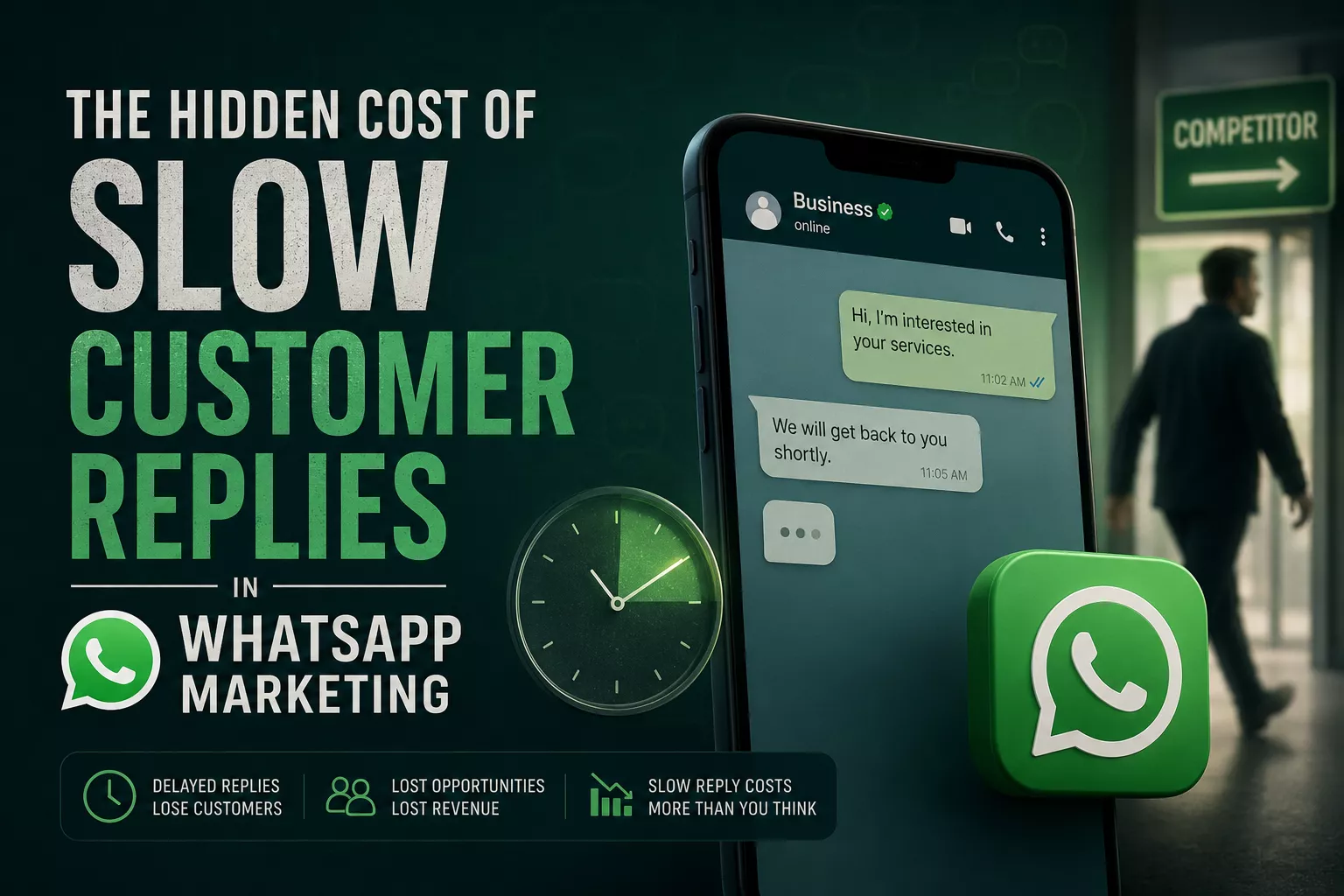
A slow response does not just fail to build trust. It actively plants doubt. A prospect who messages a new vendor and waits three hours without a reply starts thinking things the business would not want them thinking. Are they reliable? Do they actually want my business? What will happen if I have a problem after I’ve paid? If they can’t reply to a simple enquiry quickly, what happens when I need urgent support?
These doubts are not proportionate to the situation. A three-hour delay does not mean the business is unreliable. But the customer is filling the silence with their own interpretation — and in a competitive market where another vendor responded in eight minutes, the doubts do not need to be rational to cost the business the deal.
The trust deficit created by a slow response often cannot be fully recovered by a good response that comes late. The customer may engage, but they enter the conversation with a lower baseline of confidence than they would have had with a fast reply. That lower baseline affects how they interpret everything that follows.
The First Response Sets the Tone for the Entire Relationship
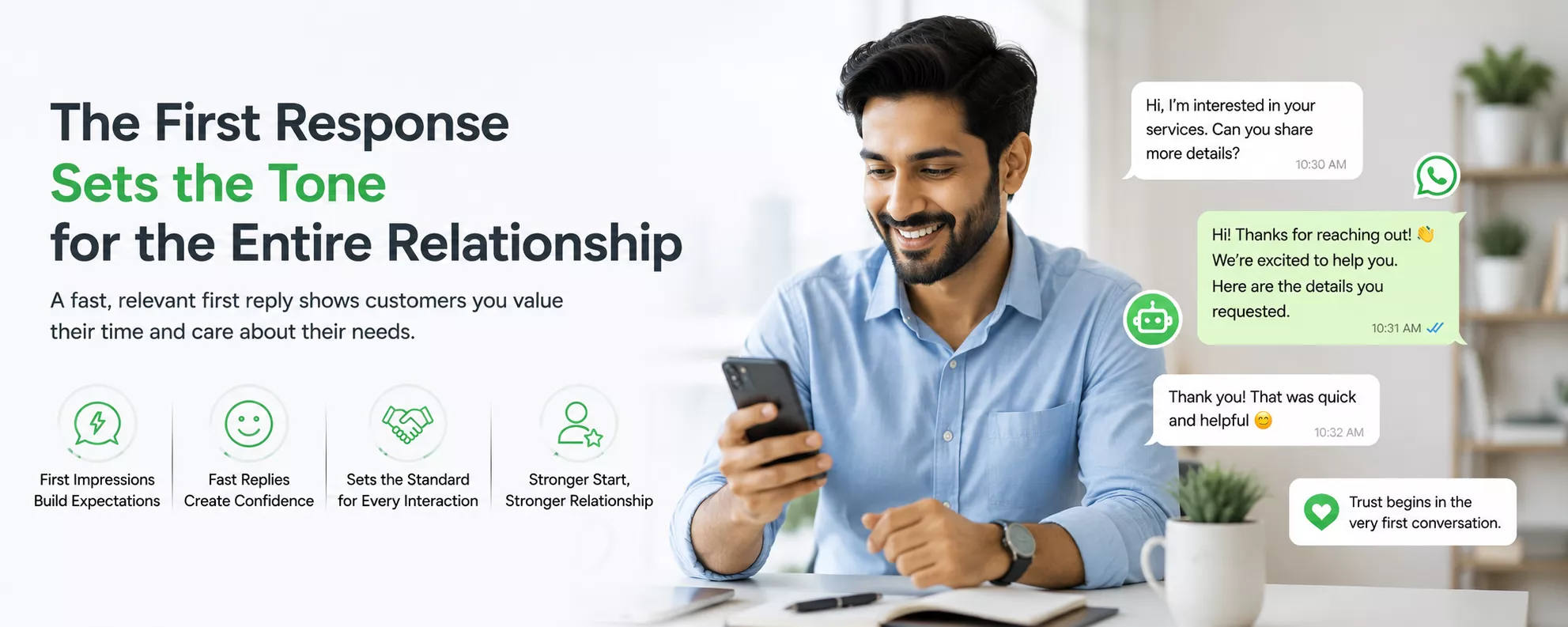
For new customers and prospects, the first WhatsApp response from a business is disproportionately important. It is the first real-time data point they have about what dealing with this business actually feels like. Everything before it — the website, the ads, the reviews — told them what the business claims to be. The first response tells them what it actually is.
A fast, relevant, accurate first response sets an anchor. The customer’s expectation of the business rises to match what they just experienced. When the next interaction is consistent with that first impression — another fast, relevant response — the pattern solidifies into trust. When the first response is fast but the second takes two days, the inconsistency is jarring precisely because the first response set a higher standard.
This is why building consistent response speed into the system matters more than occasionally having fast moments. A business that is sometimes fast and sometimes slow is not building trust — it is building uncertainty. Trust comes from predictability, and predictability requires a system, not just effort.
What Automated Replies Actually Signal to the Customer
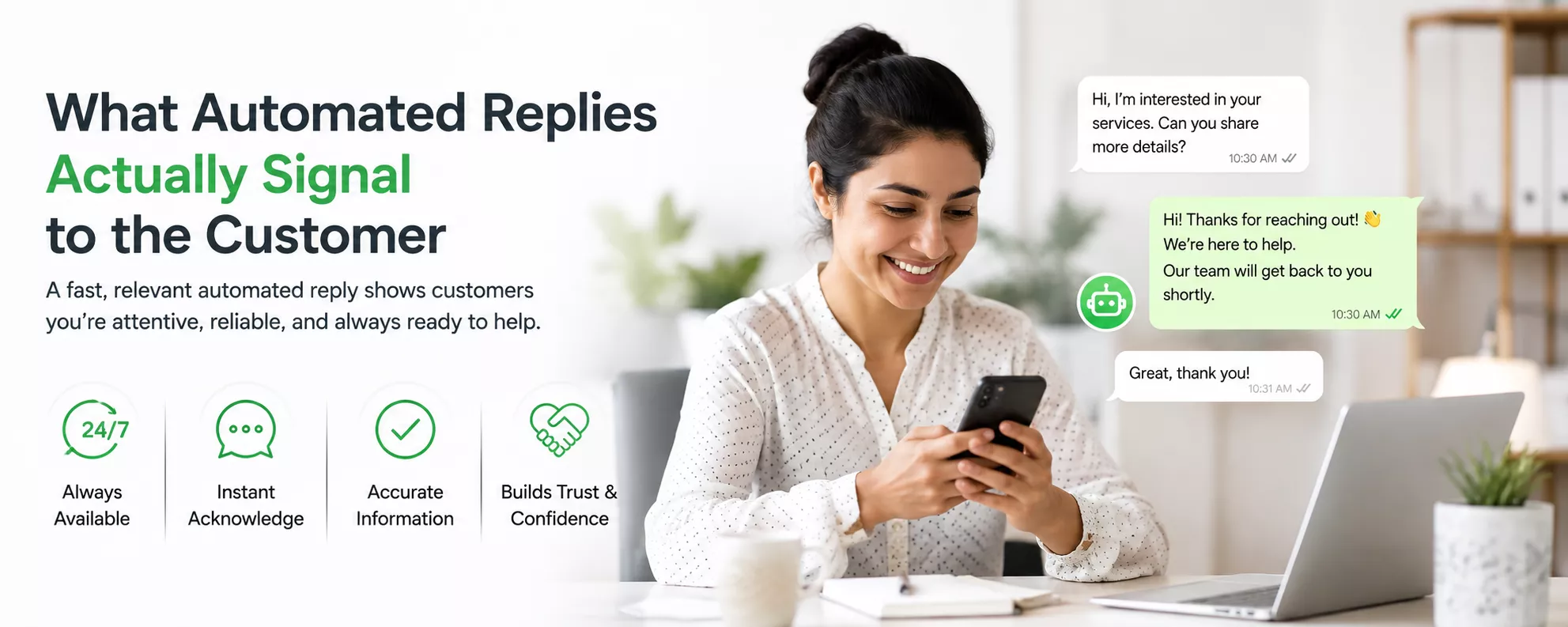
There is a widespread concern that automated replies will feel impersonal and damage trust rather than build it. In practice, the opposite is more often true — provided the automated reply is actually useful. A customer who gets a relevant, accurate response within 60 seconds at 10 PM does not think about whether a human or a system sent it. They think about whether the response helped them. If it did, trust goes up.
What damages trust is a slow human response, not a fast automated one. And what damages trust even more than a slow response is an automated reply that resolves nothing — the generic ‘thank you for your message, our team will get back to you’ that leaves the customer exactly where they started but now feeling like they have been formally acknowledged and then ignored.
A well-designed automated reply flow does what any good first response does: it acknowledges the customer, provides something useful, sets a clear expectation, and opens the next step. If a prospect messages asking about a software demo at 9 PM and the automation replies with the key features, asks a qualifying question about their team size, and tells them a sales representative will contact them the next morning between 9 and 10 AM — that is a trust-building interaction. The customer went to sleep with their question partially answered and a specific commitment made. Both came from automation.
Consistency Across the Team Is Part of the Speed Trust Signal
Response speed matters. But so does response quality — and when quality is inconsistent across team members, speed alone does not build trust. A customer who gets a detailed, professional reply from Agent A on Monday and a vague, rushed reply from Agent B on Wednesday experiences the inconsistency as unreliability. The business was fast twice, but the quality varied, and that variation undermines the impression the first interaction built.
Approved WhatsApp templates solve this by standardising the quality of outbound messages across the team. Every confirmation sent from any agent uses the same well-structured format. Every follow-up message carries the same accuracy and tone. The customer’s experience is consistent regardless of who happens to be handling their conversation at any given moment. Speed plus consistency is what compounds into trust over time.
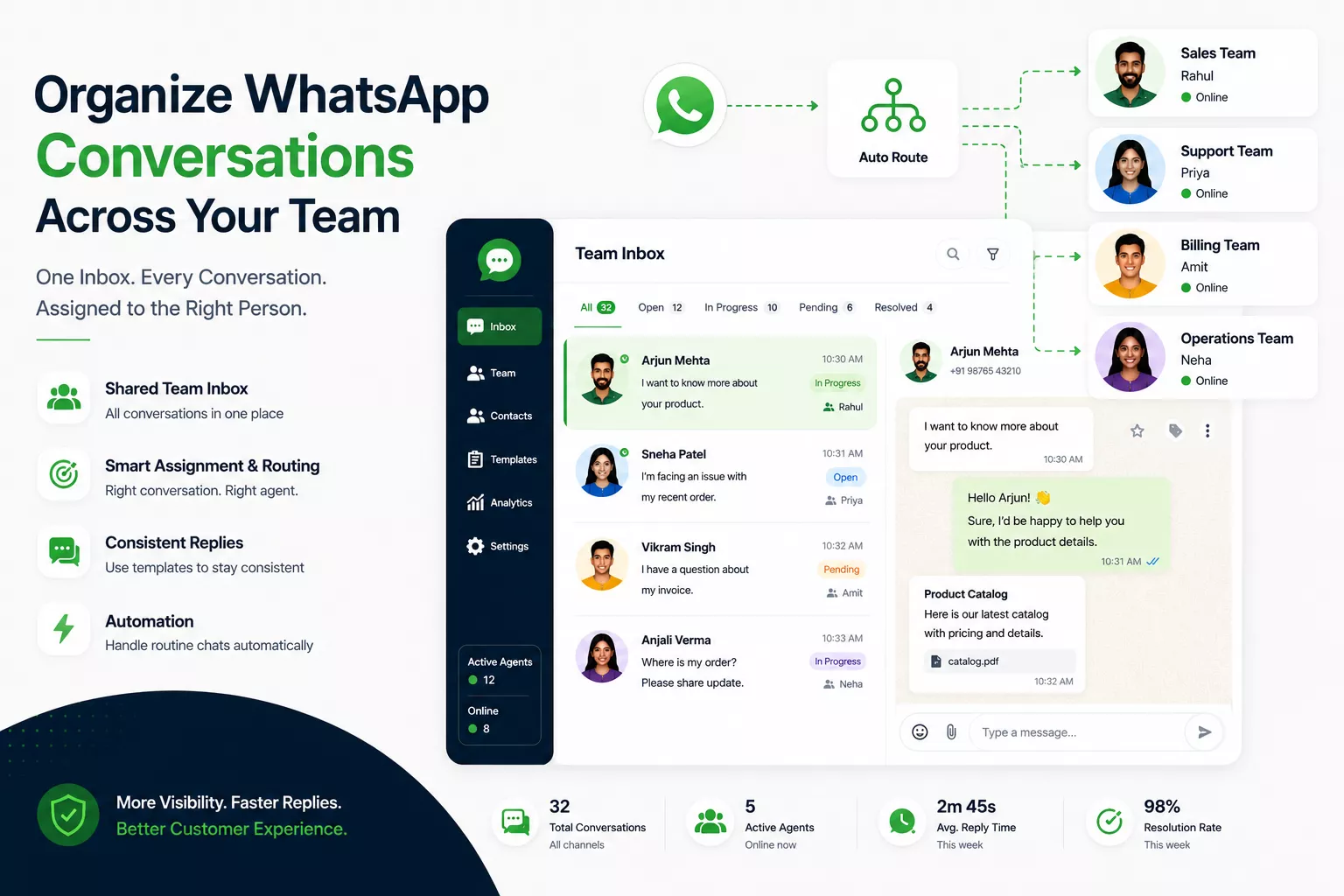
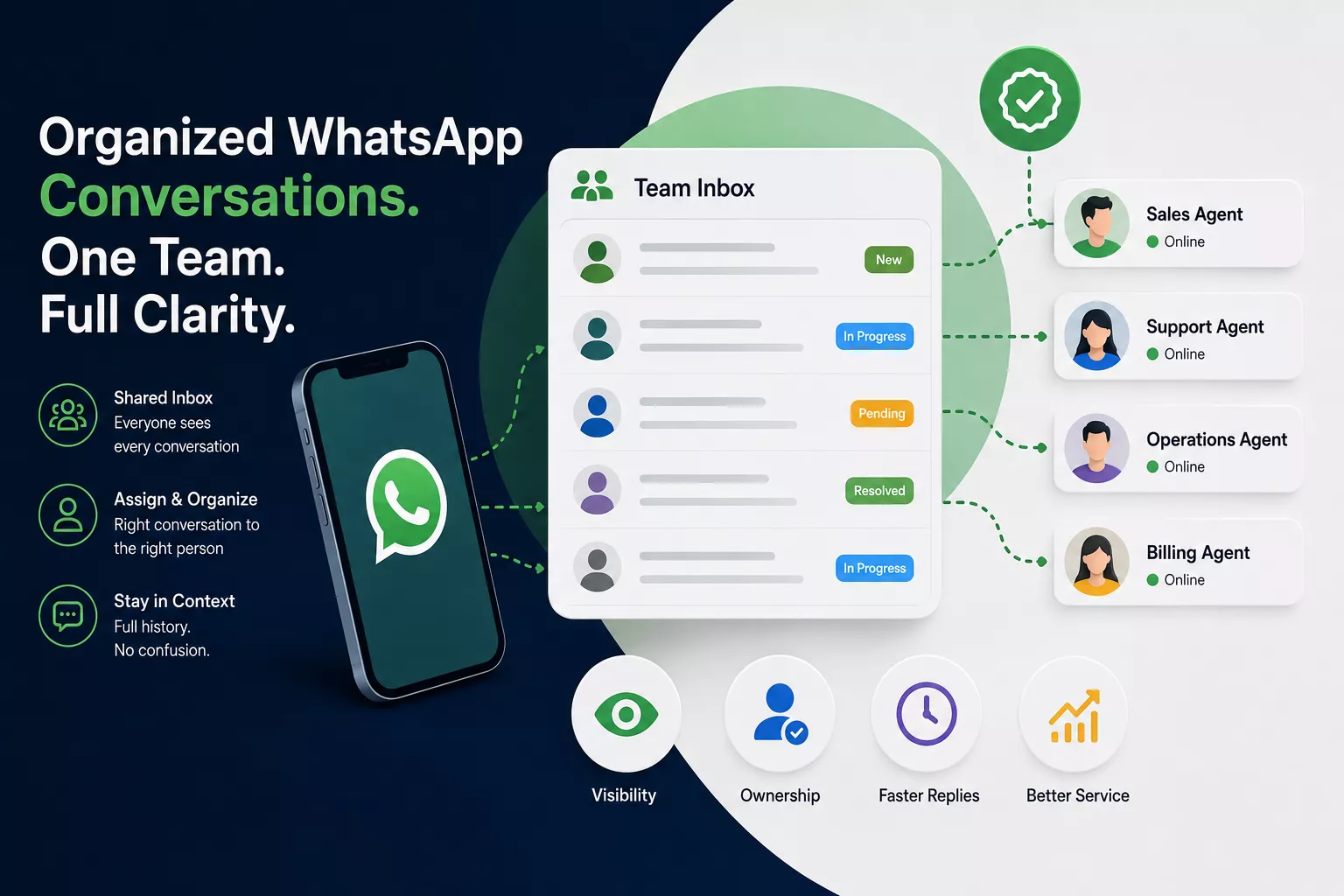
A multi-agent inbox contributes to this by eliminating the gaps and overlaps that create inconsistency at the system level. When conversations are assigned, tracked, and visible, no message sits unanswered because two agents each thought the other picked it up. The customer never experiences the silence that breeds doubt. And when the same customer comes back a week later, the agent who handles that conversation can see the full history — continuing seamlessly rather than starting over.
Trust Is Built in Small Moments, Not Big Ones
Businesses sometimes think about trust in terms of major interactions — a resolved complaint, a successful delivery, a strong product. Those matter. But the trust that accumulates quietly, over many small interactions, is what produces loyal customers who refer others without being asked.
On WhatsApp, those small interactions happen constantly — a quick reply to a query, a timely reminder before an appointment, a confirmation message that arrived before the customer thought to check. Each one is a deposit into the trust account the customer keeps in their head. Each one says: this business pays attention, this business follows through, this business is worth dealing with again.
Businesses that build this through WhatsApp — not through occasional excellence but through consistent, fast, relevant communication at every touchpoint — do not need to spend as much on re-acquiring customers or convincing reluctant ones. The trust does the heavy lifting.
At 24/7 Marketing, the system we build — campaigns, approved templates, automated reply flows, and a structured multi-agent inbox — is designed to produce that kind of consistent, fast, reliable communication at every stage of the customer relationship. Because speed alone is not the goal. The goal is the trust that consistent speed, over time, builds.
Want to build customer trust through every WhatsApp interaction? Visit 247marketing.in.