A business with 8,000 WhatsApp contacts sends the same campaign to all 8,000. The message is about a new product launch. The product is a premium skincare range for women above 35. Of the 8,000 contacts, roughly 1,200 match that profile. The remaining 6,800 are men, people under 25, existing customers who already bought the product last month, and contacts from a B2B campaign who opted in for wholesale enquiries. All 8,000 receive the same message.
The response rate comes back at 3 percent. The team is disappointed. They run a post-mortem and conclude the message was not compelling enough. They write a better message and send it to the same 8,000 people the following week. The response rate comes back at 3.5 percent. Still disappointing. Still the wrong conclusion about what went wrong.
The message was not the problem. The message sent to the right 1,200 contacts would likely have performed significantly better. Broadcast without segmentation is not a campaign strategy — it is an expensive way to confirm that most of your list is not interested in whatever you happened to send today.
What Segmentation Actually Means in Practice
Segmentation is not about making smaller lists. It is about making sure every person on a list has a genuine reason to receive the message being sent to them. A segment is not defined by size — a segment of 200 people who are exactly right for a message outperforms a broadcast to 5,000 who mostly are not.
The signals used to segment a contact list vary by business type. For a business selling products, segmentation might be based on previous purchase category, purchase frequency, average order value, or how recently someone bought. For a service business, it might be based on the type of service they enquired about, how far they got in the conversation before it went quiet, or their geographic location. For a B2B operation, it might be industry, company size, or where the contact sits in the sales pipeline.
None of this requires sophisticated technology. It requires knowing your contact data well enough to group people by relevance before a campaign goes out, and having the discipline to send different messages to different groups rather than one message to everyone.
The Direct Link Between Unsegmented Sends and Getting Blocked
On WhatsApp specifically, sending irrelevant messages to large unsegmented lists is not just ineffective — it is actively dangerous to the sender’s account. Meta evaluates the quality of a WhatsApp business number based on how recipients respond to messages from it. When recipients block the number or report the message, the number’s quality rating drops. A sustained quality rating drop leads to messaging limits, then to the number being disabled.
An unsegmented broadcast to 8,000 contacts where 6,800 have no reason to care about the message is a broad targeting approach that creates a specific blocking risk. Even a small percentage of those 6,800 clicking ‘block and report’ produces a block-to-send ratio that damages the number’s rating. The business sent to everyone and paid for it with reduced access to the channel — which then makes future campaigns less effective even for the contacts who would have been genuinely interested.
Segmentation is not just a conversion strategy. On WhatsApp, it is what keeps the channel functional. A business that sends only relevant messages to relevant contacts maintains a healthy quality rating and preserves access to a channel that is genuinely effective when used correctly.
What the Numbers Look Like When Segmentation Is Applied
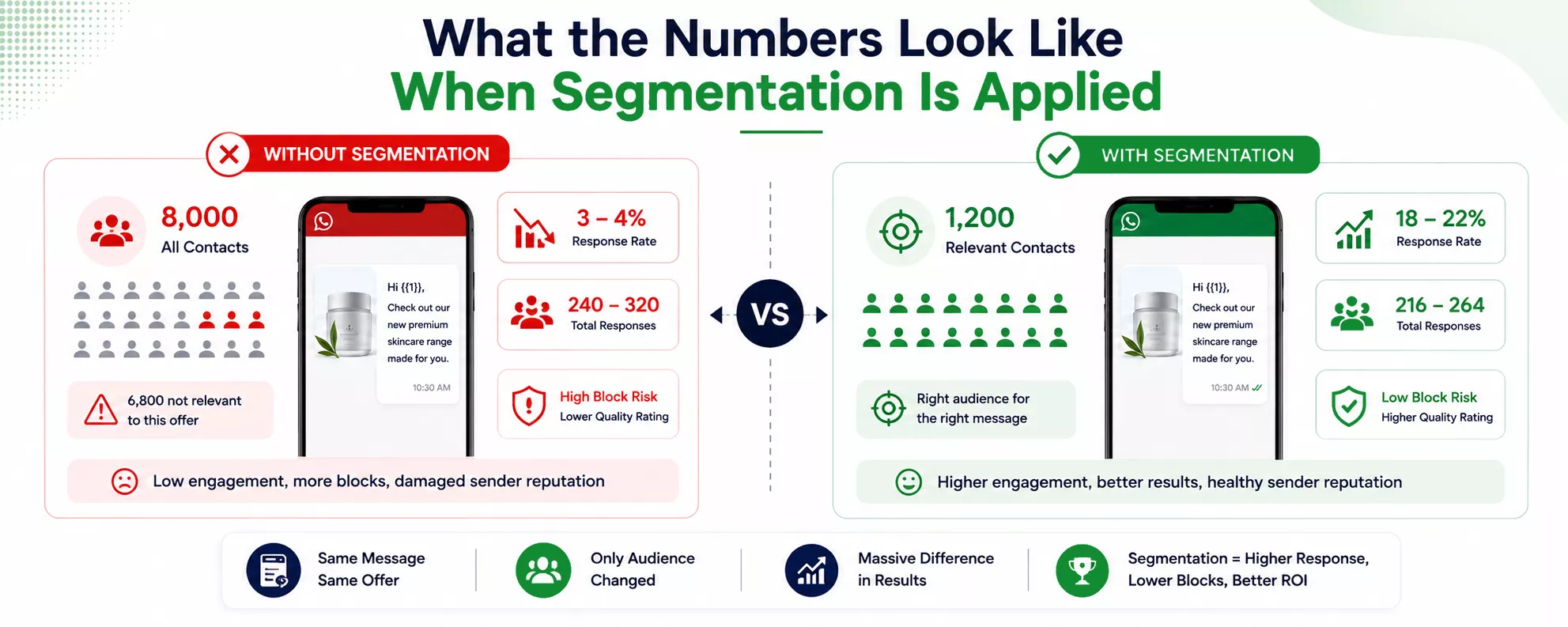
Return to the skincare example. Instead of sending to all 8,000 contacts, the business segments its list. The 1,200 contacts who match the product profile — right age range, right gender, prior engagement with skincare-related content — receive the campaign. The message is the same as before. The offer is the same. The only thing that changed is who received it.
Response rate from the segmented send: 18 to 22 percent. Not because the message improved. Because the audience it reached was the right one. The 216 to 264 responses from a list of 1,200 represents far more genuine engagement than the 240 responses the unsegmented blast of 8,000 produced — and it came without the 6,800 irrelevant sends that drove blocks and damaged the account’s quality rating.
The business also has something more valuable than a higher response rate: a cleaner signal. The responses from a segmented campaign tell you something real about how that specific audience responds to that specific type of message. The responses from an unsegmented blast are diluted by so much noise that the signal is nearly meaningless for planning the next campaign.
Templates Built for Segments, Not for Everyone
A campaign template written for a specific segment reads differently to the recipient than a generic broadcast template written for the widest possible audience. A generic template tries to be relevant to everyone and ends up being relevant to no one in particular. A segment-specific template speaks to something precise — a situation, a need, a history — that the recipient recognises as their own.
A financial services business running a campaign to customers whose fixed deposits mature next month sends a template that says: ‘Hi {{1}}, your FD of Rs {{2}} matures on {{3}}. We have a renewal option at 7.8 percent, up from your current rate. Want to know more?’ That message lands with specific relevance because it was built for a specific segment — people at a specific point in their financial timeline with the business.
The same business sending a generic ‘Attractive FD rates available, contact us now’ to its entire contact database produces a fraction of the responses at a higher blocking rate. The offer may be identical. The template for the segmented audience converts better because it is clearly written for someone in a specific situation — not for anyone who might possibly be interested in a fixed deposit at some point.
At 24/7 Marketing, approved templates are built to serve specific segments rather than to function as one-size-fits-all broadcasts. The template creation process starts with who is receiving the message, not with what the business wants to say. That sequence — audience first, message second — is what makes the template worth getting approved.
What Happens to Inbound When Campaigns Are Segmented
Segmented campaigns generate a different type of inbound than unsegmented broadcasts. The replies from a relevant, well-targeted campaign are from people who are genuinely interested and have a specific question or intent. The replies from an unsegmented blast include a significant proportion of confused, disinterested, or annoyed contacts who received a message that had nothing to do with them.
This matters for the team managing the inbound. Automated reply flows built for a segmented campaign can be precise because the inbound follows a predictable pattern. A campaign about FD renewals generates inbound about renewal rates, tenure options, and how to proceed — all of which the automation can handle with specific, accurate responses. A broadcast campaign about the same topic generates inbound from people who are not existing FD customers and have no idea why they received the message — inbound that the automation cannot serve and that the human team has to handle individually.
Segmentation makes automation more effective because the inbound it produces is more predictable. And better automation means the team handles a smaller, more manageable volume of conversations that actually need them — rather than triaging a flood of mixed, unfocused replies from a list that was never grouped by relevance.
The Multi-Agent Inbox and the Segmentation Connection
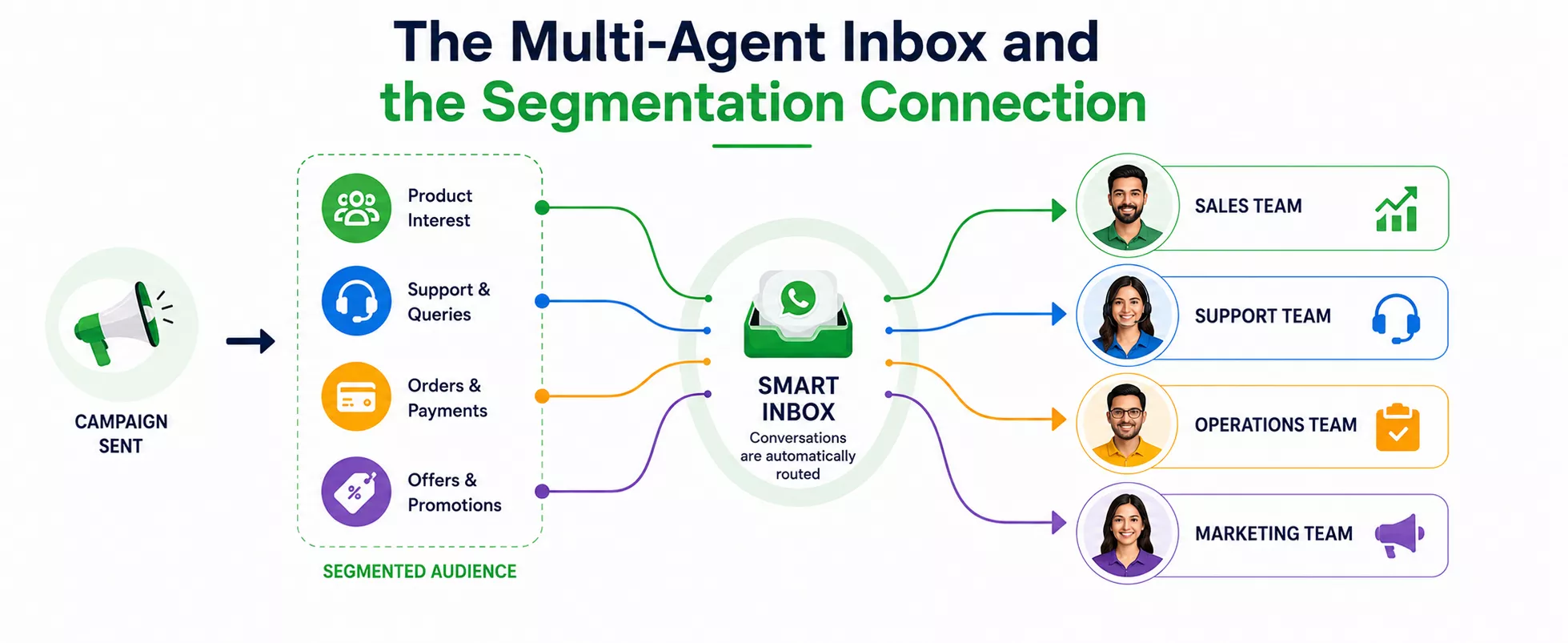
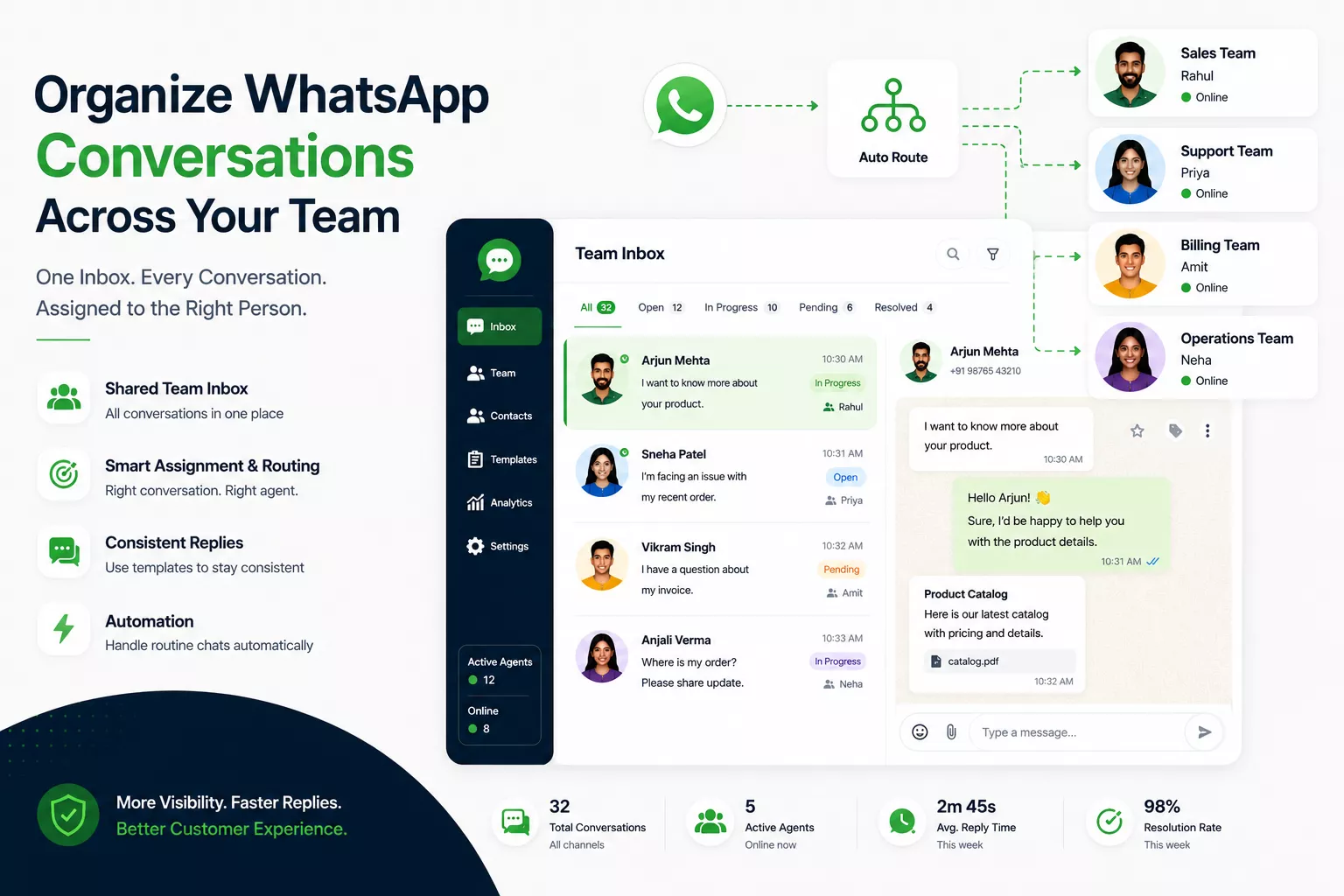
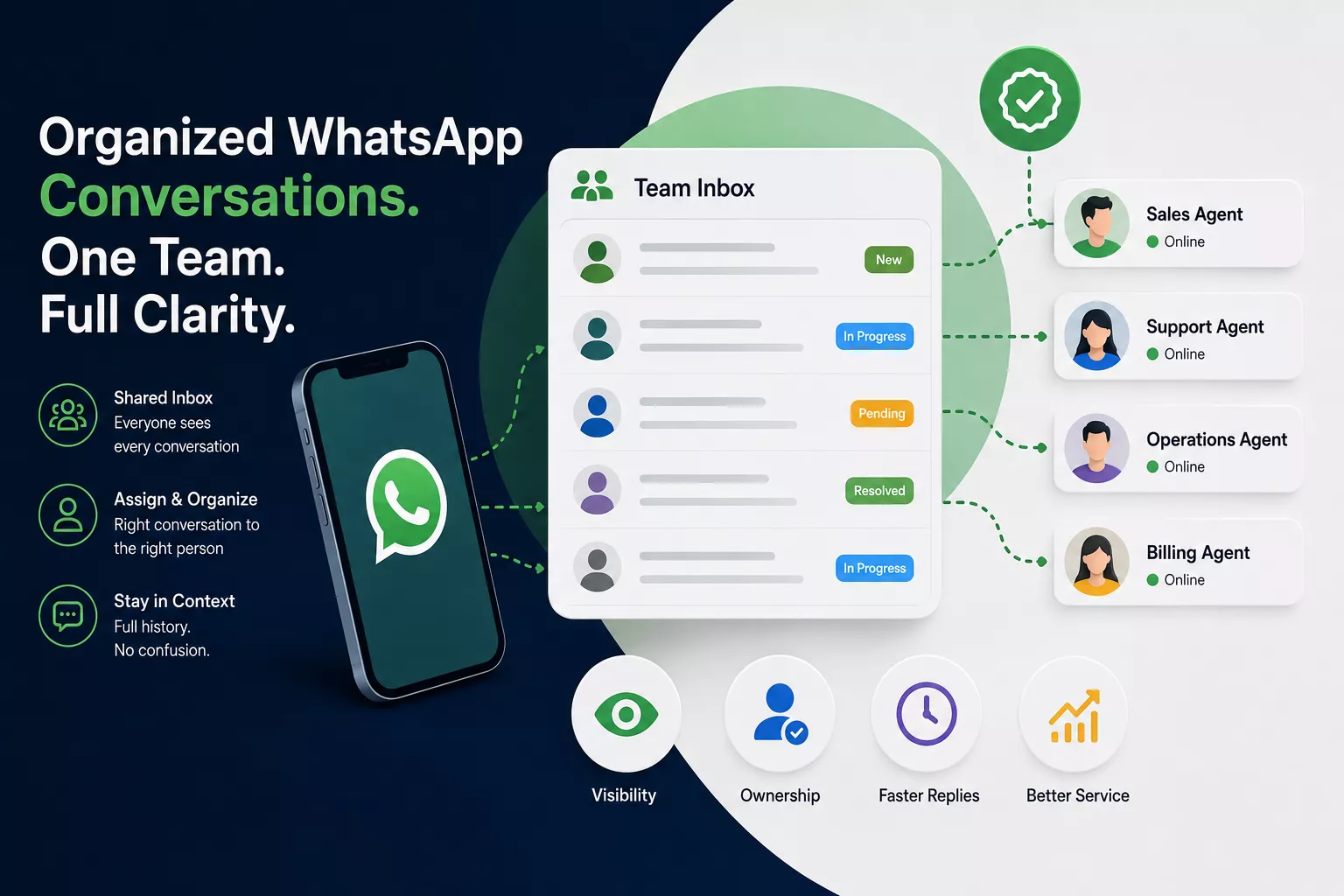
Segmented campaigns produce another benefit that connects directly to how the inbox is organised. When a campaign is tagged by segment — skincare leads, FD renewal candidates, site visit prospects — the replies that come in from that campaign can be automatically routed in the inbox to the agents best positioned to handle that specific conversation type.
An unsegmented broadcast produces an inbox full of mixed replies that require manual sorting before they can be assigned. A segmented campaign produces an inbox where every incoming conversation is already labelled by the campaign that generated it, and routing rules can send it to the right agent or team without human triage. The organisation of the inbox downstream is a direct reflection of the segmentation quality upstream.
At 24/7 Marketing, segmentation is built into the campaign setup process from the first step — before a single template is written or a send is scheduled. Because a well-segmented campaign does not just outperform an unsegmented one on response rate. It produces better inbound, cleaner automation, more organised inbox routing, and a healthier sender quality rating that keeps the channel effective for every campaign that follows.
Stop sending to everyone and reaching no one. Build segmented campaigns at 247marketing.in.